
Judge orders DC jail to justify Cole Allen confinement
White House Correspondents dinner shooting suspect held in restrictive housing, pretrial detention turns into a paperwork fight
Images
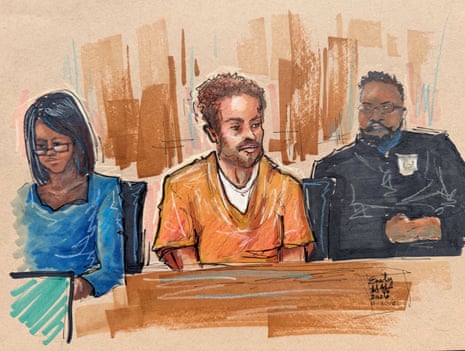 In an court artist’s sketch, Cole Allen sits in a Washington DC courtroom during a hearing on 30 April 2026. Photograph: Emily Goff/Reuters
theguardian.com
In an court artist’s sketch, Cole Allen sits in a Washington DC courtroom during a hearing on 30 April 2026. Photograph: Emily Goff/Reuters
theguardian.com
US magistrate judge Zia Faruqui ordered Washington’s jail officials to explain by Tuesday morning how they decided to place White House Correspondents’ Association dinner shooting suspect Cole Allen in highly restrictive conditions, after calling the handling “legally deficient,” according to Reuters. Allen, 31, is accused of firing a shotgun during a foiled attack at the 25 April gala attended by President Donald Trump and senior administration officials. In a 30 April hearing in Washington, Faruqui went further than a routine custody review, apologising directly to Allen for conditions he said were inappropriate for a defendant with no criminal record.
Allen’s lawyers told the court he had been isolated from other inmates, kept in a padded cell for 23 hours a day, placed on suicide watch despite a health evaluation finding no suicidal tendencies, and denied access to a Bible, Reuters reports. Prosecutors said Allen told FBI agents after his arrest that he did not expect to survive the alleged attack—language that jail staff may interpret as self-harm risk even when clinicians do not. Allen has since been removed from suicide watch but remains in restrictive housing, and he agreed to stay detained after his lawyers chose not to contest prosecutors’ argument that he posed a danger.
The dispute exposes a familiar pattern in politically sensitive cases: detention decisions are made inside institutions designed to minimise blame, not to calibrate proportionality. A high-profile defendant creates asymmetric risk for jail administrators—if anything goes wrong, the consequences are immediate, public, and career-ending—while the costs of over-confinement are diffuse and often invisible. Faruqui stressed that pretrial detention is not supposed to be punitive, yet the tools available to “manage” risk—suicide watch, segregation, deprivation of ordinary items—can resemble punishment when applied by default.
Faruqui compared Allen’s treatment with that of defendants charged in the 6 January 2021 Capitol attack, many of whom complained about the same Washington jail but were housed in a separate unit and, in the judge’s telling, treated more favourably despite comparable conduct. That comparison matters because it hints at how ad hoc detention conditions can become: not simply a function of the alleged crime, but of the institution’s current fears, staffing constraints, and political temperature. In practice, the system that promises neutral process often relies on containment first and paperwork later.
Allen has been charged with attempted assassination and firearms offences and has not yet entered a plea. The judge’s deadline to the jail is not about the allegation itself, but about who signed off on keeping a first-time defendant alone in a padded cell for most of the day.