
Car rams pedestrians in Leipzig
Two killed and 22 injured in city-centre incident, motive still unclear as driver arrested
Images
 As well as the deaths, several other people are reported to have been injured in the incident
bbc.com
As well as the deaths, several other people are reported to have been injured in the incident
bbc.com
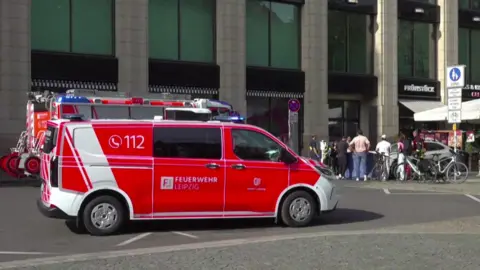 As well as the deaths, several other people are reported to have been injured in the incident
bbc.com
As well as the deaths, several other people are reported to have been injured in the incident
bbc.com
Two people were killed and 22 others injured on Monday afternoon after a car drove into pedestrians on Grimmaische Straße in central Leipzig, according to local officials cited by the BBC. Leipzig’s fire chief Axel Schuh said two of the injured were seriously hurt, with roughly 40 firefighters and 40 paramedics deployed and two helicopters called in. Mayor Burkhard Jung said the suspected driver was apprehended, and police later said there was no further danger.
The immediate question—whether this was an accident, a medical emergency, or an intentional attack—was still unanswered as authorities sealed off the area and began their investigation. That uncertainty matters because European cities have spent years hardening public spaces against vehicle rammings, adding bollards, pedestrian zones, and rapid-response protocols, yet the basic vulnerability remains: a car is cheap, ubiquitous, and hard to pre-screen. When the motive is unclear, officials tend to treat the scene like terrorism until proven otherwise, because the cost of being wrong runs into lives and public confidence.
The Leipzig response also shows what modern urban security looks like in practice: heavy emergency presence, fast cordons, and quick reassurance that “no further danger” exists—while the underlying risk is left for later briefings. For city governments, each such incident forces a trade-off between open streets and defensive architecture, with the bill often falling on local budgets rather than on the national agencies that set threat levels and policing priorities. For police, the political demand is speed and certainty; the operational reality is that early information is fragmentary, social media fills the vacuum with unverified images, and the first official statements are mostly about crowd control.
Euronews reported the incident occurred on 4 May and confirmed at least two deaths, aligning with the BBC’s account. The remaining details—why the car struck people and whether the driver targeted the crowd—will determine whether Leipzig becomes another entry in Europe’s catalogue of mass-violence tactics or a different kind of public-safety failure.
Police said the car hit several people in the pedestrianised city-centre area before driving off, and that the driver was later arrested. By early evening, Radio Leipzig reported officers had declared the danger over, while the street remained cordoned off behind tape and emergency vehicles.