
Cape Verde blocks MV Hondius docking
Suspected hantavirus cluster leaves three dead and one in ICU, WHO confirmation turns cruise itinerary into a health jurisdiction test
Images
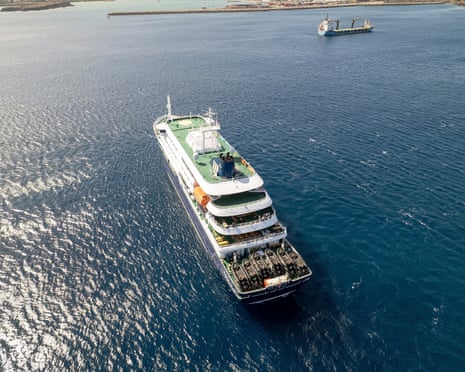 The MV Hondius off Praia, Cape Verde. A married couple from the Netherlands are among three dead from suspected hantavirus. Photograph: AFP/Getty Images
theguardian.com
The MV Hondius off Praia, Cape Verde. A married couple from the Netherlands are among three dead from suspected hantavirus. Photograph: AFP/Getty Images
theguardian.com
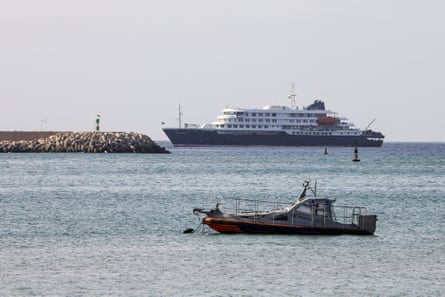 The MV Hondius anchored off the coast of Praia, on the island of Santiago, Cape Verde. Photograph: Elton Monteiro/EPA
theguardian.com
The MV Hondius anchored off the coast of Praia, on the island of Santiago, Cape Verde. Photograph: Elton Monteiro/EPA
theguardian.com
 bnonews.com
 bnonews.com
 bnonews.com
 bnonews.com
 bnonews.com
Cape Verde has refused port access to the expedition cruise ship MV Hondius after three passenger deaths and a cluster of illnesses raised suspicion of a hantavirus outbreak. The vessel, operated by Oceanwide Expeditions, has been anchored off Praia while health authorities coordinate with the Netherlands and the UK, according to The Guardian. WHO has confirmed one hantavirus infection by laboratory testing and is assessing additional suspected cases, BNO News reports.
The immediate question is medical—how to screen, isolate, and evacuate patients on a ship built for tourism, not infection control—but the episode also shows how outbreak management becomes a jurisdictional puzzle the moment a vessel leaves a major port. The Hondius sailed an “Atlantic Odyssey” route from Ushuaia in Argentina toward Cape Verde, carrying roughly 149 people from 23 nationalities, The Guardian reports. When severe respiratory symptoms appeared, the ship’s most consequential “equipment” became paperwork: which state has responsibility for testing, which country will accept a potentially infectious ship, and where an air ambulance can legally land.
The known facts are still narrower than the public fear. A Dutch passenger died on 11 April, was disembarked at St Helena on 24 April, and his wife later became unwell and died; a British passenger was medically evacuated on 27 April and remains in intensive care in Johannesburg, with a hantavirus variant identified in that patient, according to The Guardian. A third passenger, a German national, died on 2 May; the cause has not been established. WHO has also been coordinating possible evacuation for two symptomatic passengers, BNO News reports. Even in the best case—one confirmed infection and several unrelated deaths—the ship has already become a floating liability, with every coastal state weighing the downside risk of letting it dock.
Cape Verde’s decision to keep the ship offshore is a blunt but rational form of containment for a small island state with limited surge capacity. The alternative is to accept the ship, then discover too late that contact tracing, ward space, and staff protection are inadequate—and that the political cost of a local outbreak will fall on the same officials who signed the docking clearance. Oceanwide Expeditions has considered sailing onward to Spain’s Canary Islands for further screening and handling, The Guardian reports, a reminder that in maritime health incidents the “nearest” solution is often the place most able to absorb the administrative and clinical load.
For now, the Hondius remains within sight of Praia, while the most important data point—how many infections are real and connected—lags behind the faster-moving logistics of denial, diversion, and evacuation.