
Venezuela Chavista leadership reshuffles after Maduro capture
Rodríguez siblings and Diosdado Cabello sideline old inner circle under US control, party survives by purging doubters rather than rebuilding legitimacy
Images
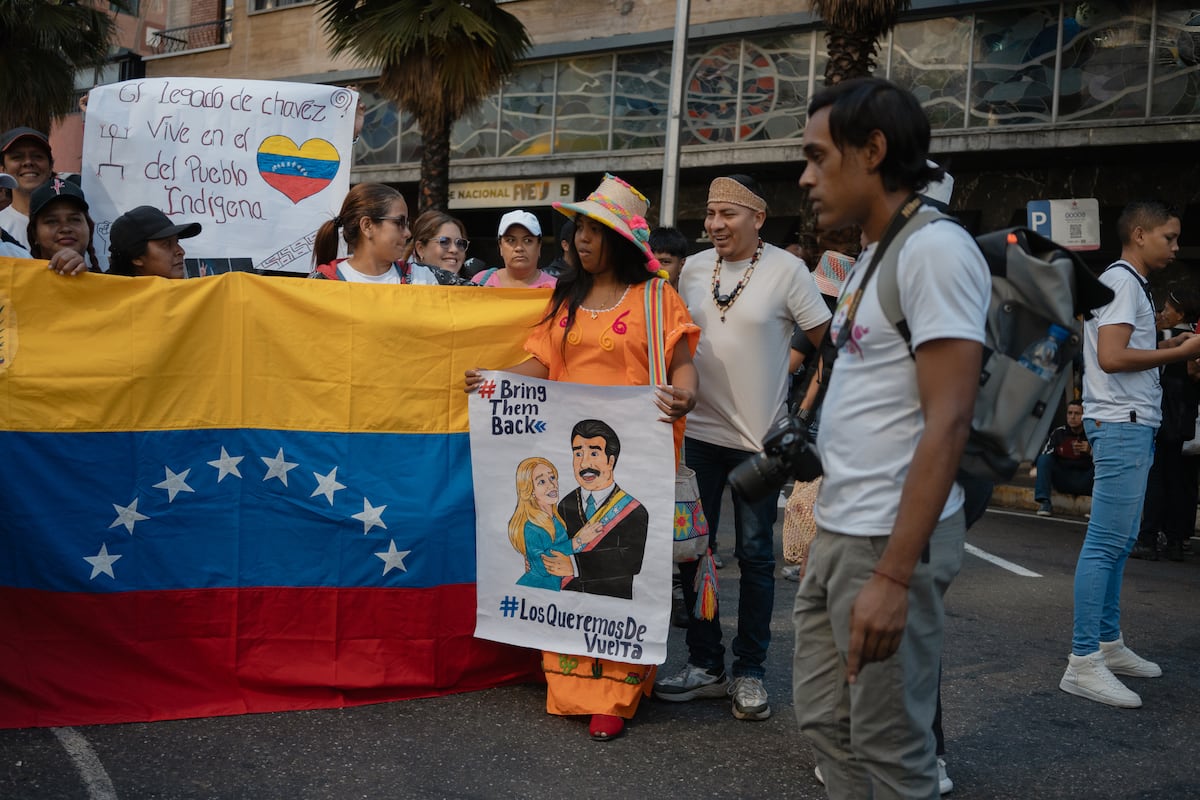 Internal purges and external tutelage: Venezuela’s Chavista regime rebuilds its faith on Maduro’s ruins
english.elpais.com
Internal purges and external tutelage: Venezuela’s Chavista regime rebuilds its faith on Maduro’s ruins
english.elpais.com
Nicolás Maduro was captured in a U.S. operation and flown to New York within hours on January 3, and three months later Venezuela’s ruling movement is still intact, according to an El País report by María Martín. The story describes a Chavista leadership that spent months preparing for an invasion scenario—down to plans to blow up refineries and oilfields—but did not anticipate Maduro being taken alive. In Caracas, the immediate shock turned inward, with senior figures suspecting betrayal as the United States took control of the country.
What followed, El País reports, has looked less like a clean break than a re-stacking of power inside the same party apparatus. Delcy Rodríguez, described as interim president, and her brother Jorge Rodríguez, head of the National Assembly, have been reshaping the inner circle with backing from interior minister Diosdado Cabello, pushing aside figures who previously clustered around Maduro and Cilia Flores. The article depicts a movement held together by obedience and habit rather than a single leader: hardliners remain loyal despite humiliation, while other blocs—especially in the military—try to preserve leverage in a state described as bankrupt and exhausted.
The report’s most revealing detail is how the old narrative collides with new necessities. Chavismo, one party leader tells El País, functions like a religion, with a fervent core and outer rings where doctrine, career, and money mix. Yet the capture of a leader who cast himself as the embodiment of “anti-imperialism” forces a practical retreat from the very posture that justified the system. Doubt, once treated as betrayal, is described as becoming permissible in the first days after January 3—until new command lines settled and questioning again became costly.
The survival of the PSUV, as presented, is not a story of popular legitimacy arriving late; it is a story of an organization that can outlive its figurehead because jobs, security, and access to shrinking resources still run through it. That makes purges rational: when an external shock exposes how quickly power can be removed, the safest move is to narrow the circle, control the story, and ensure that anyone with independent networks is either absorbed or sidelined.
Maduro is in a New York prison, and the party built around his predecessor is still deciding who gets to stand closest to the microphone in Caracas.