
US denies Iranian claim of missile strike in Strait of Hormuz
Centcom backs Trump Project Freedom escort plan for stranded shipping, 15000 personnel and 100 aircraft committed to a corridor Iran says it will attack
Images
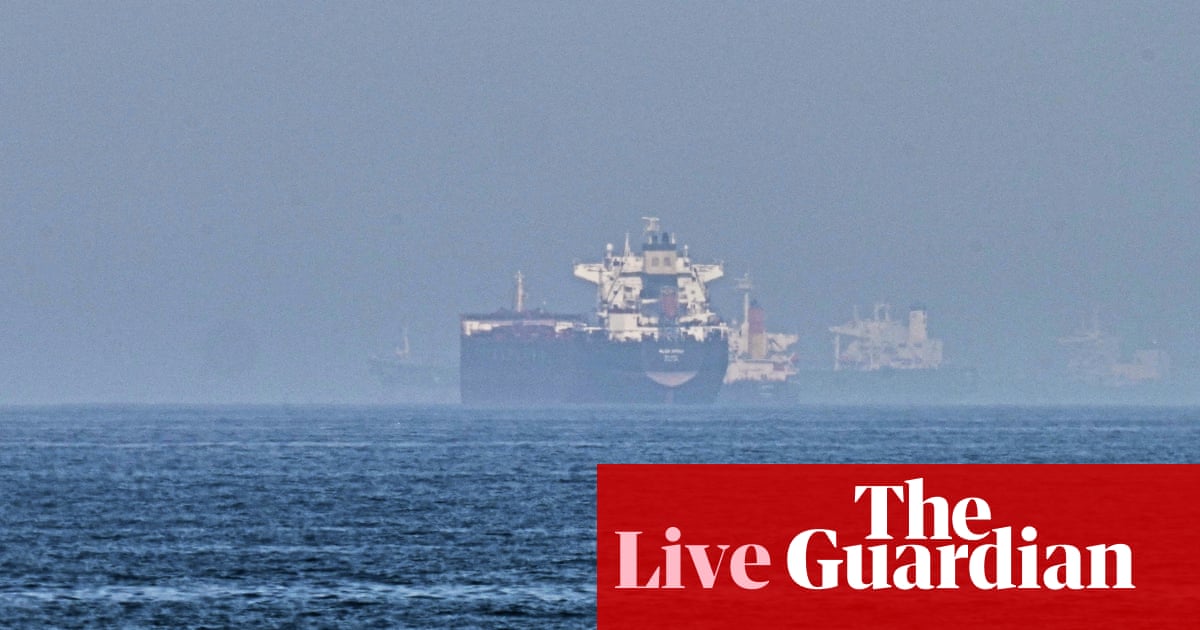 Middle East crisis live: US denies report that warship trying to pass through strait of Hormuz was hit by Iran
theguardian.com
Middle East crisis live: US denies report that warship trying to pass through strait of Hormuz was hit by Iran
theguardian.com
The US military says no American warships have been hit in the Strait of Hormuz after Iranian media claimed the Islamic Revolutionary Guard Corps struck a US vessel with two missiles. US Central Command said on X that “no US Navy ships have been struck” and that American forces would back President Donald Trump’s newly announced effort to guide stranded commercial ships out of the strait. Iran has rejected the plan and warned that any foreign military force entering or approaching Hormuz would be attacked.
Trump’s “Project Freedom” arrives in a waterway that has already been turned into a paperwork-and-insurance choke point by the US blockade on Iranian ports. The strait is narrow, but the real constraint has been the willingness of insurers, banks and shipowners to treat the Gulf as routine commerce while navies contest who gets to police it. According to the Guardian’s live reporting, Centcom says the operation will be supported by 15,000 personnel and more than 100 aircraft—an unusually large footprint for what is being described as a guidance-and-escort mission rather than open combat.
Iran’s response is aimed at the same vulnerability. If foreign escorts are treated as targets, the cost of moving a tanker becomes less about fuel and more about war-risk premiums, rerouting delays and the possibility that a single incident triggers a wider exchange. The US, for its part, is trying to separate “free passage for other nations” from its blockade of Iranian ports, a distinction that is easy to state in briefings and hard to enforce on crowded sea lanes where flags of convenience, mixed cargoes and disputed paperwork are the norm.
The immediate test will not be a press statement but the first convoy that tries to leave under US protection. Each ship that accepts an escort signals that private operators believe the US can credibly absorb the risk; each ship that stays put signals that insurers and owners think the risk is unpriceable. Iran’s warning that “especially the American military” will be attacked is also a message to third countries: accept US help and you may inherit US enemies.
Centcom’s denial—issued in public, in real time, on social media—underscored how quickly claims in Hormuz now function as market-moving events. So far, the only confirmed change is administrative: an escort plan backed by 15,000 troops has been announced, and Tehran has said it will treat foreign forces near the strait as fair game.