
Japan sees 50000 rally for pacifist constitution
Sanae Takaichi presses article 9 revision as security policy hardens, referendum math turns remilitarisation into turnout politics
Images
 Megumi Koike holds up a sign supporting article 9, the anti-war clause of Japan's constitution, during a protest in Tokyo on Sunday 3 May. Photograph: Justin McCurry/The Guardian
theguardian.com
Megumi Koike holds up a sign supporting article 9, the anti-war clause of Japan's constitution, during a protest in Tokyo on Sunday 3 May. Photograph: Justin McCurry/The Guardian
theguardian.com
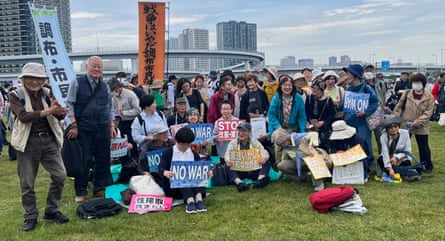 People protest in support of Japan’s pacifist constitution in Tokyo on Sunday 3 May Photograph: Justin McCurry/The Guardian
theguardian.com
People protest in support of Japan’s pacifist constitution in Tokyo on Sunday 3 May Photograph: Justin McCurry/The Guardian
theguardian.com
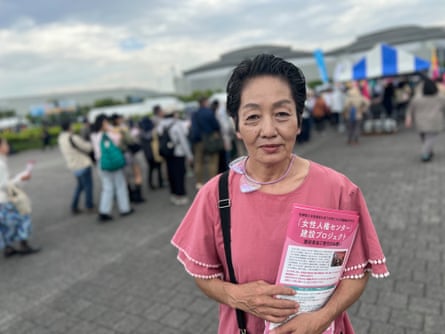 Hiroko Maekawa attends a protest in support of Japan’s pacifist constitution in Tokyo on Sunday 3 May. Photograph: Justin McCurry/The Guardian
theguardian.com
Hiroko Maekawa attends a protest in support of Japan’s pacifist constitution in Tokyo on Sunday 3 May. Photograph: Justin McCurry/The Guardian
theguardian.com
Japan’s pacifist constitution drew an estimated 50,000 people to a Tokyo park on 3 May, according to The Guardian, in what organisers described as the country’s largest such rally in decades. The demonstration coincided with Constitutional Memorial Day and came as prime minister Sanae Takaichi renewed her push to revise the postwar charter, calling from an official trip to Vietnam for “advanced discussions” on changes.
At issue is article 9, the clause that renounces war and bars Japan from threatening or using force to settle international disputes. Conservatives in the Liberal Democratic Party have argued for years that the wording no longer matches Japan’s security reality, particularly with China’s military rise and North Korea’s missile tests. But the legal and political path to revision is narrow: a two-thirds majority in both houses of the Diet followed by a national referendum, a hurdle that turns constitutional change into a test of coalition discipline and public patience rather than a simple cabinet decision.
The government has already expanded what Japan’s self-defence forces can do without rewriting the constitution. Legislation passed a decade ago permits “collective self-defence”, allowing Japan to help an ally under attack, a shift that critics see as a functional rewrite achieved through statute and interpretation. That history shapes the current argument: supporters of revision say the law has outgrown the text, while opponents see proof that policy can be stretched first and legitimised later.
Polling cited by The Guardian suggests a country split not just on the outcome but on the premise. A Yomiuri Shimbun poll found 57% support for revision, while an Asahi Shimbun survey put support at 47%, numbers that leave room for a referendum campaign to become a proxy vote on the government itself. Protesters interviewed at the rally framed the issue less as abstract constitutional theory than as budgeting and alignment: one sign-holder argued money should go to healthcare, education and jobs rather than weapons; another warned Japan was being pulled into US-led conflicts.
That anxiety has a recent reference point. In March, Takaichi cited constitutional constraints when she reportedly turned down a request by Donald Trump to send maritime self-defence forces to the Strait of Hormuz, a reminder that Tokyo’s alliance obligations and its legal limits do not always point in the same direction.
Japan’s constitution has been unchanged since it took effect on 3 May 1947. On its 79th anniversary, the government was asking for updates while thousands stood in a park insisting the existing text was the update.