
Deakin University builds marine biobank for golden kelp
Queenscliff living library stores algae after Australian heatwave die-offs, freezers scale faster than reefs recover
Images
 Golden kelp biobank
theguardian.com
Golden kelp biobank
theguardian.com
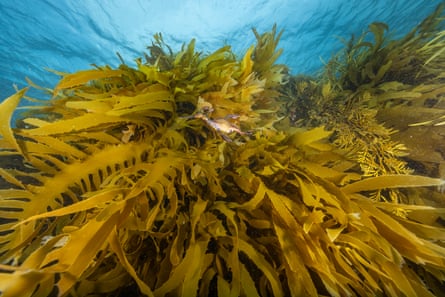 Leafy seadragon and golden kelp. Photograph: Stefan Andrews
theguardian.com
Leafy seadragon and golden kelp. Photograph: Stefan Andrews
theguardian.com
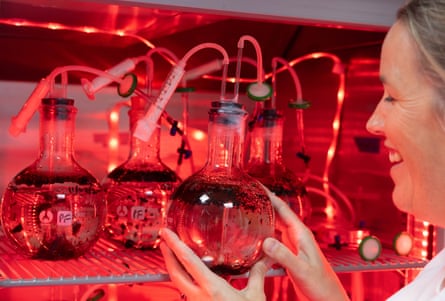 Prue Francis with the golden kelp biobank. Photograph: Ellen Smith/The Guardian
theguardian.com
Prue Francis with the golden kelp biobank. Photograph: Ellen Smith/The Guardian
theguardian.com
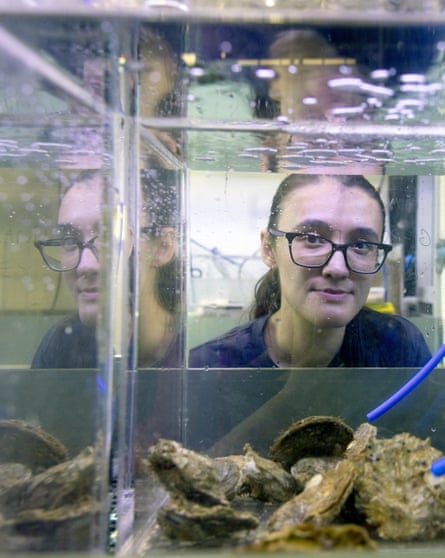 Kathy Overton with the flat oyster living library. Photograph: Ellen Smith/The Guardian
theguardian.com
Kathy Overton with the flat oyster living library. Photograph: Ellen Smith/The Guardian
theguardian.com
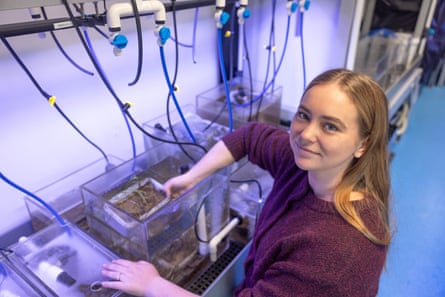 Marine ecologist Laney Callahan with the seagrass restoration project plants. Photograph: Ellen Smith/The Guardian
theguardian.com
Marine ecologist Laney Callahan with the seagrass restoration project plants. Photograph: Ellen Smith/The Guardian
theguardian.com
Golden kelp is sitting in a refrigerator near Swan Bay in Victoria, held under red light so it stays in an early life stage rather than growing up. According to The Guardian, Deakin University scientists at the Queenscliff marine research centre keep beakers of kelp under sensors and alarms, with a backup generator standing by. The same facility stores trays of tiny vials of dormant kelp—what the university calls a “living library” for species that may not survive the next heatwave.
The immediate trigger was a marine heatwave off Western Australia that wiped out large areas of golden kelp, a foundation species of the Great Southern Reef—an 8,000-kilometre chain of interconnected ecosystems. Kelp forests are not just scenery: they feed and shelter lobsters, abalone and fish, including species found nowhere else. Golden kelp also fails early when waters warm, making it a kind of biological canary; by the time it disappears, the rest of the system is already under stress.
Biobanks are pitched as insurance policies, but the insurance only pays out if someone funds the premiums for decades. The Guardian describes a broader Australian network: the Australian National Botanic Gardens in Canberra stores seeds in a -20°C vault collected from places as varied as the Australian Alps, Uluru, Kakadu and remote islands; Melbourne Museum keeps living cells and tissue samples in 2ml tubes at -196°C, where biological activity effectively stops. These collections enable genetics work and future reintroduction, and they can preserve options—embryos, cells, strains—long after a habitat has changed.
Yet the same logic that makes biobanks attractive also exposes a weak point. Storing vials is cheaper and more photogenic than rebuilding the conditions that made a species viable in the first place. Deakin’s team is restoring kelp in Port Phillip Bay sanctuaries such as Jawbone and Ricketts Point, where overgrazing by purple sea urchins has stripped reefs; that work requires ongoing labour—reducing urchin densities and growing kelp back—rather than simply maintaining freezers. Biobanks can also shift conservation into institutions that are rewarded for collection and curation, while the costs of preventing heat stress, pollution, or overgrazing sit elsewhere.
For now, the “living library” depends on mundane reliability: red bulbs, door seals, temperature logs, and the fuel that keeps the generator ready.
The kelp is alive, but it is alive in a fridge.