
WHO probes suspected hantavirus outbreak on MV Hondius cruise ship
Three deaths reported as confirmed case and five suspected cases investigated, rodent control becomes a frontline health measure at sea
Images
 bbc.com
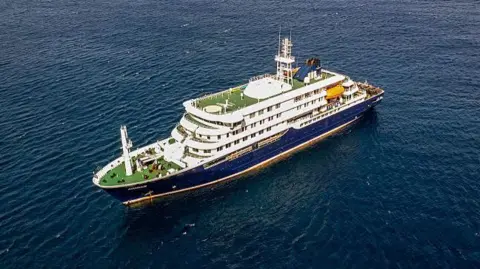 Getty Images Aerial picture of a general view of the cruise ship MV Hondius stationary off the port of Praia, the capital of Cape Verde.
bbc.com
Getty Images Aerial picture of a general view of the cruise ship MV Hondius stationary off the port of Praia, the capital of Cape Verde.
bbc.com
 What to know about hantavirus, the illness suspected in a cruise ship outbreak
independent.co.uk
What to know about hantavirus, the illness suspected in a cruise ship outbreak
independent.co.uk
Three people have died after a suspected hantavirus outbreak aboard the MV Hondius, a cruise ship sailing from Argentina toward Cape Verde, according to the World Health Organization. The WHO said one case has been confirmed and five additional suspected cases are under investigation, with further laboratory testing and epidemiological work ongoing. The ship’s route and the deaths have put a niche but high-severity virus into the middle of a mass-market travel product.
Hantaviruses are carried by rodents and most commonly infect humans when dried urine, droppings, or saliva becomes airborne and is inhaled—an exposure pattern that fits enclosed spaces and disturbed dust more than casual person-to-person contact. The WHO noted that transmission between people is rare, but the containment problem on a ship is not only medical: once a cluster is suspected, operators must treat cabins, storage areas, and service corridors as potential exposure sites while continuing to house and feed passengers and crew.
The Hondius case also highlights how cruise risk is often priced as if it were food poisoning or norovirus—unpleasant but usually self-limiting—while some pathogens carry a very different downside. In hantavirus pulmonary syndrome, the severe form seen in the Americas, respiratory symptoms can progress quickly; the US Centers for Disease Control and Prevention puts mortality at roughly 38%, the BBC reports. There is no specific cure, and treatment is supportive—oxygen, ventilation, and intensive care—resources that are scarce at sea and depend on evacuation and onshore capacity.
The virus family has two major clinical patterns. In Europe and Asia, haemorrhagic fever with renal syndrome is more common and primarily affects the kidneys, with fatality rates that vary by strain. Globally, there are an estimated 150,000 cases of HFRS each year, more than half typically in China, according to the BBC. That background makes the Hondius outbreak unusual not because hantaviruses are new, but because a rodent-linked infection has appeared in a tightly managed commercial environment designed to separate passengers from the supply chain that keeps the ship running.
The Independent notes that early hantavirus symptoms can resemble flu—fever, chills, muscle aches—making it difficult to identify without testing until patients deteriorate. The publication also points to the practical prevention advice that public health agencies repeat: avoid aerosolising droppings, ventilate enclosed spaces, use protective gear and disinfectants, and seal entry points to keep rodents out. On a cruise ship, those basics translate into inspections of storage rooms, waste handling, and any area where food and supplies are kept—work that is invisible to guests until it fails.
WHO investigators are still sequencing and testing to determine what strain is involved and how exposure occurred. For now, the confirmed case and three deaths are attached to a single vessel moving across the Atlantic with limited places to stop.