
Pretoria march demands mass deportations
Civic group March and March blames weak immigration enforcement and untaxed spaza shops, foreign missions urge nationals to stay indoors
Images
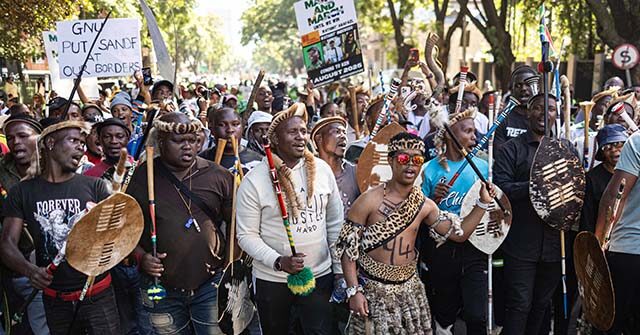 Hundreds March Against Mass Migration in Pretoria, South Africa
breitbart.com
Hundreds March Against Mass Migration in Pretoria, South Africa
breitbart.com
Hundreds of protesters marched through central Pretoria this week calling for mass deportations and tougher enforcement of South Africa’s immigration and citizenship laws, according to Breitbart. Police shadowed the demonstration and intervened when marchers entered an area described as having a heavy immigrant presence, as organisers warned supporters against direct confrontation. The rally was organised by a civic group called March and March and drew allied groups including the ActionSA party and Operation Dudula, a vigilante-style anti-immigration movement.
The march lands in a country where the practical questions—who is legally present, who is allowed to trade, who pays tax, and who is policed—are increasingly being fought out in the street rather than in functioning administrative systems. March and March founder Jacinta Ngobese-Zuma, a radio personality, argued that the current flow of migrants is “not normal migration” and described South Africa as “fertile ground for criminals to thrive,” Breitbart reports. The group’s treasurer, Sanele Nkambule, focused on informal retail: he claimed many spaza shops are operated by foreign nationals “without proper trading rights” and “pay no taxes,” and called for audits to verify legal status and tax compliance.
Those claims—whether fully accurate or not—are a map of where enforcement gaps become political oxygen. When licensing and tax compliance are weak, legitimate small businesses compete against unverified operators; when border and identity controls are porous, neighbourhood disputes turn into nationality disputes; when police capacity is thin, private groups step into the vacuum. The Pretoria demonstration also highlighted how quickly such tensions spill across borders: Ghana’s diplomatic mission advised its nationals in South Africa to prioritise safety, and the Nigerian Union in South Africa urged Nigerians to close shops and stay indoors during the rallies. Its chairman, Olaniyi Abodede, told the BBC he had been harassed during the protests, Breitbart reports.
President Cyril Ramaphosa used a Freedom Day address—marking South Africa’s first post-apartheid election in 1994—to condemn attacks on foreigners and to credit other African nations for their role in ending apartheid. His warning was aimed at preventing “concerns about mass migration” from curdling into prejudice. But the week’s practical preparations by immigrant communities were not about rhetoric: they were about shuttering storefronts and staying off the street until the march passed.