
Oil tops $126 after Trump weighs months-long Iran pressure
Pentagon plans range from short strikes to Hormuz seizure option, Europe pays first through petrol and inflation
Images
 bbc.com
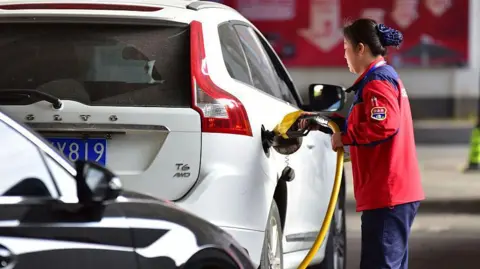 Costfoto/NurPhoto via Getty Images A female petrol station attendant refuels a white car
bbc.com
Costfoto/NurPhoto via Getty Images A female petrol station attendant refuels a white car
bbc.com
 A thin, grey banner promoting the News Daily newsletter. On the right, there is a graphic of an orange sphere with two concentric crescent shapes around it in a red-orange gradient, like a sound wave. The banner reads: "The latest news in your inbox first thing.”
bbc.com
A thin, grey banner promoting the News Daily newsletter. On the right, there is a graphic of an orange sphere with two concentric crescent shapes around it in a red-orange gradient, like a sound wave. The banner reads: "The latest news in your inbox first thing.”
bbc.com
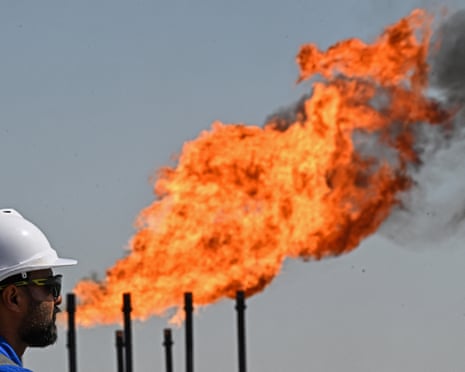 An oil and gas field in Basra, Iraq. Oil prices are rising as the Iran war is about to enter its 10th week, while global oil supplies have dropped by nearly 20m barrels each day the strait of Hormuz has been choked off. Photograph: AFP/Getty Images
theguardian.com
An oil and gas field in Basra, Iraq. Oil prices are rising as the Iran war is about to enter its 10th week, while global oil supplies have dropped by nearly 20m barrels each day the strait of Hormuz has been choked off. Photograph: AFP/Getty Images
theguardian.com
Brent crude traded above $126 a barrel on Wednesday after reports that the Trump administration is weighing months of pressure on Iran, with the Strait of Hormuz still effectively closed to normal tanker traffic. According to the BBC, Axios reported that US Central Command has prepared options ranging from “short and powerful” strikes on Iranian infrastructure to a plan that would seize part of the strait to reopen shipping, potentially involving troops on the ground. The Guardian reports Trump has also discussed with oil executives maintaining a naval blockade of Iranian ports for months, betting that storage constraints at export facilities will force Iran to cap production.
The immediate market reaction is a reminder that energy policy is now being written in operational plans and insurance premiums. Roughly a fifth of the world’s energy normally transits Hormuz, so even partial disruption tightens a system with limited spare capacity and few quick substitutes. The Guardian cites estimates that global supplies have fallen by nearly 20 million barrels a day while the waterway is “choked off”, a scale of shock that quickly feeds into inflation and borrowing costs far from the Gulf. In Britain, the war’s spillover is already being modelled as a recession risk: NIESR has warned of a large hit to growth if high prices persist, and UK inflation has been pushed higher by fuel—costs that land on households while governments look for fiscal headroom.
For Europe, the episode underlines a structural vulnerability that has outlived the last energy crisis: the continent can diversify suppliers but not geography. When shipping lanes become bargaining chips, the bill shows up first in diesel prices and then in the politics of subsidies, tax freezes, and emergency support. The BBC reports US energy executives met Trump to discuss limiting the impact on American consumers, an acknowledgement that domestic price pain limits how long any administration can sustain a strategy built on prolonged disruption. The Guardian notes Trump has framed a blockade as more effective than bombing, but the same mechanism that squeezes Tehran also squeezes importers, with Oxford Economics warning that a drawn-out impasse could push prices far higher.
The strategic picture is equally blunt: if the next step is escalation to “reopen” the strait, that is a military operation whose success is measured in uninterrupted flows, not in communiqués. Iran, meanwhile, has its own leverage in the same corridor, and talks that were meant to convene in Islamabad have not materialised, leaving traders to price policy by rumour and contingency.
On Thursday, the June Brent contract expires, but the physical constraint remains the same: tankers still have to pass through Hormuz to deliver the barrels everyone is bidding for.