
Indonesian military officers stand trial over acid attack on KontraS activist
Case stays in military court as rights groups cite wider network, prosecutors call motive personal while Komnas HAM says 14 people linked
Images
 independent.co.uk
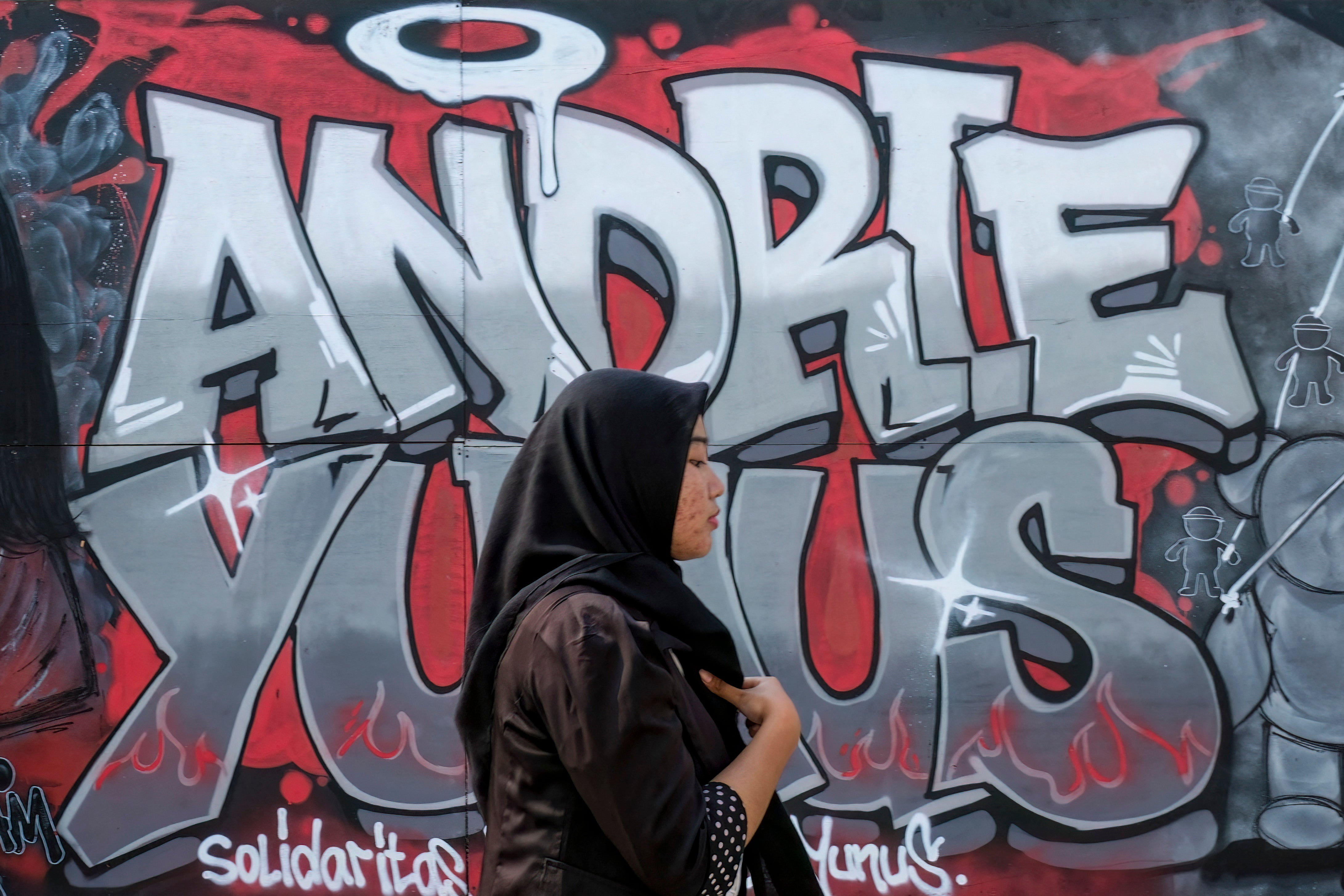 A visitor walks past a mural featuring the name of Andrie Yunus, the deputy coordinator of the KontraS rights group who suffered serious injuries when two men on a scooter threw acid at him, at the Mural Exhibition "From Citizens for Andrie" in Jakarta on 27 April 2026 (AFP/Getty)
AFP/Getty
A visitor walks past a mural featuring the name of Andrie Yunus, the deputy coordinator of the KontraS rights group who suffered serious injuries when two men on a scooter threw acid at him, at the Mural Exhibition "From Citizens for Andrie" in Jakarta on 27 April 2026 (AFP/Getty)
AFP/Getty
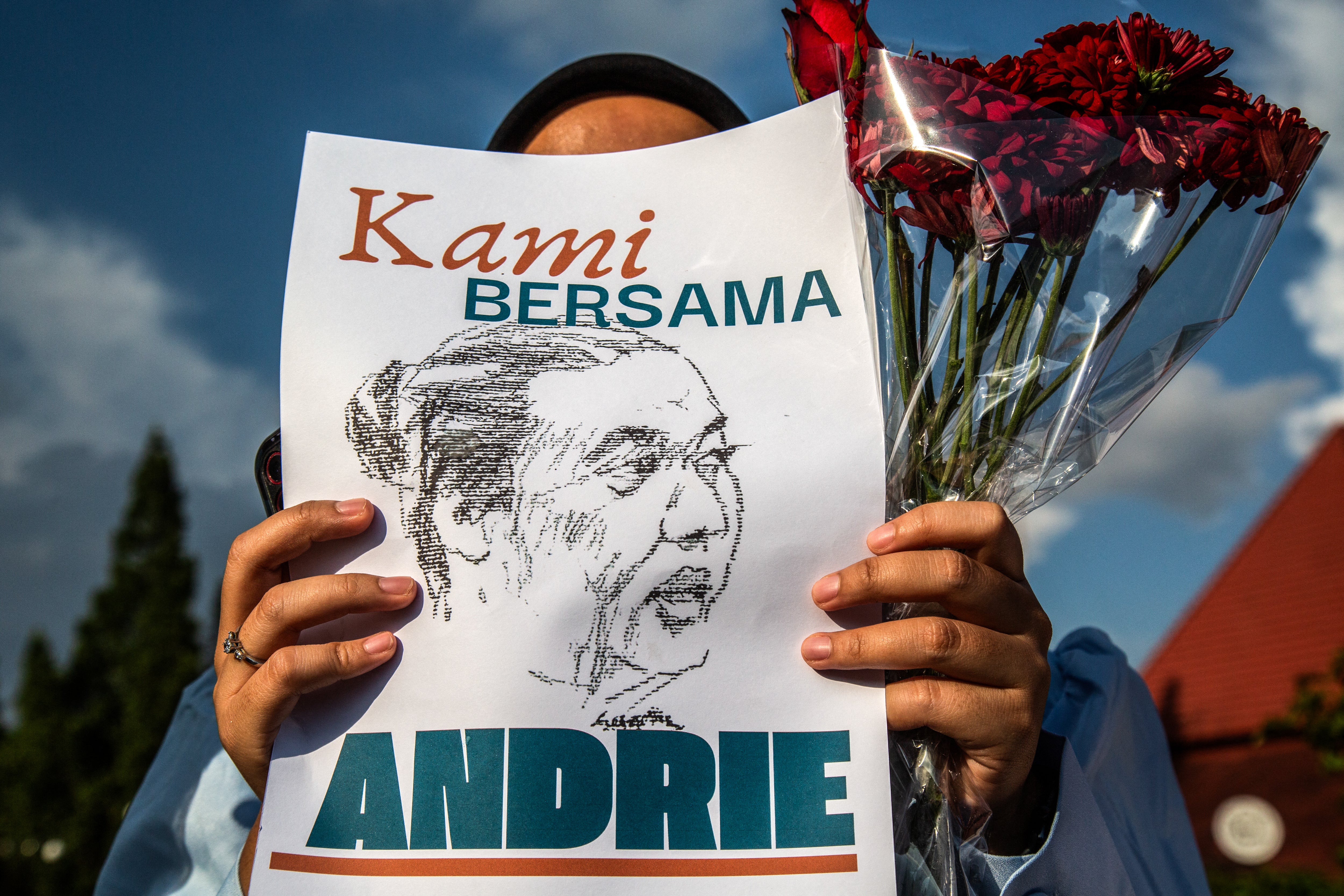 An activist holds a poster during a demonstration in support of Andrie Yunus, a staff member of Indonesian human rights NGO KONTRAS (Commission for Missing Persons and Victims of Violence), who was attacked with acid by an unidentified person, in Yogyakarta, 14 March 2026 (AFP/Getty)
AFP/Getty
An activist holds a poster during a demonstration in support of Andrie Yunus, a staff member of Indonesian human rights NGO KONTRAS (Commission for Missing Persons and Victims of Violence), who was attacked with acid by an unidentified person, in Yogyakarta, 14 March 2026 (AFP/Getty)
AFP/Getty
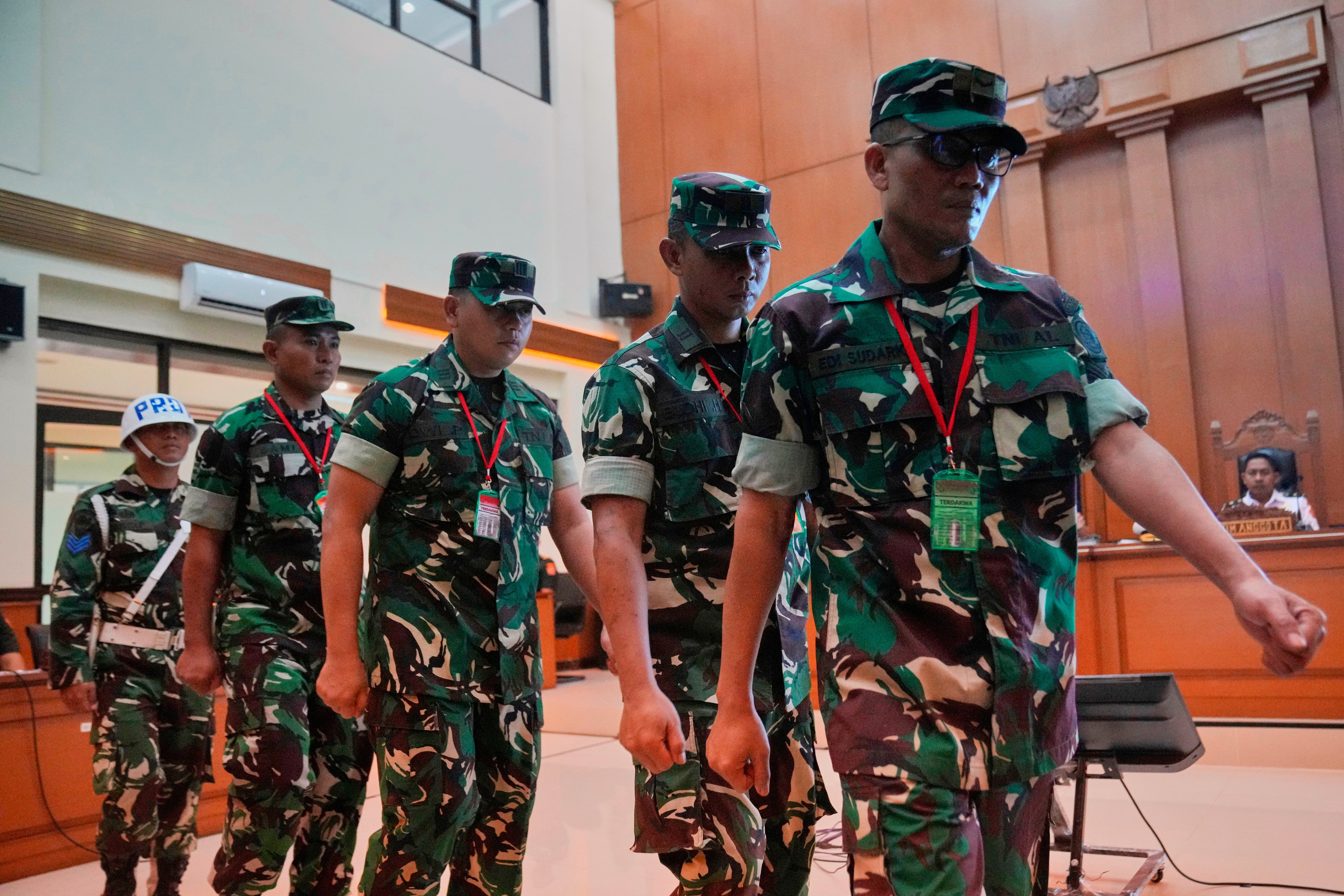
 Trial begins for 4 Indonesian service members charged over acid attack on activist
independent.co.uk
Trial begins for 4 Indonesian service members charged over acid attack on activist
independent.co.uk
Indonesia’s military court opened proceedings on Wednesday against four service members accused of throwing acid at human rights activist Andrie Yunus in central Jakarta, an attack prosecutors say left him blind in his right eye and badly burned. According to Reuters and the Independent, the defendants—three navy marines and an air force officer assigned to military intelligence—are charged with serious premeditated assault, carrying a maximum 12-year sentence.
The case is being watched less for the charge sheet than for the venue. Indonesia’s police initially investigated the March 12 attack before announcing that military personnel were implicated, after which military police arrested four suspects from the TNI’s Strategic Intelligence Agency. Rights groups argue that trying uniformed defendants in a military court narrows public scrutiny, limits participation by civilian institutions, and has historically produced softer outcomes for officers than for civilians accused of comparable violence. Indonesia’s national human rights commission, Komnas HAM, has said at least 14 people are linked to the attack and urged police to pursue the remaining suspects in civilian courts.
Prosecutors have presented the motive as personal—an effort to “teach him a lesson,” in the Independent’s account, and to deter criticism of the armed forces. That framing is contested. Amnesty International Indonesia’s Usman Hamid told the Independent there was no clear personal or professional relationship between Yunus and the accused, and alleged official assets were used in the operation—an allegation that, if substantiated, would turn a “personal” grudge into an institutional act carried out with state resources. Reuters reported the attackers used a mixture of car battery acid and rust remover, and that two of the defendants suffered minor injuries from splashes.
The broader political backdrop is Indonesia’s renewed debate over the military’s role in civilian life. Reuters notes growing concern about democratic erosion as the armed forces expand their presence in civilian administration and state-run businesses, a trend critics associate with President Prabowo Subianto, himself a retired general. Yunus, a deputy coordinator at KontraS, had protested proposed legal changes that would allow more officers to take civilian posts; Reuters reported he had recorded a podcast episode on the military’s expanding powers shortly before the attack. For civil society groups, the unanswered question is not only who threw the acid, but who ordered and financed an operation serious enough to be attributed to intelligence personnel.
The defendants did not object to the indictment at the opening hearing, the Independent reported, and the court is scheduled to resume on May 6 to hear witnesses. Yunus, 27, was unable to attend the first session due to ongoing recovery after multiple surgeries.
A military prosecutor described injuries that will not fully heal. The trial is taking place inside the institution the victim has spent his career urging Indonesia to constrain.