
Anonymous donor funds London Zoo wildlife hospital
ZSL opens UK-first public viewing gallery for veterinary work, private cheque builds the upgrade while captivity debate stays unresolved
Images
 bbc.com
 Justin Rowlatt profile image
bbc.com
Justin Rowlatt profile image
bbc.com
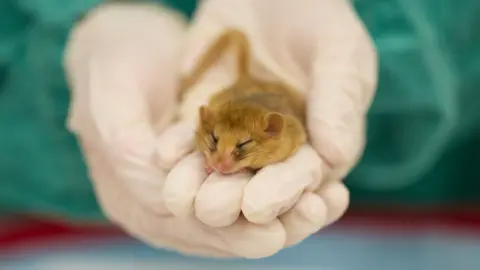 ©ZSL A tiny dormouse is held in hands. It sits on the 2/3 of three fingers of someone wearing surgical gloves. The dormouse has its eyes closed
bbc.com
©ZSL A tiny dormouse is held in hands. It sits on the 2/3 of three fingers of someone wearing surgical gloves. The dormouse has its eyes closed
bbc.com
 standard.co.uk
 standard.co.uk
 standard.co.uk
 standard.co.uk
 standard.co.uk
London Zoo plans public viewing gallery for veterinary procedures, anonymous donor funds £20m Wildlife Health Centre at ZSL, private money builds a hospital while captivity critics warn of spectacle
A single anonymous gift of £20 million is paying for a new wildlife hospital at London Zoo, where visitors will be able to watch vets at work through a dedicated viewing gallery. The Zoological Society of London (ZSL) says the facility—its largest donation in 200 years—will open at its Regent’s Park headquarters and allow the public to observe everything from penguin health checks to frog X-rays and, in some cases, post-mortems on stranded porpoises.
According to the BBC, ZSL is presenting the Wildlife Health Centre as a combined clinic, research unit and training hub, built around the “one health” idea that animal disease surveillance matters for humans too. The Standard reports the centre will expand ZSL’s work beyond zoo animals to pre-release health checks for reintroduction projects, such as hazel dormice, and will host postgraduate and field-based training in biodiversity hotspots. ZSL’s chief executive, Kathryn England, frames the project as an update to an institutional tradition: the society hired the world’s first zoo vet in 1829 and built Europe’s first purpose-built zoo veterinary hospital in the 1950s.
The public-facing design is doing two jobs at once. It turns animal care into part of the visitor experience—something that can be seen, explained and, implicitly, audited—while also creating a new kind of reputational risk if the care looks hurried, stressful or theatrical. ZSL says most procedures shown will be routine, and that it relies on “cooperative care”, training animals to present body parts for blood tests or to step onto scales, rewarded with food to reduce restraint and stress. That is also a practical answer to a zoo’s basic constraint: the same animals must be handled repeatedly over many years, and a frightened animal is expensive in staff time, equipment and injury risk.
Critics argue the transparency is cosmetic. The Born Free Foundation told the BBC that a new hospital does not resolve the ethical problem of keeping wild animals in captivity, and warned that putting treatment behind glass could turn veterinary work into a spectacle. ZSL’s response is that modern zoos are now part clinic, part laboratory and part conservation logistics—treating endangered species, monitoring pathogens such as chytrid fungus, and building expertise that can be exported to the wild.
For now, the centre exists because one donor wrote a cheque large enough to change the zoo’s infrastructure in a single move.
The first UK zoo vet was hired in 1829; in 2026, the next leap comes from a name ZSL is not disclosing.