
Sri Lanka arrests 22 Buddhist monks after 110kg airport cannabis seizure
Bandaranaike customs finds false-wall suitcases on return from Bangkok, a robe becomes a low-friction smuggling asset
Images
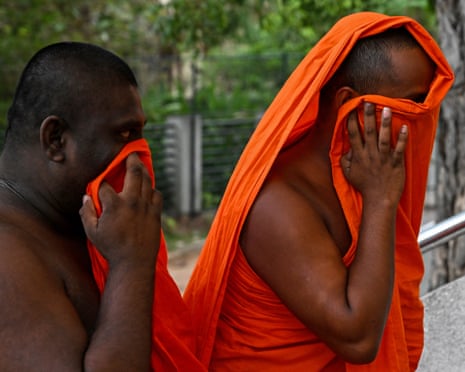 It was the largest single detection of kush at the South Asian country’s main international airport, according to officials, with the haul valued at 1.1bn rupees. Photograph: Ishara S Kodikara/AFP/Getty Images
theguardian.com
It was the largest single detection of kush at the South Asian country’s main international airport, according to officials, with the haul valued at 1.1bn rupees. Photograph: Ishara S Kodikara/AFP/Getty Images
theguardian.com
Sri Lanka arrests 22 Buddhist monks after airport cannabis seizure, 110kg of kush found in false-wall luggage at Bandaranaike, clergy status meets a smuggling route running through Bangkok
Customs officers at Bandaranaike International Airport near Colombo detained 22 Buddhist monks after finding 110kg of high-grade cannabis concealed in their luggage, according to The Guardian. Police described the haul as the largest single detection of “kush” at Sri Lanka’s main airport, with officials valuing it at about 1.1 billion Sri Lankan rupees. The monks—mostly junior trainees from temples across the country—were stopped on arrival after a four-day trip to Bangkok.
Investigators say each monk carried roughly five kilograms hidden behind false walls in suitcases, a method that requires time, tools, and pre-planning rather than opportunism. Social-media video showed the detainees shielding their faces with their robes as they were escorted through the terminal; other reporting cited by The Guardian says photos on the monks’ phones showed the group holidaying in lay clothing. A 23rd monk, alleged to have organised the trip, was arrested later in a Colombo suburb; police say he told the others the parcels were a “donation” and that a van would collect them.
The case lands in a society where the saffron robe often functions as informal identification, smoothing interactions with police, officials, and the public. Airports are built to process large volumes quickly, and screening systems lean heavily on behavioural cues and risk profiling; a group of monks returning together from Thailand is not the typical profile for a high-value narcotics shipment. That gap—between who gets scrutinised and who is waved through—creates space for smugglers to rent credibility, whether by recruiting participants who understand the job or by using couriers who can plausibly claim they did not.
The Bangkok-Colombo corridor is already a known pathway in Sri Lanka’s drug enforcement: The Guardian notes that a British woman, Charlotte May Lee, was arrested at the same airport last year with 46kg of cannabis after travelling from Bangkok, saying it had been planted in her luggage. Large seizures tend to be followed by public statements and short-term tightening, but the economics do not change unless detection becomes routine and penalties become predictable. When the couriers are members of a protected institution, accountability also becomes a test of whether rules apply evenly once the cameras leave.
The monks were produced before a magistrate on the Sunday after their arrest and ordered held for further questioning. The luggage, customs officers said, had been built to hide what it carried.