
UAE quits OPEC
Abu Dhabi cites national interest and Hormuz volatility, cartel loses one of the few members with real spare capacity
Images
 UAE decides to leave OPEC, citing focus on its national interest
euronews.com
UAE decides to leave OPEC, citing focus on its national interest
euronews.com
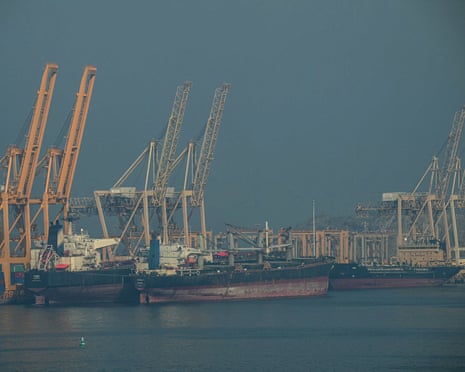 Tankers at the Khor Fakkan container terminal in the United Arab Emirates. Photograph: Giuseppe Cacace/AFP/Getty Images
theguardian.com
Tankers at the Khor Fakkan container terminal in the United Arab Emirates. Photograph: Giuseppe Cacace/AFP/Getty Images
theguardian.com
The United Arab Emirates will leave OPEC on 1 May 2026, ending a membership that dates back to Abu Dhabi’s entry in 1967. The UAE said in a statement carried by state news agency WAM that the move reflects “national interest” and commitments to investors and customers, while insisting it remains a “responsible and reliable” producer. Reuters, via the Guardian, reports the exit takes effect this week and links the decision to shipping constraints and security risks around the Strait of Hormuz.
The timing matters because the cartel’s leverage rests less on today’s production than on spare capacity that can be brought on quickly when supply is disrupted. Analysts quoted by Reuters note that, alongside Saudi Arabia, the UAE is one of the few OPEC members with meaningful spare capacity—the buffer that lets the group calm markets or tighten them. With traffic through Hormuz disrupted by the Iran war and threats to Gulf shipping, the immediate market impact may be limited: producers cannot easily move extra barrels through a bottleneck that is already binding. But once the chokepoint eases, the incentives change. Outside OPEC and OPEC+, Abu Dhabi can raise output without negotiating quotas, capturing revenue and market share while leaving Riyadh to carry more of the political and fiscal cost of “stabilising” prices.
For Europe, the departure lands in the middle of an energy shock driven by events it does not control. Euronews notes that Hormuz normally handles about a fifth of the world’s seaborne crude oil trade, and the UAE explicitly cited volatility in the Gulf and the strait’s disruption as shaping its decision. That juxtaposition—security risk rising while coordination mechanisms weaken—pushes risk premia into oil and gas prices, with knock-on effects for European inflation, industrial costs, and budget politics. A structurally weaker OPEC also makes price swings harder to smooth: when fewer producers accept limits in the good times, fewer barrels are held back to release in the bad times.
The UAE says leaving does not change its commitment to market stability. What changes on 1 May is that any future restraint will be voluntary rather than contractual.