
King Charles arrives in United States
Security review follows Washington Hilton shooting and UK-US Iran rift, pomp proceeds while leverage stays elsewhere
Images
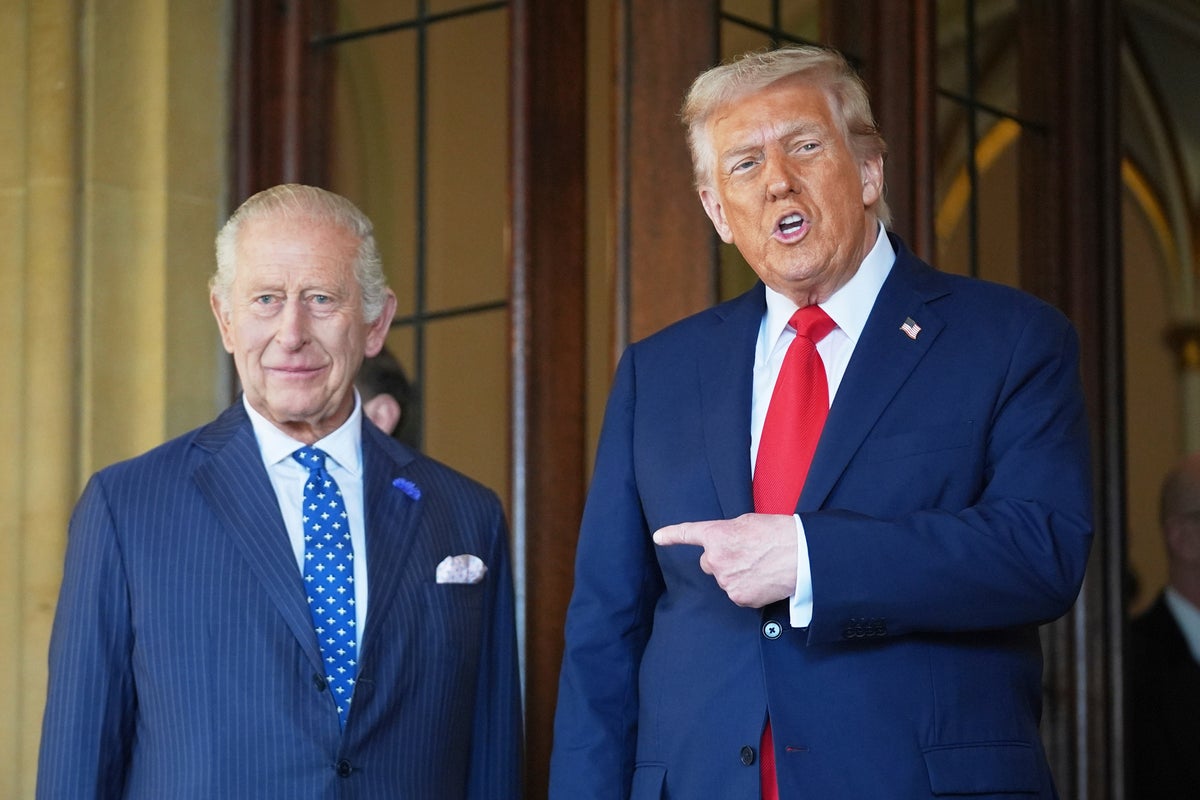 King Charles III arrives in United States on a delicate mission to restore the UK-US relationship
independent.co.uk
King Charles III arrives in United States on a delicate mission to restore the UK-US relationship
independent.co.uk
King Charles III landed in the United States on Monday for a four-day state visit tied to America’s 250th anniversary celebrations, according to The Independent. The trip went ahead after a last-minute security review triggered by Saturday’s shooting at the White House Correspondents’ Association dinner in Washington, where President Donald Trump was rushed from the room.
The choreography is familiar—state dinner, ceremonial events, the language of a “special relationship”—but the incentives are less sentimental. Buckingham Palace wants a durable asset: a monarchy that can still convene, soothe and flatter across administrations, and a Britain that looks diplomatically weighty even when it lacks leverage. The White House gets a different kind of value: images of pomp and proximity that read domestically as validation, especially for a president who treats foreign relationships as televised bargaining.
Behind the pageantry sits a working dispute between governments. Trump has criticised Prime Minister Keir Starmer for refusing to join US military attacks on Iran, and has derided allies as unwilling to fight. The Independent reports that a leaked Pentagon email suggested Washington could reassess its posture on UK sovereignty over the Falkland Islands—an issue that rarely moves in polite diplomacy but concentrates minds in London because it is expensive to defend and politically impossible to trade.
That asymmetry shapes the visit. Britain sends a head of state who does not vote in Parliament and cannot sign treaties, yet can host and absorb slights; it is a way of keeping channels open when the prime minister’s room for manoeuvre is narrow. Trump has repeatedly described Charles as a friend and insisted the chill with Downing Street will not affect the royal programme. In practice, separating “the king” from “the government” is the point: it allows both sides to bank the spectacle while leaving the arguments to officials.
The Independent quotes a University of Exeter academic, Kristofer Allerfeldt, describing two parallel objectives: Britain reinforcing long-term ties and soft power, and Trump pursuing optics that resemble a meeting of “two gilded monarchs”. UK domestic politics adds another constraint. Liberal Democrat leader Ed Davey urged cancellation and warned about embarrassment risk—an argument that implicitly acknowledges how little control a visiting delegation has over what a host president might say on camera.
The trip’s first test is not a communiqué but a timetable: after a shooting forced a security review, the visit still proceeded, and the state dinner remained on the calendar.