
SVT streams Great Moose Migration for three weeks
450-hour Ångerman river broadcast draws global slow-TV audience, DIY cameras and long waits turn wildlife into appointment viewing
Images
 Hooves into view … The Ångerman river in northern Sweden on The Great Moose Migration. Photograph: SVT
theguardian.com
Hooves into view … The Ångerman river in northern Sweden on The Great Moose Migration. Photograph: SVT
theguardian.com
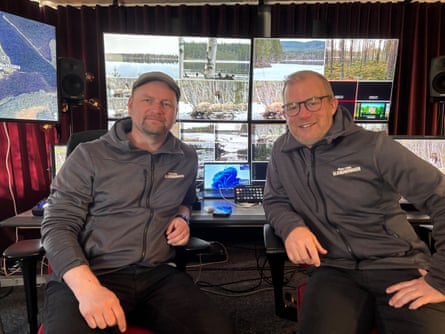 Hooving into view …. Stefan Edlund and Johan Erhag.
theguardian.com
Hooving into view …. Stefan Edlund and Johan Erhag.
theguardian.com
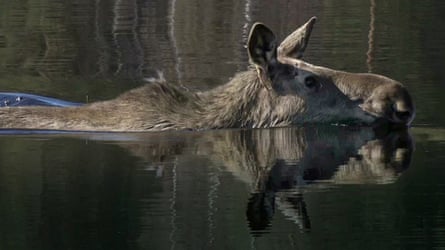 Close encounter of the furred kind … a moose traversing the Ångerman river. Photograph: SVT
theguardian.com
Close encounter of the furred kind … a moose traversing the Ångerman river. Photograph: SVT
theguardian.com
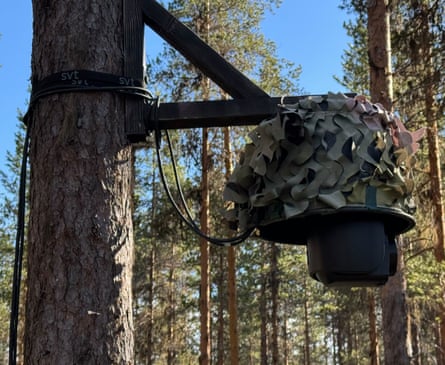 Have I got moose for you … one of the production’s cameras up a tree. Photograph: Stefan Edlund
theguardian.com
Have I got moose for you … one of the production’s cameras up a tree. Photograph: Stefan Edlund
theguardian.com
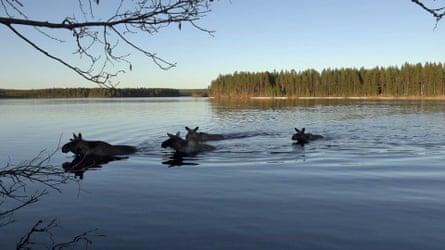 Going swimmingly … Moose caught on camera. Photograph: SVT
theguardian.com
Going swimmingly … Moose caught on camera. Photograph: SVT
theguardian.com
For three weeks each spring, Swedish public broadcaster SVT runs a 24-hour livestream from the forests and riverbanks of Västernorrland: 450 hours of fixed cameras trained on a five-mile bend of the Ångerman river, waiting for migrating moose to appear.
According to The Guardian, the production now uses about 30 cameras, 42 microphones and more than 15 miles of cabling, much of it threaded through wilderness and across a river crossing that moose have used for millennia. Viewers can follow along with an embedded chat, where the audience count can jump from a few hundred to tens of thousands when an animal finally steps into frame. The show’s makers say that in seven seasons the highest number of simultaneous “swimmers” — people watching as a moose crosses the river — was 87 in 2023, and they hope to break 100 this year.
The format is almost aggressively uneventful. The average wait between sightings is roughly 400 minutes, The Guardian reports, and the broadcast is unedited: long stretches of wind in trees, rippling water, and empty shoreline. That scarcity is part of the appeal. Unlike highlight-driven wildlife documentaries, the stream makes the audience sit through the same uncertainty as the animals’ real route imposes on the camera crew. When something happens, it is not a clip; it is a shared moment that arrives on its own schedule.
The production details underline why “slow TV” travels well beyond Scandinavia. SVT’s setup is described as shoestring and improvised: cameras not designed for outdoor use are weatherproofed with hardware-store solutions such as upturned plastic buckets and camouflage netting, and power comes from local households. One year, mice reportedly chewed through a crucial fibreoptic cable, forcing an urgent repair. The constraints are visible in the image and sound, but they also make the broadcast legible as a real-time event rather than a polished product.
The migration stream also solves a problem that most modern media has created for itself: how to hold attention without escalating stakes. There is no host, no narration, no manufactured conflict — just a predictable seasonal movement that still refuses to be scheduled. The audience supplies its own commentary, turning a quiet feed into a temporary public square.
On the Ångerman riverbank, SVT’s cameras will keep rolling whether or not the stars show up. The only guarantee is that the broadcast will be live when they do.