
ICC confirms Duterte crimes against humanity charges
Philippines drug war killings move to full trial stage, arrest and transfer to The Hague show enforcement hinges on custody not rhetoric
Images
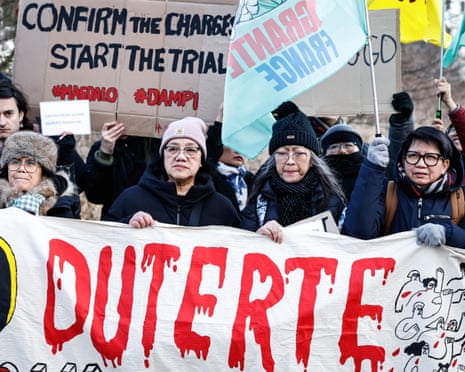 Protesters outside the international criminal court in The Hague in February call for the former president to face charges. Photograph: Simon Wohlfahrt/AFP/Getty Images
theguardian.com
Protesters outside the international criminal court in The Hague in February call for the former president to face charges. Photograph: Simon Wohlfahrt/AFP/Getty Images
theguardian.com
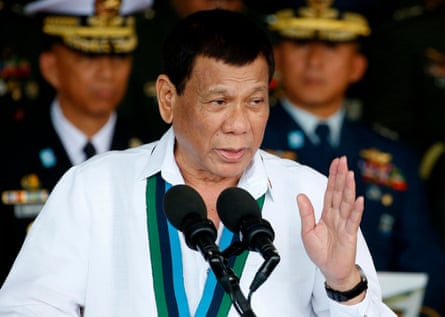 Rodrigo Duterte, seen here in 2017, stands accused of creating a ‘death squad’. Photograph: Bullit Marquez/AP
theguardian.com
Rodrigo Duterte, seen here in 2017, stands accused of creating a ‘death squad’. Photograph: Bullit Marquez/AP
theguardian.com
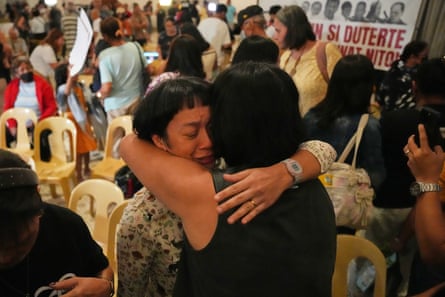 Family members of those killed during Rodrigo Duterte’s ‘war on drugs’ celebrate the ICC decision. Photograph: Aaron Favila/AP
theguardian.com
Family members of those killed during Rodrigo Duterte’s ‘war on drugs’ celebrate the ICC decision. Photograph: Aaron Favila/AP
theguardian.com
International Criminal Court judges have confirmed charges of crimes against humanity against former Philippine president Rodrigo Duterte, clearing the way for a full trial over killings linked to his “war on drugs”. The Guardian reports the pre-trial chamber unanimously found “substantial grounds” to believe Duterte was responsible for murder and attempted murder as part of a “widespread and systematic attack” on civilians.
The case reaches back beyond Duterte’s 2016–2022 presidency to his earlier decades as mayor of Davao City, where prosecutors say he helped build and direct a local “death squad” model later scaled nationally. The ICC prosecutor has previously cited estimates of up to 30,000 civilian deaths connected to anti-drug operations, while Philippine police have acknowledged more than 6,000 deaths in official operations. Victims were disproportionately men from poor urban neighbourhoods, often shot in the street or in their homes, a pattern that made the campaign legible not as sporadic excess but as a repeatable method.
In court filings and at earlier hearings, prosecutors have argued Duterte sat “at the very heart” of the campaign: authorising killings, selecting targets, promising immunity and providing financial support to perpetrators. The Guardian notes the prosecution relied heavily on Duterte’s own public statements, including threats to “wipe out” drug suspects and claims that he would order executions within 24 hours. That rhetorical record matters because it is cheap to produce, widely distributed, and difficult to reinterpret once it becomes part of an evidentiary timeline.
Duterte, now 80, denies wrongdoing. His defence has tried to stop the case on jurisdictional grounds and has argued he is unfit to stand trial due to cognitive decline. Judges rejected the jurisdiction challenge. The fitness question remains a practical constraint: international trials are slow, and a defendant’s age can turn legal accountability into a race against time.
The politics of enforcement sit behind the legal language. Duterte was arrested in Manila last year and flown to The Hague, a reminder that the ICC’s reach depends less on courtroom authority than on a state’s willingness—or inability—to shield a former leader. For families represented by the group Rise Up for Life and for Rights, the confirmation decision is not a verdict but a signal that the case will not be dismissed on procedural grounds.
A trial date has not yet been set. Duterte did not attend February pre-trial hearings, citing frailty and memory loss.