
Hay fever season starts earlier across Europe
Lancet review finds climate-linked shift of one to two weeks in birch alder and olive pollination, longer symptoms push costs onto households and clinics
Images
 bbc.com
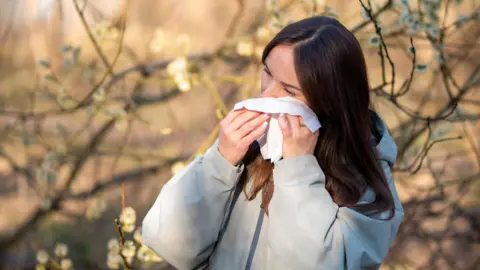 Getty Images A young woman with long brown hair wearing a grey jacket dabs her eye with tissue, with flowering trees in the background behind her
bbc.com
Getty Images A young woman with long brown hair wearing a grey jacket dabs her eye with tissue, with flowering trees in the background behind her
bbc.com
 Getty Images A woman holds up two packs of antihistamine pills in one hand and nasal and eye sprays on in the other, along with a tissue
bbc.com
Getty Images A woman holds up two packs of antihistamine pills in one hand and nasal and eye sprays on in the other, along with a tissue
bbc.com
Hay fever season in parts of Europe is now starting up to two weeks earlier than it did in the 1990s, according to a new review in The Lancet Public Health cited by the BBC. The analysis, written by 65 scientists, links earlier pollination in common European trees such as birch, alder and olive to warmer conditions between 2015 and 2024 compared with 1991 to 2000. For millions who rely on timing—when to start medication, when to plan outdoor work, when to sit exams—the calendar shift is the story.
The practical effect is not just more sneezing. Allergy UK tells the BBC that prolonged symptoms mean poorer sleep and missed work, and that for some teenagers active hay fever can be enough to drag exam performance down by a grade. Asthma and Lung UK warns that pollen-driven inflammation can aggravate asthma and COPD, turning a seasonal nuisance into emergency inhaler use and flare-ups that end up in clinics. The same weather pattern that makes pollen travel—warm, dry days—also concentrates exposure into sharp spikes, the “pollen bomb” effect described in the BBC report.
Healthcare systems are set up to treat the peak, not the creep. Longer seasons stretch demand for GP appointments, pharmacy consultations and prescription refills, while leaving the costs of adaptation—air filters, masks, extra cleaning, time off work—sitting with households. The report’s authors say more research is still needed on whether climate change is increasing total pollen production as well as shifting timing, but the direction of travel is already visible in the onset dates.
For individuals, clinicians quoted by the BBC recommend what amounts to routine self-management on a tighter schedule: non-drowsy long-acting antihistamines, steroid nasal sprays and eye drops, used together because they target different symptoms. Pharmacists also push “hygiene” measures that treat pollen like grit—shower after being outdoors, change clothes, and remember that pets bring pollen indoors on fur. NHS-style advice extends to small barriers: petroleum jelly at the nostrils, sunglasses or masks on high-count days, and regular vacuuming.
The study’s headline finding is simple: pollination in parts of Europe is happening earlier, and hay fever sufferers are being asked to reorganise their spring around it.