
Ukraine prepares Druzhba restart
Zelenskyy links pipeline repair to release of €90bn EU loan, Russian energy transit still buys votes in Brussels
Images
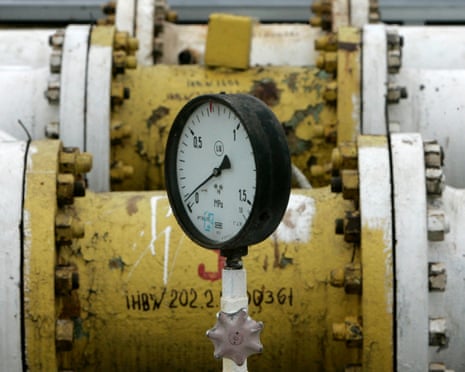 Meter at a station on the Druzhba pipeline in Brody, 460km west of Kyiv. Photograph: Gleb Garanich/REUTERS
theguardian.com
Meter at a station on the Druzhba pipeline in Brody, 460km west of Kyiv. Photograph: Gleb Garanich/REUTERS
theguardian.com
Ukraine says it has repaired damage to the Druzhba oil pipeline and is ready to resume pumping Russian crude to Hungary and Slovakia, a move Kyiv argues removes the last pretext for blocking a long-stalled EU loan package worth €90bn.
Volodymyr Zelenskyy said the pipeline is prepared to restart after a Russian strike disrupted operations, and EU foreign policy chief Kaja Kallas told reporters in Luxembourg she expected a decision on the loan “within 24 hours”, according to the Guardian. Reuters, cited by the Guardian, quoted an industry source saying pumping would resume on Wednesday.
The episode is a reminder of how Europe’s war finance has become entangled with the physical plumbing of its energy system. Hungary’s Viktor Orbán had held up the EU loan for months, and the Guardian reports Zelenskyy explicitly linked Budapest’s objections to the pipeline outage: with Druzhba back online, he said, “there can now be no grounds for blocking it.” That is a narrow procedural victory for Kyiv, but it sits awkwardly beside Zelenskyy’s repeated public calls for Europe to stop relying on Russian energy supplies in the first place.
For Budapest and Bratislava, Druzhba is less a geopolitical symbol than a supply line that keeps refineries running and fuel prices contained. For Kyiv, it is leverage: a transit route that can be repaired, throttled or become collateral damage, and a bargaining chip in EU decision-making where unanimity and veto threats still matter. For Brussels, the loan is framed as solidarity with Ukraine, but the timing shows how easily “support” becomes conditional on keeping certain member states’ domestic energy and budget pressures manageable.
The pipeline story also lands amid widening concern about Russian activity beyond the front. Britain’s National Cyber Security Centre chief Richard Horne is due to warn at the CyberUK conference in Glasgow that Moscow is exporting its wartime methods into “sustained Russian hybrid activity” aimed at the UK and Europe, the Guardian reports. Sweden, Poland, Denmark and Norway have all recently reported suspected Russia-linked attempts against critical infrastructure, including power plants and dams.
A pipeline repaired after an attack can restart in a day. A continent that funds its war policy through unanimity rules still needs a functioning valve to do it.