
Trophy hunting funds conservation in Mozambique reserve
Niassa quotas sell kills to pay for patrols across Switzerland-sized landscape, scarcity raises both protection budgets and price tags
Images
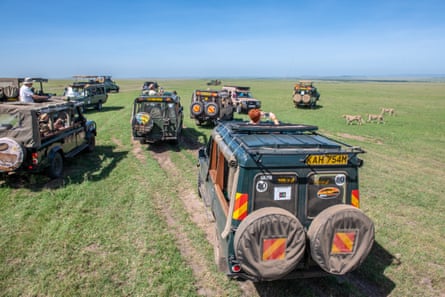 Tourist view a group of cheetahs in the Maasai Mara national reserve in Kenya. Photograph: VW Pics/Universal Images Group/Getty Images
theguardian.com
Tourist view a group of cheetahs in the Maasai Mara national reserve in Kenya. Photograph: VW Pics/Universal Images Group/Getty Images
theguardian.com
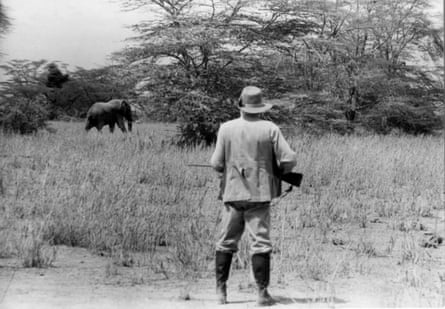 Ernest Hemingway stalks an elephant in Kenya in 1952. Photograph: Earl Theisen Collection/Getty Images
theguardian.com
Ernest Hemingway stalks an elephant in Kenya in 1952. Photograph: Earl Theisen Collection/Getty Images
theguardian.com
A hunting party in Mozambique’s Niassa Special Reserve spent days tracking a Cape buffalo before a single shot was taken, a scene The Guardian’s Cal Flyn uses to describe the central bargain of trophy hunting in parts of Africa: a small number of animals are deliberately killed each year to finance the protection of the rest. Niassa alone covers about 4.2 million hectares—larger than Switzerland—and holds elephants, leopards and roughly 1,000 lions, alongside quotas that set aside specific animals for paying clients.
The argument from operators is straightforward: conservation needs cash, and in remote landscapes the fastest payer is often a foreign hunter. The Guardian notes that trophy hunting kills tens of thousands of wild animals globally each year, and in sub-Saharan Africa hunting interests control large tracts of land that would otherwise be hard to fund as protected areas. In this model, the “product” is not meat but permission—access to land and to a regulated kill—sold at prices high enough to cover anti-poaching patrols, staff salaries and the basic logistics of running vast reserves.
The story’s details show how the industry tries to wrap that transaction in a code. Hunters and guides emphasise “fair chase”, where the animal is free-ranging and has a chance to escape, drawing a distinction from “canned hunting” in fenced enclosures, particularly for captive-bred lions. The larger and wilder the area, the stronger the claim that the hunt resembles sport rather than slaughter. Niassa’s scale is part of the marketing.
But the economics also reveal why the model is contested. When revenue depends on a handful of high-paying clients, incentives tilt toward maintaining a pipeline of huntable animals and a narrative that the hunts are indispensable. The Guardian recalls the 2014 case in Namibia where a Texas hunter paid $350,000 at auction to kill a critically endangered black rhino, with organisers presenting the sale as a conservation fundraiser. The episode illustrates a recurring pattern: the same scarcity that makes an animal valuable to protect can also make it valuable to shoot.
Critics, Flyn reports, frame the arrangement as neocolonial: wealthy outsiders purchasing the right to kill animals on African land, while local communities bear the long-term ecological and security consequences. The reliance on hunting fees can also crowd out alternative funding models—tourism, private conservancies, or direct community revenue-sharing—if the easiest money comes from a small number of foreign permits rather than building broad-based local benefits.
Niassa’s “protected, but not all” reality is the concrete endpoint of the debate. A reserve can be described as safeguarded and still operate with an annual list of animals marked for sale, with the conservation budget balanced on the assumption that someone will pay to pull the trigger.