
Report alleges sexual assault used to drive Palestinians from West Bank
West Bank Protection Consortium documents 16 cases since 2023, families cite harassment of girls as tipping point to leave
Images
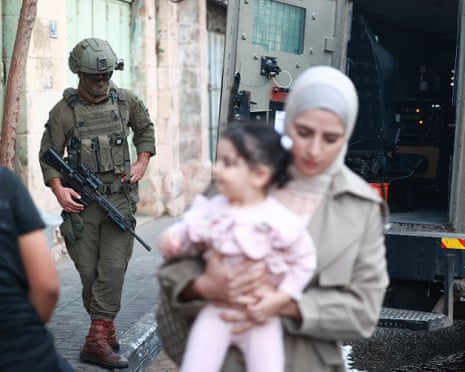 Israeli soldiers standing guard in an alleyway in Hebron, West Bank. Photograph: Mohammad Nazal/Middle East Images/AFP/Getty Images
theguardian.com
Israeli soldiers standing guard in an alleyway in Hebron, West Bank. Photograph: Mohammad Nazal/Middle East Images/AFP/Getty Images
theguardian.com
Israeli soldiers and settlers have used sexual assault and sexualised humiliation in the occupied West Bank in ways that push Palestinian communities to leave, according to a report by the West Bank Protection Consortium.
The report documents 16 cases of conflict-related sexual violence recorded over the past three years, while warning that stigma and fear mean the true number is likely higher. Accounts include forced nudity, invasive body searches, threats of rape, Israelis exposing themselves including to minors, and the taking and distribution of degrading photographs of detainees.
According to The Guardian, the consortium argues that sexualised violence is functioning as a tool of coercion alongside other pressures that have intensified since 2023. In household surveys cited in the report, more than two-thirds of respondents said rising violence against women and children — including harassment aimed at girls — was a tipping point in decisions to leave.
The alleged abuses described are not limited to checkpoints or detention. One anonymised case describes two female soldiers conducting a painful internal search inside a woman’s home after entering with settlers, ordering her to undress for a full-body search and making derogatory comments while touching intimate areas, the report says.
Men and boys are also described as targets. The report cites an incident last month in Khirbet Humsa in the northern Jordan valley where witnesses said settlers stripped a 29-year-old man, zip-tied his genitals and beat him in front of residents and international activists. Another case from October 2023 in Wadi as-Seeq describes settlers and soldiers stripping and beating detainees, urinating on them, attempting to rape one with a broom handle, and circulating photographs of naked captives.
The consortium says the social effects extend beyond immediate physical harm. Women reportedly stop working and girls quit school to reduce the risk of encounters with Israelis who might assault or harass them. The report also links the climate of threat to an increase in early marriage, citing at least six families interviewed who arranged weddings for girls aged 15 to 17 as a form of protection.
Israeli soldiers are described as present during some incidents and as repeatedly failing to prevent abuse or ensure accountability, according to the report. The case studies are anonymised, and the consortium frames the pattern as part of a broader dynamic of displacement.
The report’s findings add a further layer to the West Bank’s already combustible mix of military control, settlement expansion and communal violence: in several of the cases, the alleged assaults are described not as random brutality but as pressure applied at the point where families decide whether they can remain.
In the accounts gathered, the decision to move is sometimes described in the same terms as the abuse itself — a calculation of what might happen next.