
Trump says US-Iran ceasefire extension unlikely
Blockade enforcement and fuel stockpiles become the real timetable, EU counts months of jet fuel while talks drift
Images
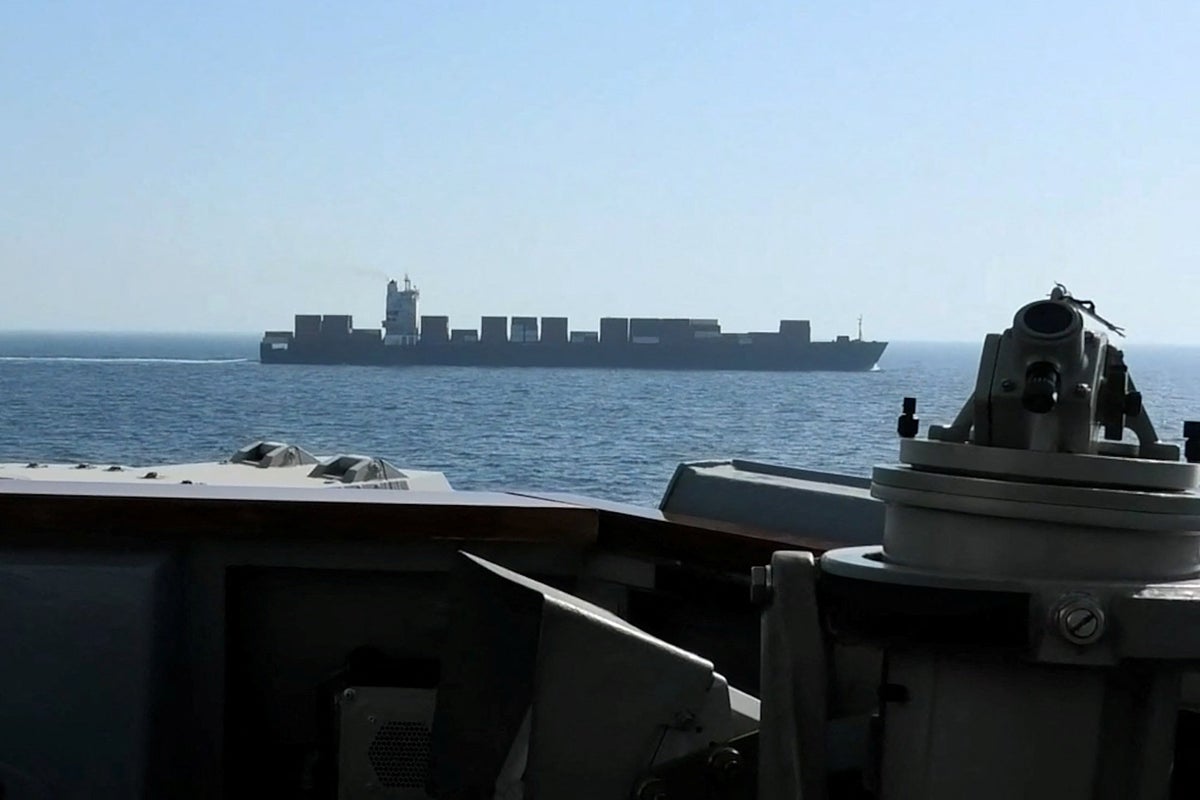
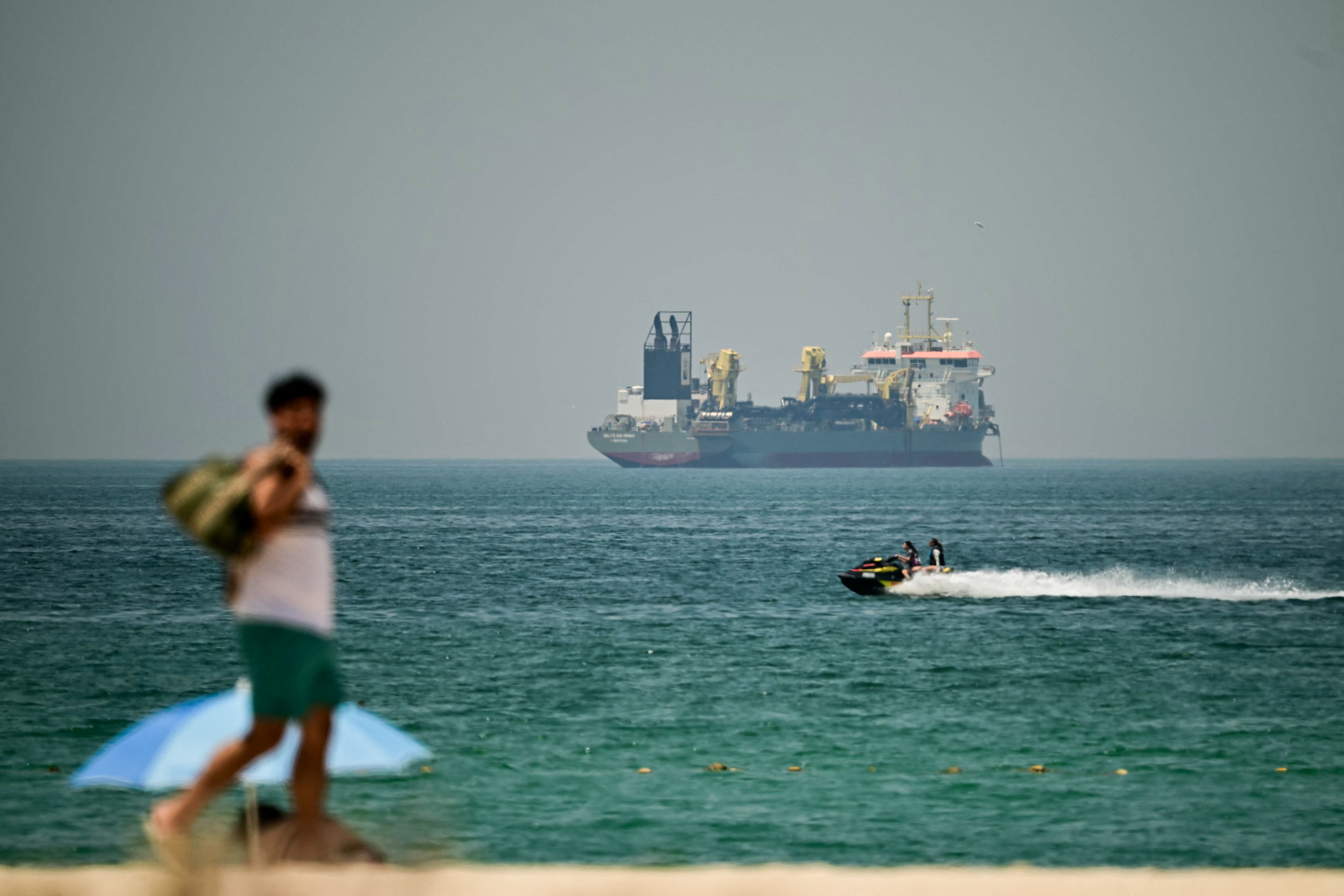 A cargo ship in the Strait of Hormuz, which Iran closed again on Sunday (AFP/Getty)
AFP/Getty
A cargo ship in the Strait of Hormuz, which Iran closed again on Sunday (AFP/Getty)
AFP/Getty
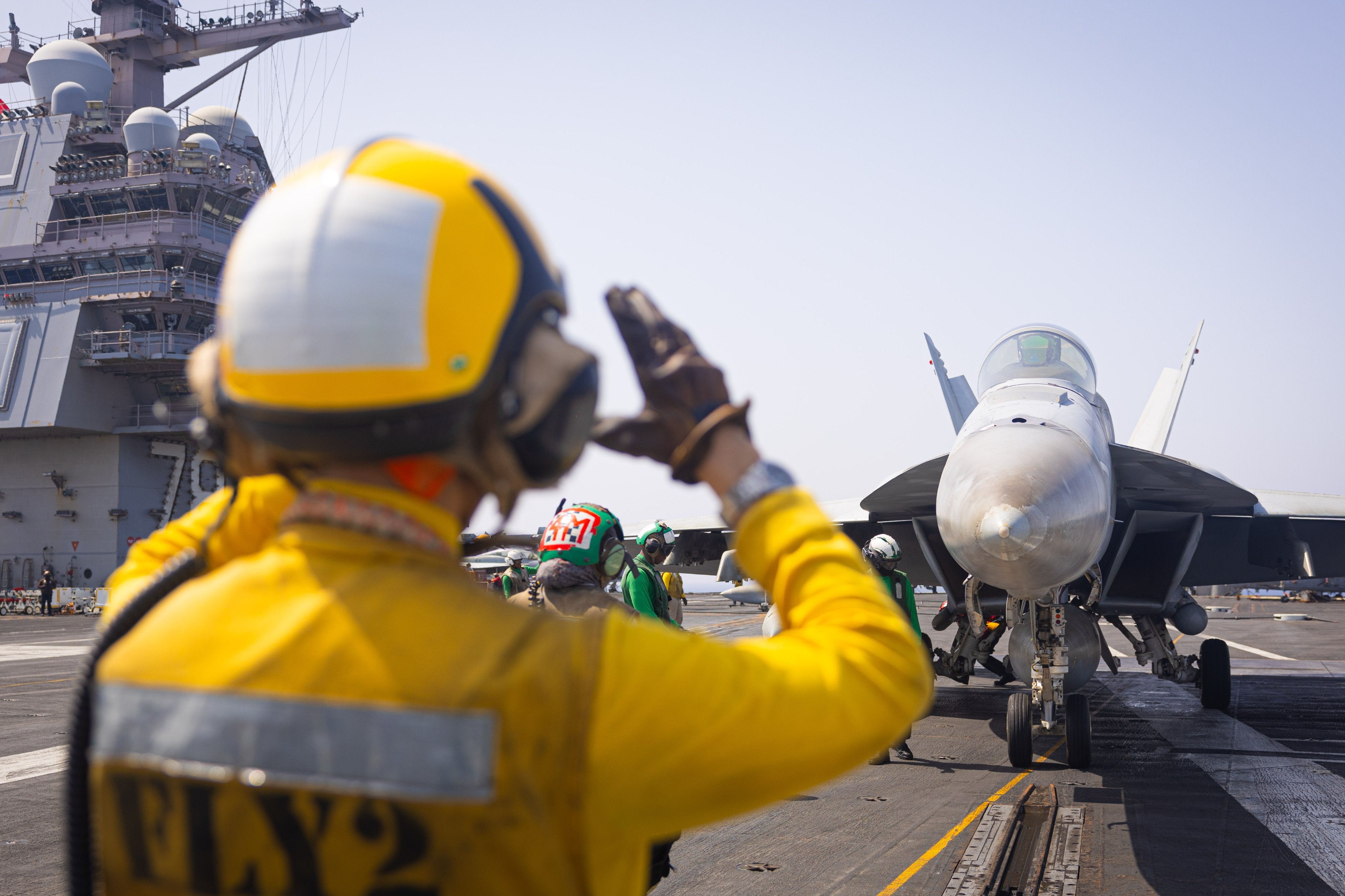 Sailors conduct flight operations aboard USS Gerald R. Ford (CVN 78) in the Red Sea, April 19 (US Centcom)
US Centcom
Sailors conduct flight operations aboard USS Gerald R. Ford (CVN 78) in the Red Sea, April 19 (US Centcom)
US Centcom
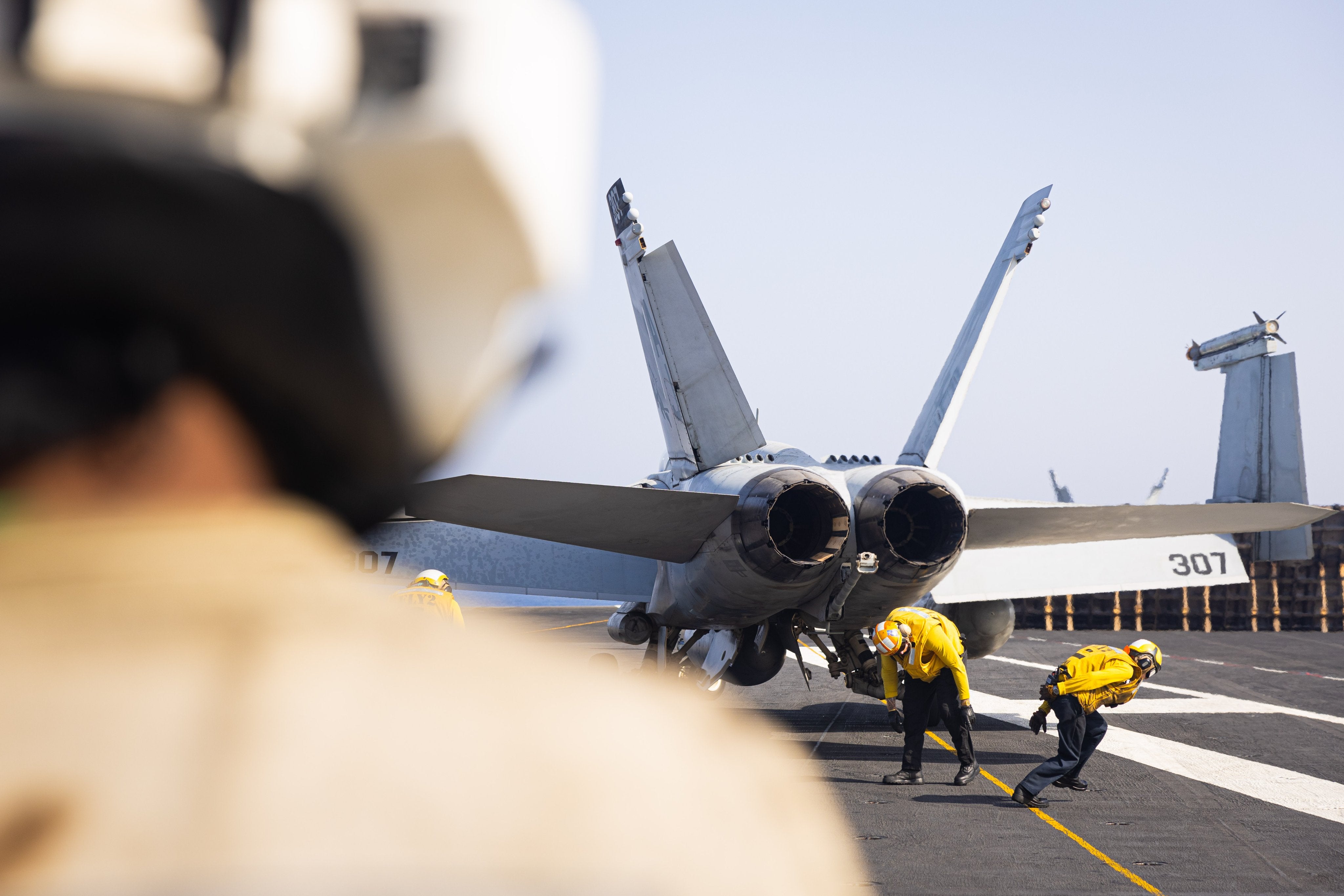 Sailors conduct flight operations aboard USS Gerald R. Ford (CVN 78) in the Red Sea, April 19 (US Centcom)
US Centcom
Sailors conduct flight operations aboard USS Gerald R. Ford (CVN 78) in the Red Sea, April 19 (US Centcom)
US Centcom
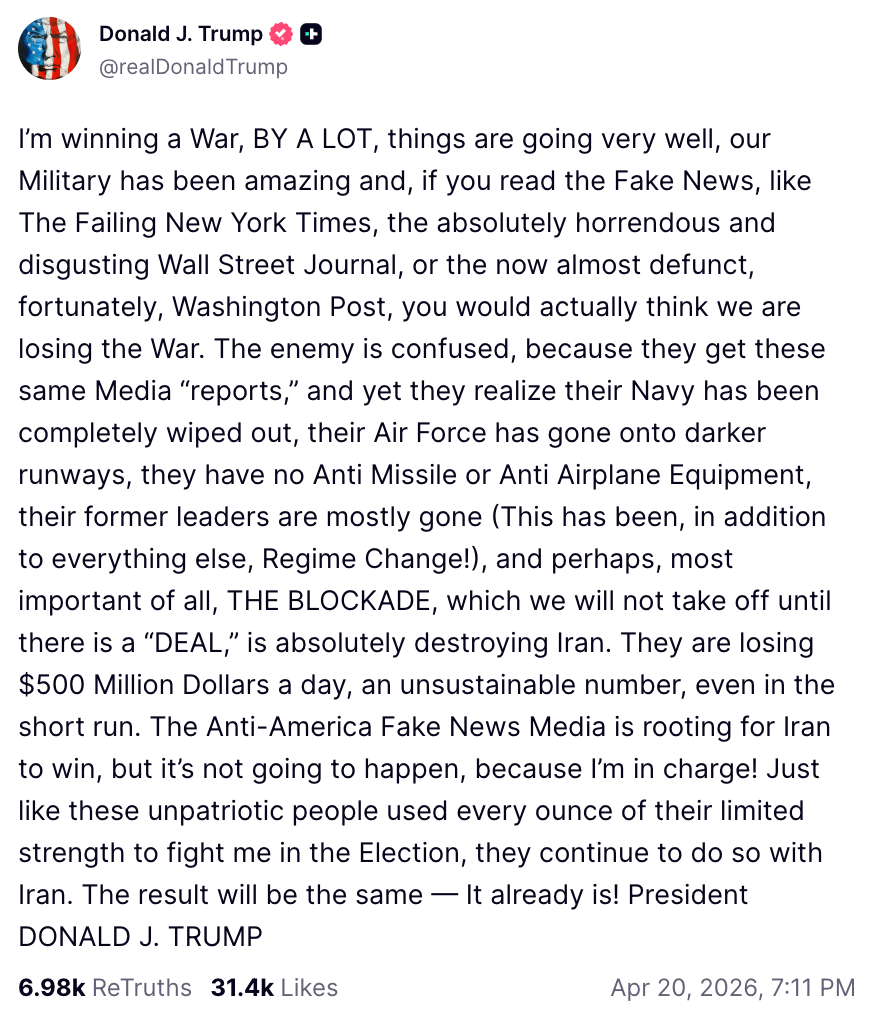 In full: 'I'm winning a War, BY A LOT', says Trump (Donald Trump)
Donald Trump
In full: 'I'm winning a War, BY A LOT', says Trump (Donald Trump)
Donald Trump
 independent.co.uk
Donald Trump said the two-week US-Iran ceasefire would expire on Wednesday evening Washington time and described an extension as “highly unlikely”, as Tehran warned that the US naval blockade was turning talks into what it called a “table of surrender”.
The remarks, reported by the Independent, come after US forces seized the Iranian-flagged container ship Touska near the Strait of Hormuz, an interception that included disabling fire into the vessel’s engine room and a helicopter-borne boarding by US marines. Iran’s parliamentary speaker Mohammad Bagher Ghalibaf said Washington was “imposing a siege” and violating the ceasefire, arguing that pressure tactics were being used to justify a return to fighting.
The immediate market question is not whether oil is flowing today, but whether insurers and financiers will keep pricing the Gulf as a routine trade lane. A ceasefire that exists on paper while ships are stopped at gunpoint produces a different risk profile than open hostilities: it invites selective enforcement, miscalculation, and retaliation that can be calibrated to hit shipping without formally reopening war. The US position—blockade “until there is a ‘DEAL’”, in Trump’s words—also shifts leverage from diplomats to the parties who can impose costs fastest: navies, sanctions offices, and the underwriters who decide what can be shipped.
European governments are already modelling the difference between headline disruption and sustained shortage. The Independent cited a Dutch estimate that the EU could cover jet fuel demand for “about five months” using domestic output and strategic reserves if current disruptions persist, with diesel and petrol covered for longer. That kind of arithmetic matters because airlines and refineries cannot run on political statements; they run on delivery schedules and credit lines, both of which tighten when war-risk premiums rise.
The diplomatic track remains uncertain. Reports of a second round of direct talks in Islamabad have been contradictory, with Iran delaying confirmation of attendance and US officials signalling travel plans without a firm meeting. Meanwhile, Israel and Lebanon are preparing to resume talks in Washington on Thursday, a separate channel that underscores how quickly regional files become interlinked when shipping, fuel, and ceasefires are negotiated under pressure.
Trump’s deadline is now fixed to a specific evening in Washington. The blockade is already being enforced in the Gulf of Oman, where the Touska’s engine room was left with a hole big enough to stop it moving.