
UK Supreme Court orders planners to count downstream oil emissions
Horse Hill case turns local permits into national climate tests, councils learn that missing numbers become litigation
Images
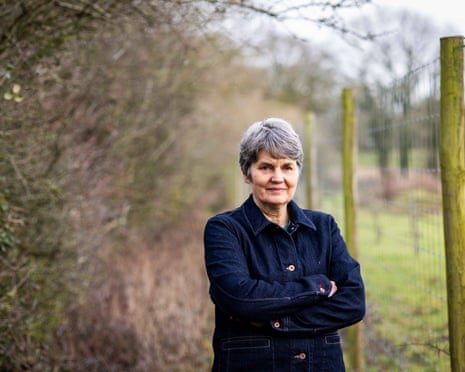 Sarah Finch in Surrey in January. She has been awarded the Goldman Environmental prize, alongside six other women. Photograph: Goldman Environmental prize
theguardian.com
Sarah Finch in Surrey in January. She has been awarded the Goldman Environmental prize, alongside six other women. Photograph: Goldman Environmental prize
theguardian.com
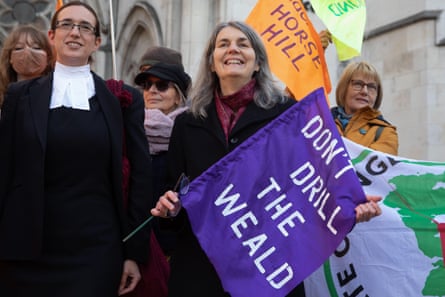 Sarah Finch, fellow activists and her legal team outside London’s high court in November, 2021. Photograph: Mark Kerrison/Alamy Stock Photo/Alamy Live News.
Alamy Live News.
Sarah Finch, fellow activists and her legal team outside London’s high court in November, 2021. Photograph: Mark Kerrison/Alamy Stock Photo/Alamy Live News.
Alamy Live News.
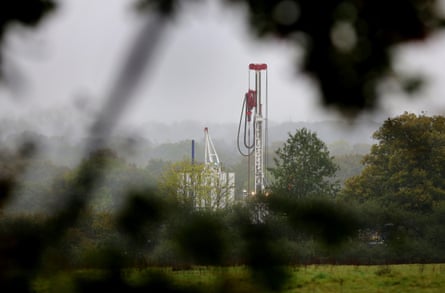 An exploratory drilling rig on the Horse Hill site in 2014. Photograph: Gareth Fuller/PA
theguardian.com
An exploratory drilling rig on the Horse Hill site in 2014. Photograph: Gareth Fuller/PA
theguardian.com
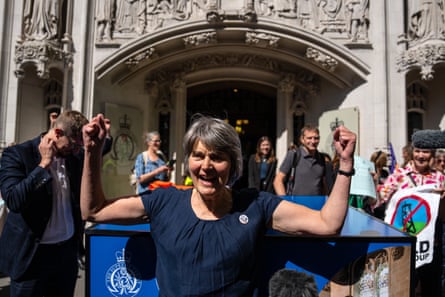 Finch celebrates outside the supreme court in London after the landmark ruling in June 2024. Photograph: Carl Court/Getty Images
theguardian.com
Finch celebrates outside the supreme court in London after the landmark ruling in June 2024. Photograph: Carl Court/Getty Images
theguardian.com
Sarah Finch’s fight over a small oil site in Surrey ended at the UK Supreme Court with a ruling that forces planners to count the emissions from burning the fuel they approve.
The dispute began at Horse Hill, near Gatwick, where Horse Hill Developments sought permission to drill and produce oil over 25 years. According to The Guardian, Surrey County Council approved the project despite local objections, and despite having declared a “climate emergency” months earlier. The environmental statement for the plan covered emissions from the site itself—drilling, machinery and traffic—but not the carbon dioxide released when the oil would be refined and burned.
That omission mattered because the bulk of the climate impact sits downstream. The Guardian reports campaigners calculated about 10.6 million tonnes of CO2 from combusting the oil—often described as “scope 3” emissions. Surrey planners initially told the developer to include them, then dropped the requirement after the company resisted. Finch and the Weald Action Group challenged the approval through judicial review, arguing the decision could not be lawful if it ignored the predictable end-use emissions.
The Supreme Court ultimately agreed, producing a precedent that reaches well beyond one well pad. In practice, the ruling turns many oil and gas applications into a referendum on the emissions of the product itself, not just the local disturbance of producing it. That shifts leverage to courts and paperwork: if planning authorities must model downstream emissions, opponents gain a concrete figure to litigate and a new procedural hook to delay or overturn consents.
The case also exposes how climate policy is being made when ministers want the revenue and the energy supply, but do not want ownership of the carbon arithmetic. Councils and regulators can approve projects by narrowing the boundary of what they measure; developers can treat end-use emissions as someone else’s responsibility; central government can talk about targets while leaving individual approvals to local planning committees. Courts end up as the backstop that forces the accounting to match the physics.
Finch has since been awarded the Goldman Environmental Prize, The Guardian reports, a recognition that will likely encourage similar legal strategies against other fossil fuel developments. For industry, the immediate cost is not only the extra modelling, but the extra uncertainty: projects can be held up on whether an impact assessment is deemed complete, not on whether the wells can be drilled.
Horse Hill was expected to pump tens of millions of barrels over a generation. The Supreme Court’s intervention means the most contested part of that project is now the smoke at the end of the chain, not the rig at the start.