
Iran International London office hit by attempted arson attack
UK-based Iranian journalists report escalating intimidation and violence, protection costs shift from Tehran to British policing
Images
 The London offices of news channel Iran International, which opposes the regime in Tehran, were the target of an attempted arson attack last week. Photograph: Courtesy of Iran International
theguardian.com
The London offices of news channel Iran International, which opposes the regime in Tehran, were the target of an attempted arson attack last week. Photograph: Courtesy of Iran International
theguardian.com
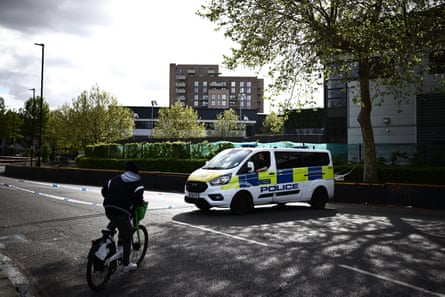 A police van near the offices Iran International, following this week’s arson attack. Photograph: Henry Nicholls/AFP/Getty Images
theguardian.com
A police van near the offices Iran International, following this week’s arson attack. Photograph: Henry Nicholls/AFP/Getty Images
theguardian.com
London police are investigating an attempted arson attack on the offices of Iran International, a Persian-language TV channel critical of the Iranian government, after an “ignited container” was thrown into a neighbouring building’s car park last week. The incident is the latest in a pattern of threats and physical attacks against Iran-linked journalists based in the UK, according to a Guardian report.
According to The Guardian, staff at Iran International and BBC Persian say intimidation has escalated during moments of political crisis inside Iran, including during mass protests and after the Israel–Iran war in June 2025. One Iran International journalist described violence and threats as having become routine, while another said Iranian security services showed his family in Iran a photograph of his London balcony and warned they were “so close to him”. The Metropolitan Police has treated the latest incident as an attempted arson attack; previous cases have included alleged kidnap plots and an attack on presenter Pouria Zeraati, who was stabbed outside his home in Wimbledon in 2024.
The UK has become a hub for exiled Persian-language media precisely because it offers legal protections and a global broadcast base. That also makes it an attractive pressure point: journalists can be targeted without the diplomatic and operational costs of overt state action, while threats to relatives inside Iran can be used as leverage that British policing cannot easily neutralise. Counter-terrorism specialists cited by the Guardian have previously warned that foreign states can outsource coercion to criminal proxies, blurring the line between organised crime and national security.
For the British state, the dilemma is practical as much as principled. Protecting individual journalists and media offices is expensive, and constant security measures shift the burden onto private organisations that did not choose to become part of a geopolitical contest. At the same time, failing to deter attacks invites a reputational cost: London’s role as a safe operating environment for international media depends less on formal guarantees than on whether threats are met with arrests, prosecutions, and visible disruption of networks.
The attempted arson attack did not injure anyone, but it added another address in London to the list of places where foreign political disputes are now being fought with improvised weapons and local intermediaries.