
Connie Ballmer gives NPR $80 million
Public media funding fights push local stations toward private patronage, federal share small but leverage large
Images
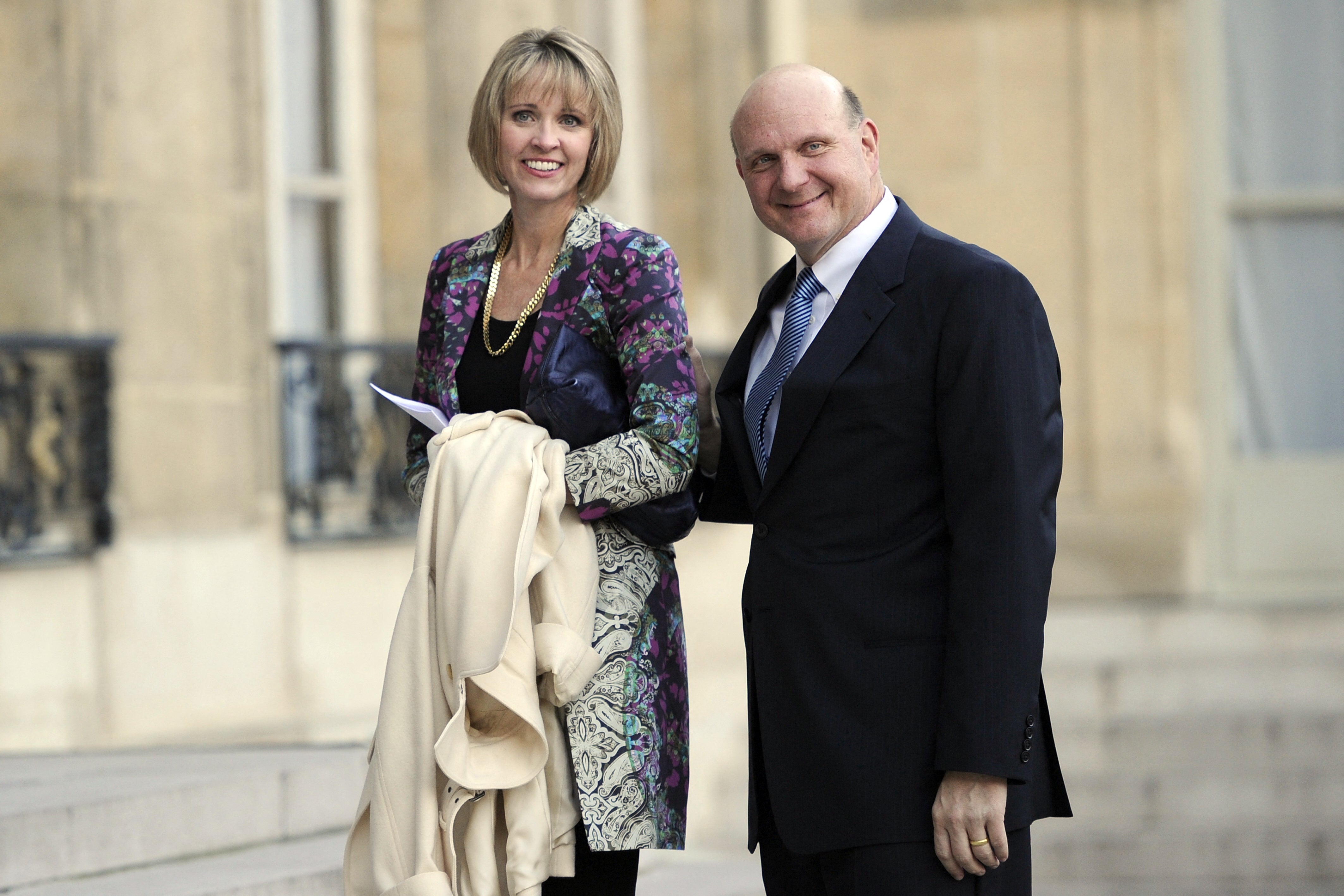 Discussing the donation, Connie Ballmer told the Wall Street Journal “we need fact-based journalism, and we need local journalism.” (AFP/Getty)
AFP/Getty
Discussing the donation, Connie Ballmer told the Wall Street Journal “we need fact-based journalism, and we need local journalism.” (AFP/Getty)
AFP/Getty
Connie Ballmer, the philanthropist married to Los Angeles Clippers owner and former Microsoft chief executive Steve Ballmer, has donated $80 million to NPR, the broadcaster’s largest-ever gift from a living donor. According to The Wall Street Journal, Ballmer said she gave because “we need fact-based journalism, and we need local journalism.” NPR said it also received a further $33 million from an anonymous donor, bringing the total announced this week to $113 million.
The timing is not accidental. NPR has been scrambling for stability after President Donald Trump signed an executive order last year aimed at ending federal funding for public TV and radio, a move NPR challenged in court. The Independent reports that a judge ruled in March that the administration could not use its power to slash NPR’s funding, but the episode still pushed the network to look for other money. NPR itself says federal support via the Corporation for Public Broadcasting accounts for roughly 1% of NPR’s own budget, yet that headline number hides the system’s weak point: the CPB can represent up to half the operating budgets of smaller member stations, especially in rural areas.
That structure creates a peculiar dependency chain. The national brand is insulated, but the local distribution network—where many listeners actually encounter NPR—can be financially fragile. When Washington threatens the CPB, it is the small stations that face immediate cuts, consolidation, or closure, even if the flagship newsroom survives. A large private gift can therefore function less like a newsroom subsidy and more like a network bail-out, buying time for stations to modernise their technology, fundraising, and digital distribution.
Philanthropy, however, comes with its own trade-offs. A donor cannot directly rewrite the newsroom’s daily agenda, but large gifts inevitably shape what management prioritises: which projects get scaled, which bureaus stay open, and which audiences are considered strategically important. Ballmer told the Journal she had seen the challenges of running the member-station network while serving on the NPR Foundation board, and framed the donation as a push to help stations “take advantage of the digital age.” That is a governance story as much as a journalism story.
In the short term, the money reduces the urgency to cut. In the longer term, it underscores that “public media” in the US increasingly survives like a private institution—through a mix of listener contributions, corporate underwriting, and billionaire patronage—while still carrying the political liabilities of a quasi-public role.
NPR’s chief executive Katherine Maher called the donations “catalytic investments” meant to help the network and its stations prepare for the next 50 years. The immediate fact is simpler: when a federal funding fight meets a local-station cash squeeze, the biggest cheque wins the next budget cycle.