
Harry and Meghan wrap Australia visit outside royal duties
Tightly managed schedule mixes charity events with paid appearances, security costs and brand strategy dominate local backlash
Images
 The couple's tour included both commercial and charitable events
bbc.com
The couple's tour included both commercial and charitable events
bbc.com
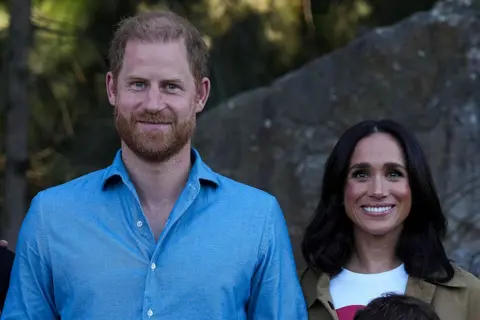 The couple's tour included both commercial and charitable events
bbc.com
The couple's tour included both commercial and charitable events
bbc.com
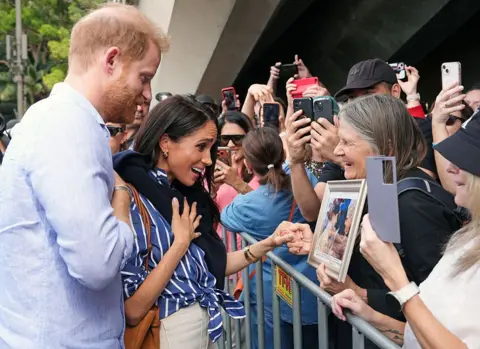 Michelle Haywood presented the couple with a picture of her late mother with Harry
bbc.com
Michelle Haywood presented the couple with a picture of her late mother with Harry
bbc.com
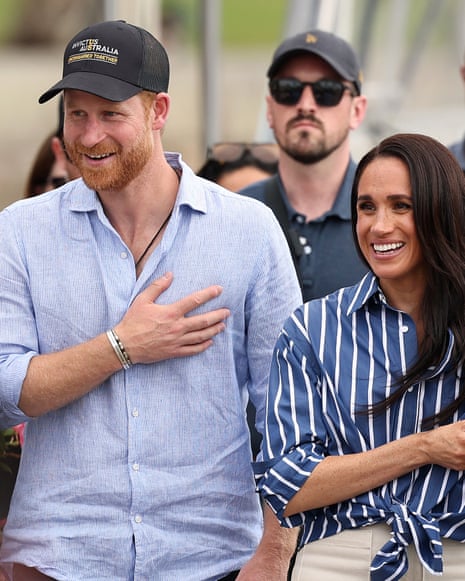 Prince Harry and Meghan greet the public at the Cruising Yacht Club of Australia in Sydney. Photograph: Cameron Spencer/Getty Images
theguardian.com
Prince Harry and Meghan greet the public at the Cruising Yacht Club of Australia in Sydney. Photograph: Cameron Spencer/Getty Images
theguardian.com
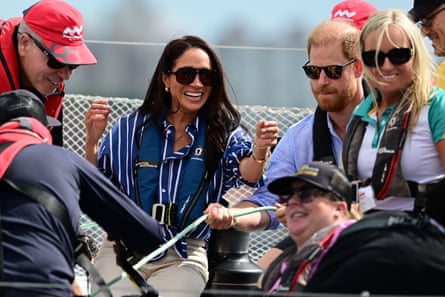 Meghan and Harry on a tour of Sydney harbour with Invictus Australia. Photograph: Dean Lewins/AAP
theguardian.com
Meghan and Harry on a tour of Sydney harbour with Invictus Australia. Photograph: Dean Lewins/AAP
theguardian.com
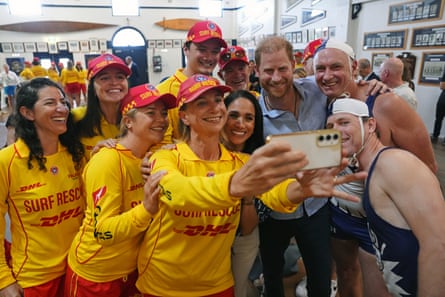 Meghan and Harry pose for a selfie at Bondi Surf Bathers’ Life Saving Club at Bondi beach. Photograph: Jonathan Brady/PA
theguardian.com
Meghan and Harry pose for a selfie at Bondi Surf Bathers’ Life Saving Club at Bondi beach. Photograph: Jonathan Brady/PA
theguardian.com
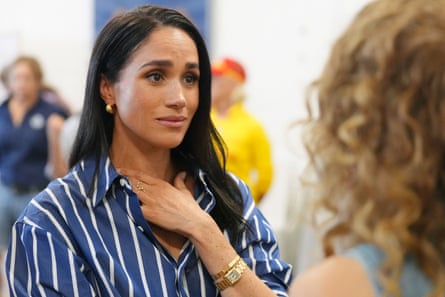 Meghan meets volunteer first responders from Bondi Surf Bathers’ Life Saving Club. Photograph: Jonathan Brady/PA
theguardian.com
Meghan meets volunteer first responders from Bondi Surf Bathers’ Life Saving Club. Photograph: Jonathan Brady/PA
theguardian.com
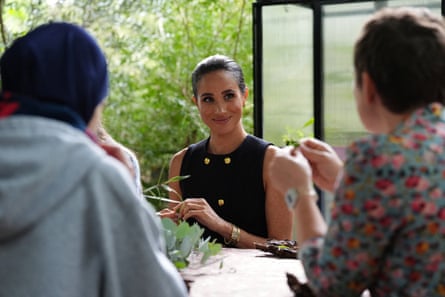 Meghan takes part in a therapy session with adolescent patients at the Royal Children’s hospital in Melbourne. Photograph: Jonathan Brady/Reuters
theguardian.com
Meghan takes part in a therapy session with adolescent patients at the Royal Children’s hospital in Melbourne. Photograph: Jonathan Brady/Reuters
theguardian.com
Prince Harry and Meghan Markle ended a four-day visit to Australia that looked like a royal tour in its choreography but not in its legal status, with events mixing charity appearances and commercial engagements. The BBC reports the Duke and Duchess of Sussex, no longer working royals, kept their schedule tightly controlled, avoided large public walkabouts, and barred questions at events—choices that reduced the risk of heckling and, according to Australian commentators, limited the public’s ability to gauge genuine enthusiasm.
The trip’s public-facing themes were familiar: mental health, online harms, and community work. In Sydney, the couple met supporters and posed for selfies, and Harry was presented with a photograph of his late Australian admirer Daphne Dunne, whom he met during earlier visits. The BBC notes that the Sussexes’ press releases repeatedly used the language of “connection”, “community”, and “wellbeing”, resembling palace-style briefings but written by their own media team.
Behind the scenes, the visit raised a question that follows the couple wherever they travel: who pays for the security. Both the BBC and the Guardian report controversy in Australia over whether taxpayers will shoulder some policing costs. The Guardian says public gatherings were reportedly avoided in part to limit those costs, while the BBC quotes an academic describing the appearances as “carefully controlled” and “spontaneously” staged.
The Guardian frames the tour as a hybrid product—part cause-driven, part brand-building—with ticketed events and commercial tie-ins sitting alongside charity work. It points to high-price dinners and a luxury wellness retreat, and notes scrutiny of Meghan’s association with OneOff, a fashion platform she invests in, as well as the price of access to the couple at paid events. Associate professor Lauren Rosewarne at the University of Melbourne told the Guardian the visit’s success would be measured less by crowds than by whether it strengthened the Sussex brand.
That contrast was sharpened by memories of 2018, when Harry and Meghan visited as working royals and drew large, open crowds across a longer itinerary. This time, many Australians the BBC spoke to said they were unaware of the trip or uninterested, even as the local media covered it intensely.
On Friday, the couple’s final engagements took place on Sydney Harbour and around the Opera House, with security, cameras, and controlled access doing most of the crowd management that palace staff once handled.