
Kyiv supermarket hostage shooting kills at least six
Attacker identified as Moscow-born permit holder, licensed weapon system comes under scrutiny
Images
 The motive for the attack in the Holosiivskyi district is unclear
bbc.com
The motive for the attack in the Holosiivskyi district is unclear
bbc.com
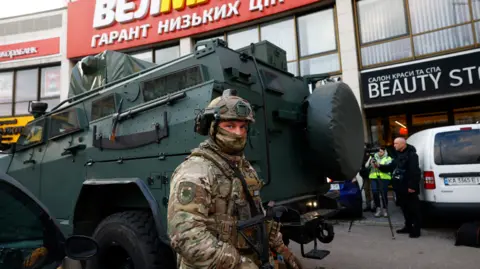 The motive for the attack in the Holosiivskyi district is unclear
bbc.com
The motive for the attack in the Holosiivskyi district is unclear
bbc.com
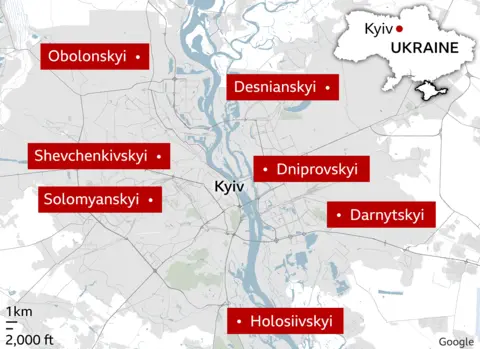 The shooting occurred in Kyiv's southern Holosiivskyi district
bbc.com
The shooting occurred in Kyiv's southern Holosiivskyi district
bbc.com
Six people were killed and at least 15 injured in Kyiv on Saturday after a gunman opened fire in the Holosiivskyi district and then took hostages inside a supermarket, Ukrainian officials said. Interior Minister Ihor Klymenko told reporters that police negotiators spoke to the attacker for about 40 minutes before officers stormed the store and shot him dead. President Volodymyr Zelensky said four hostages were freed.
The incident is unusual in a city more accustomed to missile and drone alerts than street-level gunfire. According to the BBC, Kyiv’s mayor Vitali Klitschko said most of the victims were shot outside on the street, with one woman later dying in hospital. Ten people, including a child, were taken to hospital. Authorities said the attacker made no demands, and Klymenko described him as “acting chaotically,” a detail that helps explain why a hostage negotiation ended in a firefight rather than a prolonged standoff.
The shooter was identified by Prosecutor General Ruslan Kravchenko as a 58-year-old man from Moscow, and officials said he used an automatic weapon that was legally registered. That combination—Russian origin, a registered automatic weapon, and an attack with no stated political demands—creates a second, quieter investigation alongside the criminal case: how the permit was issued and what checks were performed. Ukrainian officials said the circumstances of the licence and the shooting itself are now under review.
A fire also broke out in the man’s apartment during the incident, with officials citing unconfirmed reports that an explosive device may have been detonated. Klitschko said the shooter caused the fire, though the sequence—whether it was part of preparation, a diversion, or an unrelated accident—remains unclear.
Kyiv’s security services have spent two years hardening the capital against cross-border attacks, but the event underlines a different vulnerability: the capacity for a single licensed weapon holder to turn a normal Saturday into a mass-casualty scene in minutes. In wartime, policing and intelligence resources are pulled toward air defence, sabotage prevention, and frontline logistics; routine licensing oversight and local risk signals can become the first budgets to be squeezed.
The attacker was killed inside the supermarket after, officials said, he shot one of the hostages during the standoff.