
Tanker reports gunfire near Strait of Hormuz
UKMTO cites IRGC-linked boats off Oman, blockade politics turns into insurance pricing
Images
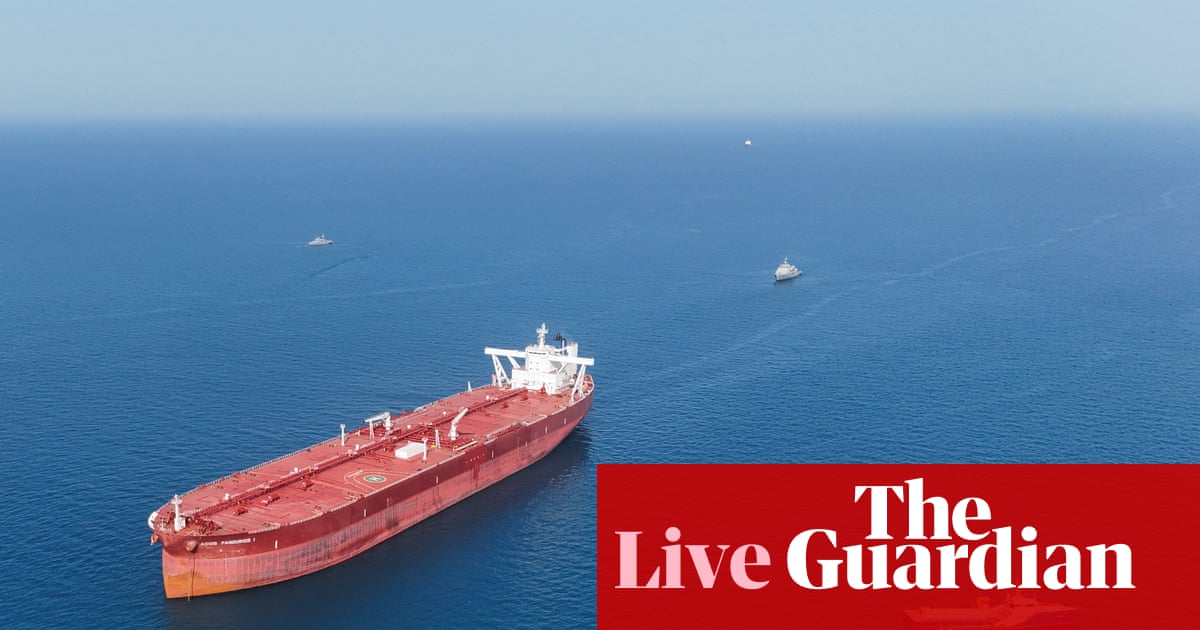 Middle East crisis live: tanker reports attack as Iran closes strait of Hormuz; French soldier killed in Lebanon
theguardian.com
Middle East crisis live: tanker reports attack as Iran closes strait of Hormuz; French soldier killed in Lebanon
theguardian.com
A tanker transiting near the Strait of Hormuz reported coming under fire on Friday after being approached by two fast boats linked to Iran’s Islamic Revolutionary Guard Corps, according to a security notice from the UK Maritime Trade Operations (UKMTO). UKMTO said the incident occurred about 20 nautical miles northeast of Oman and that the tanker’s master reported no radio challenge before shots were fired. The vessel and crew were reported safe, and authorities said they were investigating.
The report lands in a shipping lane already distorted by paperwork and enforcement rather than open naval battle. Earlier this week, major outlets including the BBC described a US-led maritime blockade focused on Iranian ports at the Hormuz chokepoint, with inspections hinging on ship transponders, cargo documentation and insurers’ willingness to cover voyages. In that environment, a single exchange of gunfire does not need to sink a tanker to change behaviour: it can be enough to push underwriters to raise war-risk premiums, banks to tighten trade finance, and operators to delay sailings until rules are clarified.
Iran has repeatedly threatened to close Hormuz, a narrow passage through which a large share of seaborne oil and LNG exports move. But “closure” in practice rarely looks like a physical barrier; it looks like uncertainty that makes commercial traffic self-censor. Shipowners can reroute only at enormous cost, while many cargoes—especially crude and refined products—depend on tightly scheduled loading windows and port slots. When insurers hesitate or charge punitive rates, the effective capacity of the route shrinks even if the waterway remains technically open.
The UKMTO note also highlights how quickly the situation can blur between state action and deniable harassment. A pair of armed boats firing without a VHF challenge is a small, cheap action that forces expensive responses: naval escorts, higher security standards, and delays that ripple into fuel prices. For Iran, such incidents can signal resolve without committing to a formal declaration. For the US and its partners, every ambiguous encounter creates pressure to “restore freedom of navigation” while defining—often after the fact—what counts as legitimate interdiction.
UKMTO’s report was limited to the tanker’s account and did not identify the vessel. It nonetheless adds a concrete datapoint to a standoff where the market has been pricing risk on headlines, not confirmed damage.
The tanker’s master reported two IRGC-linked gunboats, no radio challenge, and shots fired 20 nautical miles off Oman—then continued on with crew safe, according to UKMTO.