
Satellite data tracks hundreds of village fires in Darfur
El País cites Sudan Witness record of more than 750 burn sites since 2023, repeated arson turns displacement into a permanent border export
Images
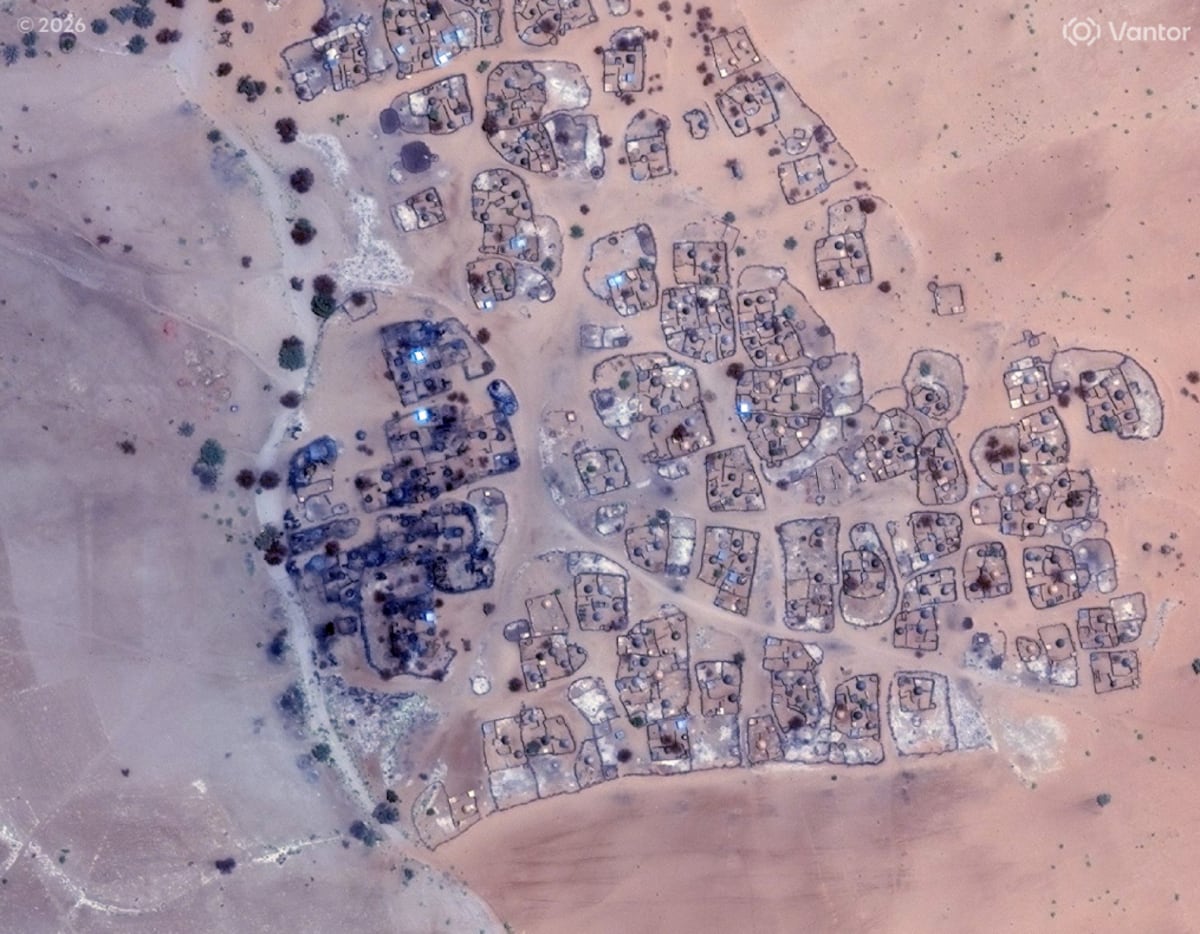 Scorched-earth policy of paramilitary groups burns and reshapes Darfur, resulting in famine, ethnic cleansing and demographic change
english.elpais.com
Scorched-earth policy of paramilitary groups burns and reshapes Darfur, resulting in famine, ethnic cleansing and demographic change
english.elpais.com
Sudan’s burned villages are disappearing from the map, satellite-tracked fires show RSF scorched-earth tactics across Darfur since 2023 war, aid and return routes collapse as territory changes hands
More than 750 fires have been recorded across Sudan’s Darfur region since the current civil war began in April 2023, according to data compiled by Sudan Witness, a project of the Center for Information Resilience (CIR) cited by El País. The research, based on satellite imagery, counts 357 affected settlements in an area roughly the size of Spain, with many villages burned repeatedly.
El País reports that the pattern is most concentrated in North Darfur, where fighting around El Fasher has been decisive. After a siege lasting more than 500 days, the city was taken last October, following what the paper describes as one of the war’s worst massacres. The arson campaign, however, is not limited to one front: CIR’s dataset also shows fires in South, Central and West Darfur, and a spread into Kordofan, another major theatre of the war.
The data points to intent as much as chaos. Of the villages burned, 140 suffered fires at least twice and 25 were set alight five times or more, El País reports. El Fasher alone saw 80 recorded fires; El Geneina, the capital of West Darfur and a historic centre of the Masalit community, saw 27. While satellite images cannot always identify the arsonists, El País says the Rapid Support Forces (RSF) and allied Arab militias are considered responsible in most cases, drawing on a long history of similar tactics in earlier phases of the Darfur conflict.
What the method buys the armed groups is not only tactical advantage but administrative simplicity. A burned village is harder to defend, harder to resupply, and—crucially—harder to return to. Hajj Kater, a Darfuri activist from El Fasher interviewed by El País, describes villages around Karnoi being seized and then destroyed, pushing survivors toward displacement camps in eastern Chad. He argues that once an area is attacked “it becomes uninhabitable,” turning flight into a one-way decision.
That changes the war’s economics. Displacement shifts the burden to aid agencies and neighbouring states, while the group that controls the ground inherits land without having to govern a population that might resist. In places that were already marginalised by Khartoum, Kater notes, villages can vanish without paperwork: some were never properly registered, and their destruction leaves little more than ash and a GPS coordinate.
For Europe, the immediate implications are humanitarian—famine risk, cross-border displacement, and the erosion of any safe corridor for assistance. But the longer-term consequence is demographic: when settlements are erased and residents scattered, the postwar question of “who lived where” becomes a dispute over evidence as much as territory.
In CIR’s tally, 25 Darfur settlements have burned five times or more.