
Crocodile attacks rise around Lake Turkana
Higher water pushes predators into Kenyan settlements, amputations and displacement follow a shoreline that no longer stays put
Images
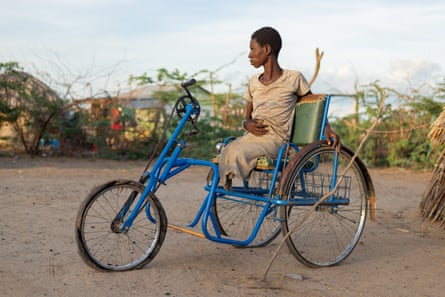 Ng’ikalei Loito sits on her tricycle outside her house in Kalokol town in Turkana
theguardian.com
Ng’ikalei Loito sits on her tricycle outside her house in Kalokol town in Turkana
theguardian.com
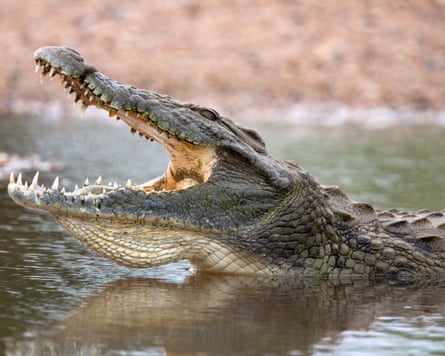 A Nile crocodile peeks out of the water, jaws open wide
theguardian.com
A Nile crocodile peeks out of the water, jaws open wide
theguardian.com
 A fisher sets off on a log boat in Lochilet village in Turkana county
theguardian.com
A fisher sets off on a log boat in Lochilet village in Turkana county
theguardian.com
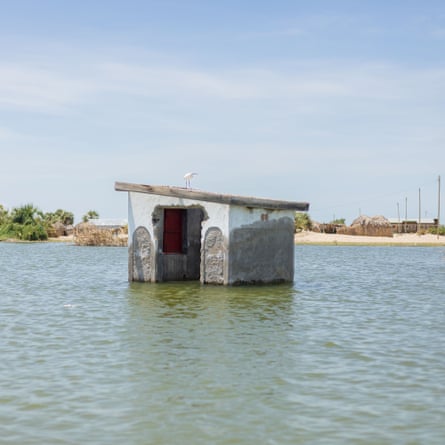 What was once a toilet is partially submerged by the rising water level of Lake Turkana
theguardian.com
What was once a toilet is partially submerged by the rising water level of Lake Turkana
theguardian.com
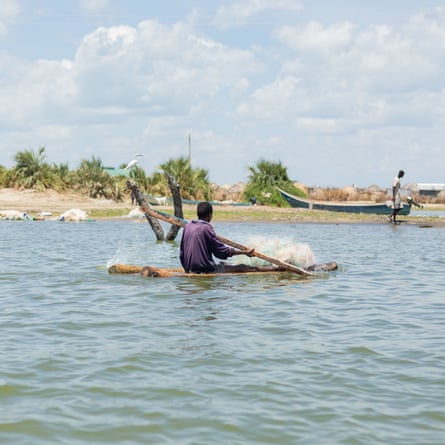 A fisher rows his log boat on Lake Turkana
theguardian.com
A fisher rows his log boat on Lake Turkana
theguardian.com
Seven people have been killed and at least 15 injured in the past year in Kenya’s Turkana county as Nile crocodiles move into areas where people swim, fish and draw water from Lake Turkana, according to a report by The Guardian. The attacks follow a rapid rise in the lake’s level that has pushed the shoreline into homes and public infrastructure and created new nesting sites close to settlements around Kalokol and Lowarengak.
The immediate story is physical: a larger lake leaves fewer safe, predictable edges. Lake Turkana is the world’s largest permanent desert lake and a core food and income source for communities that rely on fishing and small trade. When the shoreline advances, it does not just flood buildings; it rewrites daily routines. People must wade further to launch boats, children play closer to deeper water, and the places where women wash clothes or collect water become ambush points for a predator that can grow to roughly six metres. The Guardian describes a 33-year-old mother, Ng’ikalei Loito, who lost both legs after a December 2024 attack and now depends on relatives, an injury that turns a household’s labour supply into a long-term care obligation.
Kenya has seen similar lake expansions across the Rift Valley, with tens of thousands displaced and schools, farms and clinics submerged. A 2021 government report cited increased rainfall linked to the climate crisis as the primary driver and also pointed to tectonic movement in the Rift Valley; a separate 2021 UN Environment Programme assessment warned that such flooding could become more frequent over the next two decades. Those explanations matter because they imply the change is not a one-off emergency but a new baseline: higher water, more contact between people and wildlife, and repeated losses of property that are hard to insure and harder to rebuild when the next high-water season arrives.
The county response described in the report runs into a familiar constraint. Wildlife control is a public function, but the costs of failure are paid privately: amputations, lost income, and families relocating in a region where land is already marginal. Kenya Wildlife Service wardens can patrol and relocate animals, yet the shoreline is long and the incentives for residents are immediate—fish must be caught, water must be collected—while the risk is probabilistic until it is not. In that gap, adaptation becomes improvised: avoiding certain beaches, changing routes, and living with the knowledge that the lake’s edge is no longer a shared public space but a contested one.
In Turkana, a lake that expanded by about 10% over a decade is now producing a different kind of casualty statistic: not drought deaths, but predator attacks at the waterline.