
Gautam Adani overtakes Mukesh Ambani as Asia richest
Bloomberg index reflects oil shock and infrastructure repricing, allegations fade when capital stays open
Images
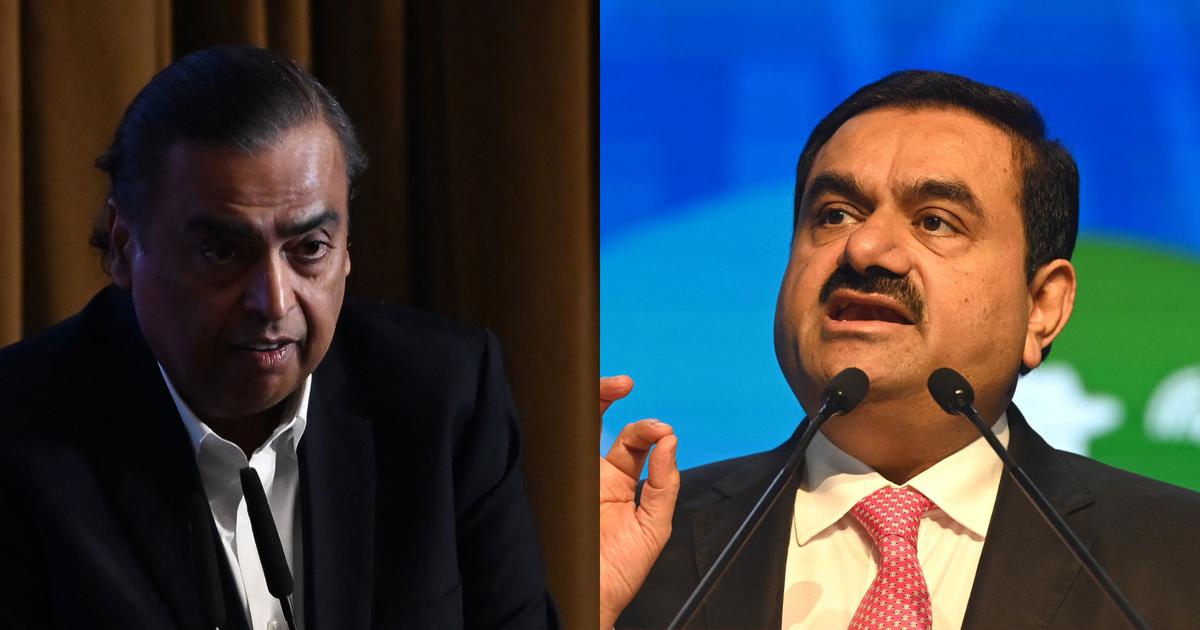 Businesspersons Mukesh Ambani and Gautam Adani
|
Dibyangshu Sarkar/AFP (for the photo on the left) and Indranil Mukherjee/AFP
scroll.in
Businesspersons Mukesh Ambani and Gautam Adani
|
Dibyangshu Sarkar/AFP (for the photo on the left) and Indranil Mukherjee/AFP
scroll.in
Gautam Adani’s fortune moved ahead of Mukesh Ambani’s this week by less than two billion dollars, according to Bloomberg’s Billionaires Index, after a sharp year-to-date swing driven less by new factories than by oil and geopolitics.
Scroll.in reports Adani rose to about $92.6bn while Ambani fell to about $90.8bn after losing roughly $16.9bn this year. The Financial Times, cited by Scroll, attributes much of the hit to Reliance Industries’ exposure to crude prices and Middle East disruption, including the earlier blockage of the Strait of Hormuz. Reliance runs the world’s largest refinery; when feedstock and freight costs jump, refining margins and downstream demand do not always move in lockstep.
The contrast is a reminder that “Asia’s richest” is often a derivative of which sectors are currently being repriced. Ambani’s wealth is tied to a business that sits directly on the global energy cycle. Adani’s is tied to a conglomerate built around ports, power, logistics and materials—assets that can look defensive in a crisis because governments keep paying for infrastructure even when households cut consumption.
That resilience is also political by design. Infrastructure groups win when public authorities accelerate grid build-outs, port expansions, and energy transition procurement, and they lose when those same authorities tighten scrutiny. Adani’s rebound comes after a period dominated by allegations rather than earnings: Hindenburg Research’s 2023 report alleging accounting manipulation and offshore structures; an Indian regulator later clearing the group in connection with one set of allegations; and a US indictment in 2024 alleging a $265m bribery-and-fraud scheme linked to solar contracts, which Adani has denied.
Those episodes matter because the business model depends on continual access to capital and permits. A refinery can run on engineering and throughput; a port concession or a power purchase agreement runs on signatures, timelines and enforcement. When investors believe the state will stand behind the contracts, leverage looks manageable. When they suspect investigations or sanctions could interrupt cashflows, the same leverage looks existential.
For India, the scoreboard between two tycoons is less important than the mechanism it illustrates: wealth rankings can flip on policy risk and commodity shocks, while the underlying assets remain in place. The market is not voting on who is more productive this week; it is repricing who is more exposed to decisions made in Tehran, Washington and New Delhi.
On Bloomberg’s list, the gap between India’s top two names is smaller than the daily move in Brent crude during the Hormuz crisis.