
Fossil tooth enamel reveals ancient ecosystems
Isotope signatures map diets in Ethiopia’s Afar over millions of years, durable teeth outlast the landscapes they record
Images
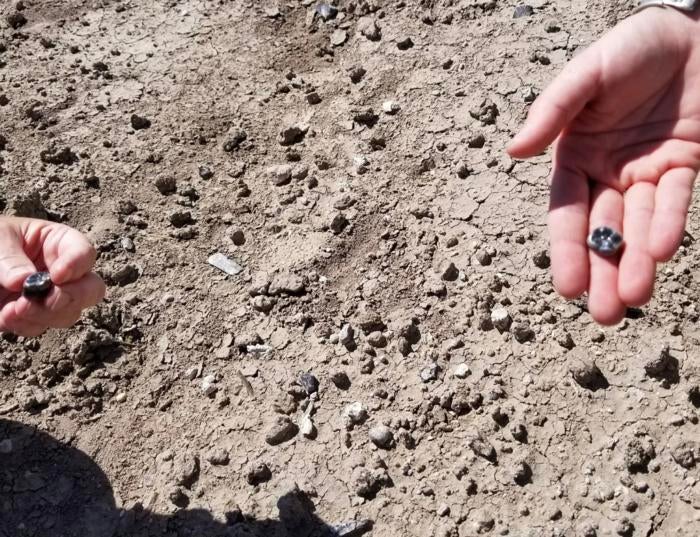 Fossil teeth unearthed in Ethiopia (Amy Rector, Virginia Commonwealth University)
Amy Rector, Virginia Commonwealth University
Fossil teeth unearthed in Ethiopia (Amy Rector, Virginia Commonwealth University)
Amy Rector, Virginia Commonwealth University
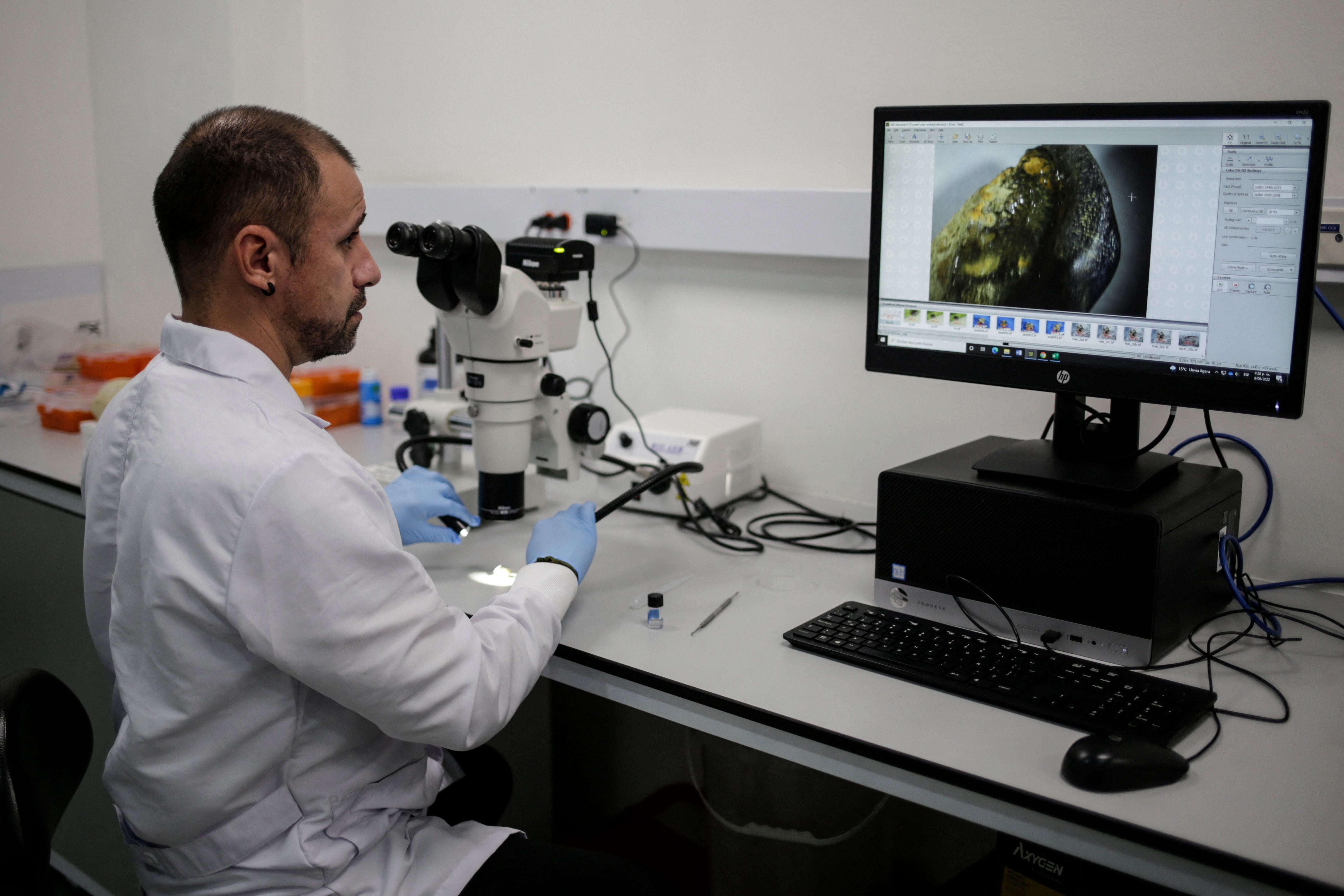 (AFP/Getty)
AFP/Getty
(AFP/Getty)
AFP/Getty
New chemical analyses of fossil tooth enamel from Ethiopia’s Afar region are letting researchers reconstruct ancient ecosystems in unusually fine detail, using microscopic traces left by food and water. The work draws on roughly three decades of sampling teeth from animals such as antelopes, giraffes, pigs, horses, hippos and elephants across sediment layers in the East African Rift Valley, according to The Independent.
Enamel is the key material in the method because it forms early in life and then largely stops changing, while bone is more porous and more easily altered after burial. Researchers take tiny amounts of enamel powder and measure stable isotopes that reflect what an animal ate as a juvenile and, indirectly, what kinds of plants dominated the landscape. The central distinction is between plants that use different photosynthetic pathways—trees and shrubs versus many tropical grasses—which leave different carbon-isotope signatures that then show up in the teeth of browsers and grazers.
Because sediments accumulate over time, teeth found in deeper layers generally represent older periods. That stratigraphy turns scattered fossils into a time series: compare isotopic signatures across layers and the direction of ecological change becomes visible. In Afar, the record points to a mosaic landscape around four million years ago—rivers and wooded patches alongside lakes and grassier plains—followed by a shift toward more open grasslands between roughly three and two million years ago. The Independent notes that this period overlaps with major steps in early human evolution, and the enamel record helps anchor debates about what kinds of habitats hominins actually lived in.
The approach is attractive because it scales. A single tooth can be informative, but a large set of teeth across species becomes a proxy census of an ecosystem’s food web: which animals were grazing, which were browsing, and how quickly those proportions changed. It also provides a check on narratives built from more fragile evidence, like pollen or plant remains, which are often missing from the same sites.
The method’s limits are also clear. Enamel captures a slice of life—often youth—and it does not directly measure temperature, rainfall, or vegetation cover. It infers them through diet and water signals, which means interpretation depends on careful sampling, good dating of layers, and an understanding of how local geology and water sources can bias isotopic readings.
In Afar, the teeth that survive erosion and excavation are not just individual fossils but a durable archive of what the basin could support—forest edges, wetlands, and expanding grasslands—long after the plants themselves have vanished.