
Daniel Lacalle weighs Mises and Rothbard on Iran war
Zero Hedge republishes case for and against preventive strikes, oil chokepoint costs land on households while war aims stay classified
Images
 zerohedge.com
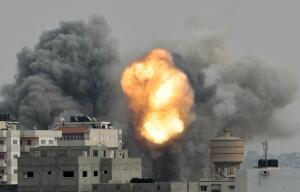
On February 28 the US and Israel began a war with Iran that has since spilled into energy markets and shipping lanes, according to a commentary republished by Zero Hedge. The piece frames the conflict through the arguments of Ludwig von Mises and Murray Rothbard, asking whether a philosophy that distrusts state power can ever justify state war.
The author’s starting point is that the war is sold as preventive: stop a theocratic regime, stop nuclear proliferation, protect allies, avert a larger regional catastrophe. That framing is politically convenient because it converts unknown future harms into a blank cheque today. It also pushes the costs into places voters don’t connect to the decision: higher fuel prices, disrupted supply chains, and the slow inflation that arrives as “global conditions” rather than as a line item with a signature.
The essay contrasts two traditions. Mises, writing in the shadow of Nazi Germany, argued that neutrality becomes a form of surrender when an expansionist regime is determined to dominate; the only stable outcome is decisive defeat. In that view, delay is not prudence but compounding risk: every half-measure buys the aggressor time, while democracies argue over procedure. The author then maps that logic onto Tehran: proxies, repression, ideological hostility, and the strategic leverage of the Strait of Hormuz.
Rothbard’s answer is colder and more operational. States do not wage war like private individuals defend themselves; they finance it through taxes, debt, and inflation, and they prosecute it through institutions that don’t personally bear the cost of error. Even when a government targets “bad actors”, it does so with tools that predictably hit bystanders: sanctions that crater civilian living standards, bombings that miss, intelligence that is classified and therefore unchallengeable, and escalation ladders that are managed by careers and reputations rather than by owners risking their own capital.
That difference matters because it changes the incentives around truth. A private actor who misreads a threat pays quickly. A state that misreads a threat can relabel the outcome as a success, classify the evidence, and fund the next phase. The Zero Hedge piece leans on this asymmetry: once war begins, institutions that argued for it become the arbiters of whether it is “working”, and they do so with information the public cannot audit.
The argument also exposes how “preventive” wars age. If the war drags on, leaders can claim they are preventing something worse; if it ends badly, they can claim the alternative would have been catastrophe. Either way, the counterfactual is unpriced and therefore politically safe. Meanwhile, the costs that are priced—fuel, insurance, shipping, interest rates—are socialised across households and firms.
The author does not resolve the philosophical dispute so much as show the trap: a state strong enough to smash foreign tyranny is also strong enough to expand its own powers at home, and it will tend to do both. In practice, the most visible domestic legacy of foreign conflict is rarely the victory parade; it is the new budget baseline.
Iran’s grip on Hormuz is measurable in tanker routes and jet fuel bills. The decision to override those costs is signed in offices far from the pump.