
ESA Rosalind Franklin rover wins Falcon Heavy launch slot
NASA brokers new ExoMars architecture after Russia split, Europe reaches Mars on US commercial rocket
Images
 Credit:
Airbus
Credit:
Airbus
 Credit:
SpaceX
Credit:
SpaceX
 Photo of Stephen Clark
arstechnica.com
Photo of Stephen Clark
arstechnica.com
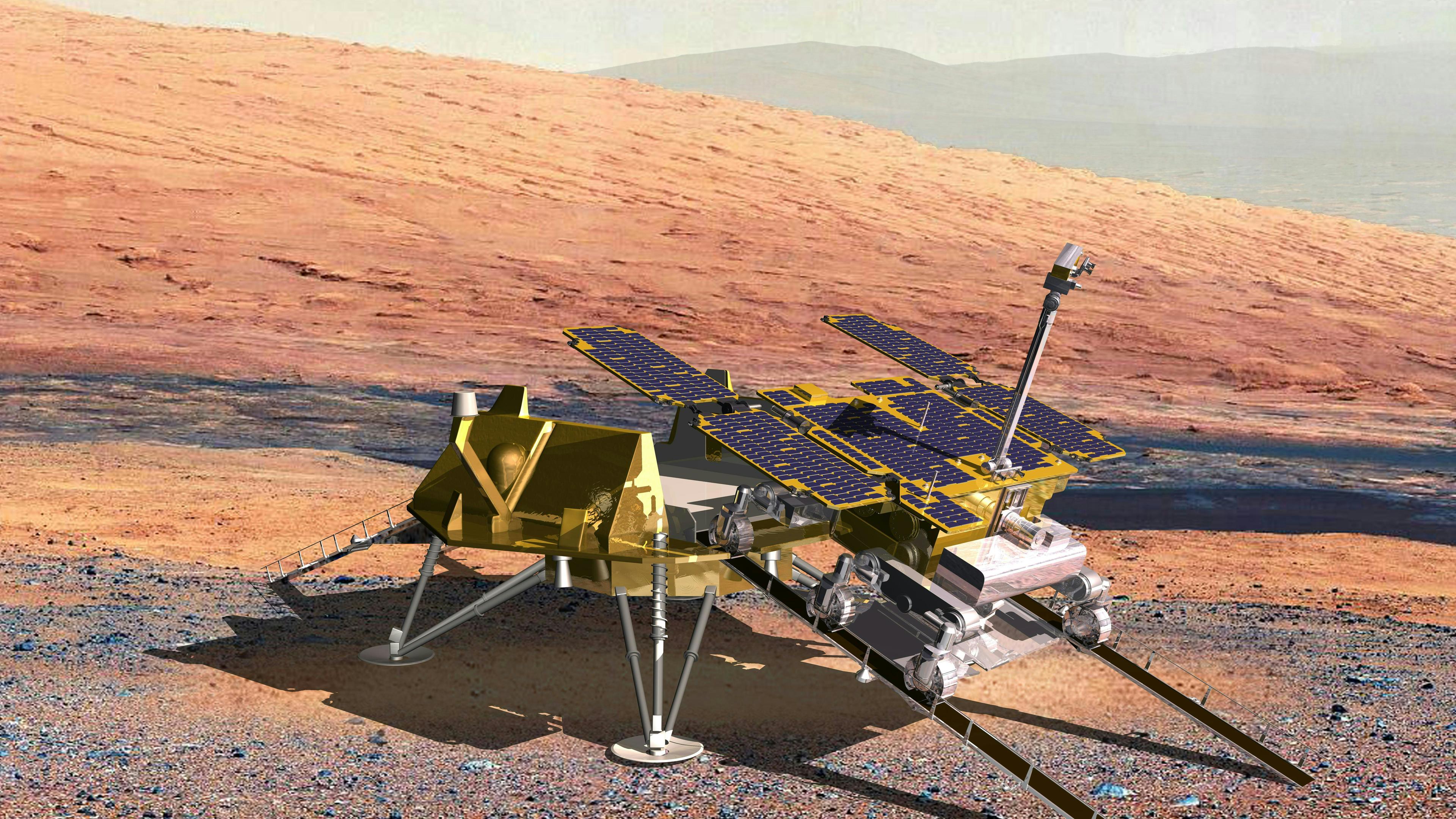
NASA has confirmed that SpaceX will launch the European Space Agency’s Rosalind Franklin Mars rover on a Falcon Heavy rocket, with the mission now targeting a window as early as late 2028.
According to Ars Technica, the decision caps a 25-year development history in which Europe’s first Mars rover repeatedly lost its ride to space as partnerships collapsed and schedules slipped. What began as ESA’s Aurora programme in the early 2000s evolved into ExoMars, a flagship project intended to put a European-built rover on Mars to drill below the surface in search of signs of past or present life.
The rover’s path has been shaped less by engineering than by geopolitics and budget cycles. In 2009, NASA and ESA agreed to pursue Mars exploration together, with plans for a 2016 orbiter and a 2018 rover mission using US launchers and a US landing system. Ars Technica notes that NASA withdrew in 2012, citing budget pressure including cost overruns on the James Webb Space Telescope. ESA, unable to replace NASA’s contributions alone, turned to Russia: Proton rockets for launches, a Russian descent system for landing, and Russian instruments aboard the spacecraft.
That partnership produced one tangible success. Russia launched the ExoMars Trace Gas Orbiter in 2016, and it remains in service around Mars, returning data and relaying communications for NASA’s rovers, Ars Technica reports. But the rover itself was delayed again by parachute-test failures and the pandemic, pushing a planned 2022 launch. Then Russia’s 2022 invasion of Ukraine ended the arrangement entirely: ESA severed most ties with Roscosmos after key hardware had already been built and was awaiting final integration.
The new US role is therefore not a symbolic assist but a replacement for critical components. Under a 2024 NASA-ESA agreement cited by Ars Technica, the United States is providing the launch vehicle, braking engines for landing, and nuclear-powered heater units to keep the rover’s systems alive through the Martian night. The Falcon Heavy assignment adds another layer: Europe’s flagship rover will fly on an American commercial rocket, from Kennedy Space Center, after successive European and Russian launch plans failed.
For ESA, the mission is a test of institutional resilience as much as planetary science. A rover designed to search for life is now also a case study in how space programmes inherit the risks of their suppliers and partners. When the political cost of cooperation rises, hardware already built becomes stranded inventory, and the schedule resets to whoever can provide the missing pieces.
The rover is named for Rosalind Franklin. Its launch date is now dependent on a US rocket manifest.