
250 feared missing after Andaman Sea boat capsizes
Rohingya refugees and Bangladeshis were travelling from Teknaf to Malaysia, shrinking aid and blocked legal routes push crossings offshore
Images
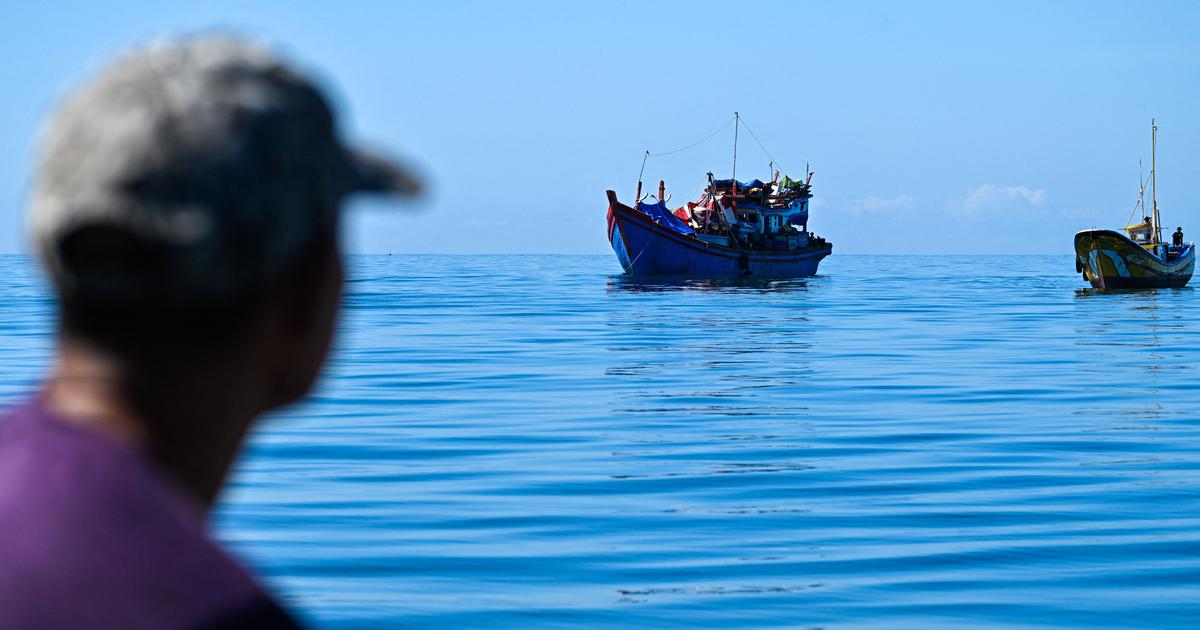 File image. A man on a vessel looks at Rohingya refugees on a boat in October 2024.
|
Chaideer Mahyuddin/AFP
scroll.in
File image. A man on a vessel looks at Rohingya refugees on a boat in October 2024.
|
Chaideer Mahyuddin/AFP
scroll.in
About 250 Rohingya refugees and Bangladeshi migrants are feared missing after a boat capsized in the Andaman Sea on its way from Bangladesh to Malaysia, according to UN agencies cited by Scroll.in. The vessel reportedly left from Teknaf in southern Bangladesh and sank in heavy winds and rough seas, with overcrowding mentioned as a factor.
The report says it is unclear exactly when the accident occurred, and by Wednesday the whereabouts of those on board were still unknown. UNHCR and the International Organization for Migration said women and children were among the missing.
The incident sits on top of a long-running displacement pipeline that has become structurally dependent on risk. More than a million Rohingya are living in Bangladesh after fleeing Myanmar since 2017, and the UN agencies described the sinking as a consequence of “protracted displacement” and the lack of durable solutions.
In practice, the “solutions” available to many refugees in Cox’s Bazar are tightly rationed: limited legal work, constrained education, and shrinking humanitarian budgets. When legal routes are closed and camp life becomes more precarious, smugglers sell the only product left—passage—priced in cash and in probability of death. The same sea that separates Bangladesh from Malaysia becomes a market for dangerous transport, where the cost of failure is externalised onto families and search-and-rescue systems.
The UN agencies linked the pressure to worsening conditions in Myanmar’s Rakhine state, which they said has dimmed hopes of safe return. That leaves people choosing between immobility in camps and illegal movement at sea.
The boat left from Teknaf, the report says, and vanished somewhere in the Andaman Sea. For the missing, the border controls that prevented regular travel are now being enforced by weather and water.