
Telenor sued in Norway over Myanmar data sharing
Class action alleges telecom helped junta arrest more than 1200 activists, state ownership turns human-rights risk into shareholder liability
Images
 Burmese customers wait outside a showroom to buy sim cards in 2014, shortly after Telenor moved into Myanmar as it was transitioning to democracy. Photograph: Khin Maung Win/AP
theguardian.com
Burmese customers wait outside a showroom to buy sim cards in 2014, shortly after Telenor moved into Myanmar as it was transitioning to democracy. Photograph: Khin Maung Win/AP
theguardian.com
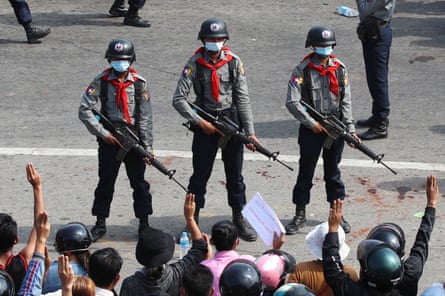 Armed riot police face protesters flashing a three-finger salute, seen as a symbol of resistance, in Myanmar’s capital, Naypyidaw, during a 2021 protest against the military coup. Photograph: EPA
theguardian.com
Armed riot police face protesters flashing a three-finger salute, seen as a symbol of resistance, in Myanmar’s capital, Naypyidaw, during a 2021 protest against the military coup. Photograph: EPA
theguardian.com
Telenor faces a class-action lawsuit in Norway alleging it handed Myanmar’s military regime customer data that helped security forces locate and arrest more than 1,200 people after the 2021 coup. According to The Guardian, the suit covers 1,253 customers and seeks at least €11 million in compensation, arguing the company failed to protect users or warn them when authorities demanded information.
The case centres on what telecom networks inevitably become in a country run by a security state: a location system, an address book and a map of social relationships. The Guardian reports that Telenor’s own transparency reporting showed it complied with 96% of 153 data requests from Myanmar’s authorities. Documents obtained by Norway’s NRK and shared with the newspaper indicate that one activist, Aung Thu, was targeted in a September 2021 request while he was already in custody, and that he believes a later disclosure contributed to his re-arrest under counter-terrorism laws after a prisoner amnesty.
Telenor entered Myanmar in 2013 during a brief political opening, selling itself as a modernising force that would connect a previously isolated population. But once the military seized power in February 2021, the same infrastructure became a choke point. The lawsuit, filed by the Justice and Accountability Initiative with support from SOMO and the Open Society Justice Initiative, argues that the company complied even when internal assessments suggested the orders were likely to lead to arrests.
The incentives are hard to miss. A telecom operator holds data because regulators require it, because networks need it to function, and because customer records are a monetisable asset in normal times. When the state becomes the primary counterparty—issuing orders backed by coercion—“compliance” stops being a customer-service concept and becomes a matter of whether a company will absorb the cost of resistance. Exiting the market does not erase what has already been handed over.
The Guardian says a Norwegian parliamentary inquiry into the Norwegian government’s role is expected later this year, an uncomfortable prospect given that the state is Telenor’s majority shareholder. The suit’s premise is simple: a public stake does not change what a telecom can do to a dissident when a junta asks for a phone number.
Telenor left Myanmar in 2022. The lawsuit argues that for at least 1,253 customers, the network stayed behind in a more permanent form: as a trail of data requests marked “complied.”