
US and Iran reopen indirect ceasefire talks
Pakistan mediates after Islamabad breakdown, naval blockade tightens while Lebanon fighting tests what the truce covers
Images
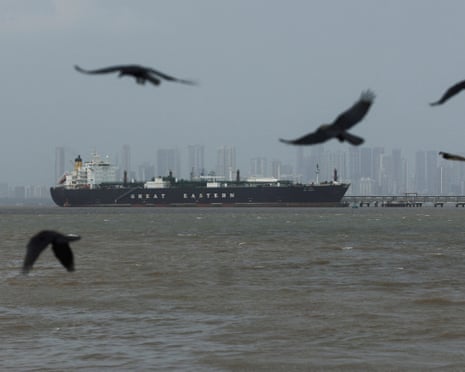 The Jag Vasant transfers liquefied petroleum gas after transiting the strait of Hormuz Photograph: Francis Mascarenhas/Reuters
theguardian.com
The Jag Vasant transfers liquefied petroleum gas after transiting the strait of Hormuz Photograph: Francis Mascarenhas/Reuters
theguardian.com
Pakistan’s army chief arrived in Tehran on Wednesday as Washington and Tehran began a new round of indirect contacts aimed at extending a two-week ceasefire set to expire on 22 April. According to The Guardian, the White House said it was “very much engaged” and “feel[s] good about the prospects of a deal” after weekend talks in Islamabad broke up after 21 hours without agreement.
The ceasefire is being negotiated in the shadow of a US naval blockade of Iranian ports imposed after the Islamabad talks collapsed. The Guardian reported the US military said the blockade was “fully implemented” and that warships had turned back nine ships, including a Chinese-owned tanker, Rich Starry, which Washington has sanctioned. NRK, citing Reuters, also reported that Rich Starry turned back after initially transiting out of the Strait of Hormuz. The blockade is designed to squeeze Iran’s export earnings without formally closing the strait to non-Iran traffic, but it still forces shipping decisions to be made ship-by-ship, insurer-by-insurer.
The talks are no longer just about Iran and the US. Pakistan is attempting to convert geography into leverage, shuttling messages between capitals while Prime Minister Shehbaz Sharif tours Saudi Arabia, Qatar and Turkey to line up regional support. China sits in the background as both customer and constraint: US enforcement actions have already touched a Chinese-owned vessel, and Beijing’s appetite for discounted energy keeps the sanctions game alive even as Washington tries to tighten it.
The substance remains stuck on the same hard questions. An Infobae report citing The New York Times said Iran offered to suspend sensitive nuclear activity for up to five years, while President Donald Trump’s team pushed for a 20-year moratorium—an interval long enough to outlast political cycles in Tehran but also long enough to be politically radioactive for any Iranian leadership. That gap is not a technical dispute; it is a disagreement over whether the deal is meant to pause a programme or to end it as a strategic option.
Meanwhile, the ceasefire’s boundaries are contested. Iran has argued that Israel’s continued operations against Hezbollah in Lebanon violate the spirit of the truce, while Israel has signalled it is not bound by it. NRK, quoting a Norwegian researcher, described US messaging on whether Lebanon is covered as unclear, with Washington effectively endorsing Israel’s narrower interpretation after the fact. The result is a ceasefire that can hold on paper while fighting continues in a neighbouring theatre—useful for diplomats, but difficult to sell as de-escalation.
The next round is expected to take place in Islamabad, according to The Guardian. The deadline remains 22 April.
US warships are already turning tankers around in the same waters where negotiators are discussing what “ceasefire” means.