
AMOC slowdown looks worse in models that match observations
Study reweights climate simulations using real ocean data, Europe’s weather risk shifts from gradual warming to circulation failure
Images
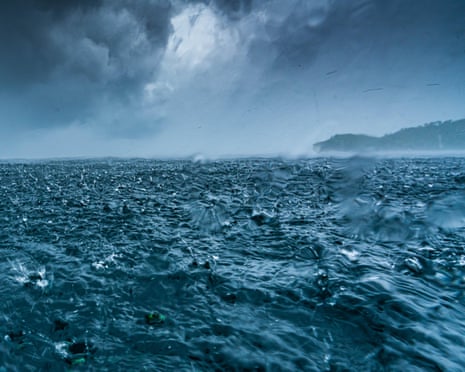 The Atlantic meridional overturning circulation is a major part of global climate system and is known to be at its weakest for 1,600 years as a result of climate crisis. Photograph: Henrik Egede-Lassen/Zoomedia/PA
theguardian.com
The Atlantic meridional overturning circulation is a major part of global climate system and is known to be at its weakest for 1,600 years as a result of climate crisis. Photograph: Henrik Egede-Lassen/Zoomedia/PA
theguardian.com
A new analysis of climate-model performance suggests the Atlantic Meridional Overturning Circulation (AMOC) is on track for a much larger slowdown this century than the “model average” implies. According to The Guardian, the study finds that models projecting the strongest weakening best match real-world ocean observations, narrowing earlier forecasts to an estimated 42–58% AMOC slowdown by 2100.
AMOC is not a single current but a coupled system that moves warm, salty surface water northward and returns colder, denser water southward at depth. Because that circulation is driven by density differences, it is sensitive to the two inputs that a warming Arctic changes most: temperature and freshwater. Warmer surface waters become less dense and sink less readily; additional rainfall and meltwater further freshen the surface and reduce density again, weakening the “engine” that forms deep water in the North Atlantic.
What makes the new result politically awkward is not that it introduces a dramatic new mechanism, but that it reduces the room for wishful interpretation. Climate assessments often present a spread of model outcomes, and decision-makers gravitate to the middle. Here, the study’s method—checking which models reproduce observed ocean conditions—shrinks that spread and shifts the “most realistic” set toward the pessimistic tail. Prof Stefan Rahmstorf of the Potsdam Institute for Climate Impact Research tells the Guardian that the implication is a probability of shutdown that is no longer a remote edge case.
The downstream effects are concrete and geographically uneven. A major AMOC weakening would change where tropical rainfall concentrates, affecting agriculture for populations that depend on seasonal rains. For Europe, the trade-off is not a simple “colder or warmer” headline: the Guardian notes a scenario of harsher winter cold in western Europe alongside summer drought risk, a pattern that strains both heating demand and water systems. Sea-level impacts are also asymmetric; a weakened overturning can raise sea levels around parts of the Atlantic basin by altering ocean mass distribution, adding roughly half a metre to a metre on top of ongoing rise, according to the report.
The study is not a prediction that collapse will happen on a specific date. It is a claim about which models to trust when they disagree—and it points to the ones that slow AMOC the most. That is a different kind of alarm: less about a new fear, more about fewer places to hide it.
The AMOC has collapsed in Earth’s past, and researchers have been watching for warning signs since at least 2021. The new work’s main contribution is that it treats the “worst-case models” as the ones that best resemble the ocean we can measure today.