
IAEA warns North Korea rapidly expanding nuclear production
Rafael Grossi cites intensified activity at Yongbyon, enrichment capacity grows while inspectors remain locked out
Images
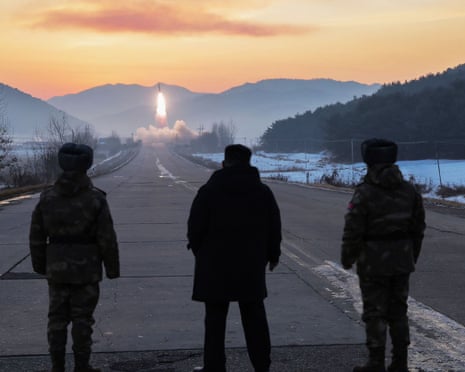 Kim Jong-un (centre) inspects a test launch of hypersonic missiles in Pyongyang in January. Photograph: AP
theguardian.com
Kim Jong-un (centre) inspects a test launch of hypersonic missiles in Pyongyang in January. Photograph: AP
theguardian.com
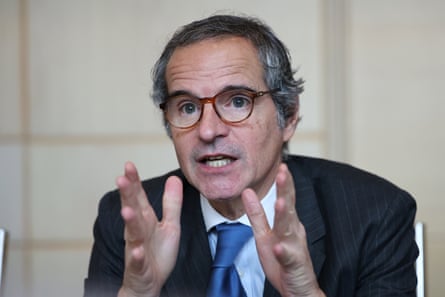 Rafael Grossi speaks during a press conference in Seoul on Wednesday. Photograph: Kim Hong-Ji/AP
theguardian.com
Rafael Grossi speaks during a press conference in Seoul on Wednesday. Photograph: Kim Hong-Ji/AP
theguardian.com
North Korea has made “very serious” progress in expanding its ability to produce nuclear weapons, the head of the International Atomic Energy Agency said during a visit to Seoul, according to The Guardian. Rafael Grossi cited a rapid rise in activity at the Yongbyon nuclear complex, including work at the 5MW reactor, reprocessing facilities and a light-water reactor. He said North Korea is believed to possess “several dozen” nuclear warheads.
The warning lands in a familiar gap between monitoring and leverage. The IAEA has long been locked out of North Korea, meaning its assessments rely heavily on satellite imagery and indirect indicators of operations. Yet even those indicators now point in one direction: more fissile material, more quickly. A US thinktank, Beyond Parallel at the Center for Strategic and International Studies, said this week that satellite imagery suggests North Korea has completed a building intended for uranium enrichment at Yongbyon and that the facility is nearing operational readiness, South Korea’s Yonhap reported. The group noted that the suspected enrichment site and another at Kangson near Pyongyang have not been declared to international nuclear authorities.
The immediate implication is arithmetic. Enrichment capacity determines how many weapons a state can build and how rapidly it can replace or diversify warheads. Grossi’s comments echo the IAEA’s assessment last year that Pyongyang was constructing a new enrichment facility at Yongbyon capable of producing weapons-grade material. South Korea’s president, Lee Jae Myung, has said the North may be producing enough material for 10 to 20 nuclear weapons a year—an output that would change the strategic balance even without another nuclear test.
Diplomacy has not kept pace. North Korea has not conducted a nuclear test since 2017, but it has continued missile development, including systems it says can deliver nuclear warheads. Summits between Kim Jong-un and Donald Trump during Trump’s first term ended without a deal, and relations between Pyongyang and Seoul have deteriorated since. Sanctions remain in place, but the regime has treated them as a cost of doing business, while using the weapons program as insurance against external pressure.
Grossi said there was no evidence of “significant change” at the Punggye-ri nuclear test site, but that it remained capable of supporting tests. The IAEA, he added, maintains “enhanced readiness” to play a verification role if access is restored.
At Yongbyon, the reactors and enrichment halls do not need a test to matter. They only need to keep running.