
Starmer pursues dynamic EU alignment
UK-EU talks cover food carbon and electricity standards, post-Brexit sovereignty fight shifts to secondary legislation
Images
 bbc.com
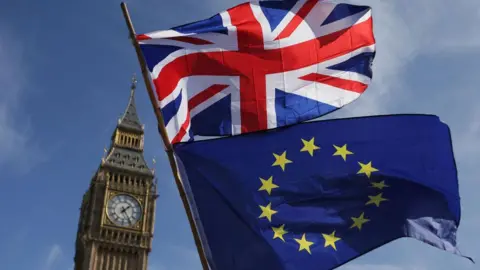 Getty Images A Union Jack and European Union flag fly against a blue sky in front of Big Ben in central London.
bbc.com
Getty Images A Union Jack and European Union flag fly against a blue sky in front of Big Ben in central London.
bbc.com
Sir Keir Starmer pushes dynamic EU rule alignment, post-Brexit trade talks target food carbon and electricity standards, sovereignty row returns via secondary legislation
Keir Starmer has moved Britain’s argument about Europe back into the open, tying a new package of UK-EU negotiations to economic vulnerability and a more unstable security environment. According to the BBC’s Henry Zeffman, the government is negotiating deals with the EU on food and drink standards, carbon emissions and electricity—areas where ministers now want “dynamic” alignment, meaning UK rules would track EU rules not only today but as they change over time.
The immediate political flashpoint is procedural. Starmer’s government says the alignment would be implemented through legislation that will be voted on in Parliament, but subsequent updates—when EU rules shift—may be handled through secondary legislation, which typically receives less scrutiny and may not require repeated votes. Conservatives and Reform UK have seized on that mechanism to revive a familiar charge: that Britain would become a rule-taker, accepting Brussels’ standards without shaping them.
The broader issue is the trade-off the government is openly making. The UK can either diverge and absorb friction—border checks, certification costs, regulatory duplication—or align and accept that in specific sectors the price of market access is reduced autonomy. Starmer is presenting that bargain as economically rational rather than ideologically fraught, arguing that the benefits of smoother trade and integrated energy markets outweigh the discomfort of copying rules.
What has changed is not the underlying arithmetic but the political posture. Zeffman notes that Starmer had previously been cautious as Labour leader, aware that reopening Brexit arguments risked alienating Leave voters and Remain voters who wanted the issue buried. Now the prime minister is explicitly describing Brexit as having done “deep damage” to the economy and is framing closer ties as a response to “massive conflict” and “great uncertainty”—language that links domestic regulation to external shocks.
The timing also reflects pressure from both flanks. Polling suggests Brexit is increasingly unpopular, while Labour faces competition among progressive voters, including from the Greens, who can treat closer EU integration as a low-risk demand. At the same time, opposition parties can treat any move toward alignment as proof that Brexit is being diluted, even when the policy is confined to narrow sectors.
The government’s plan is therefore less a grand reversal than a targeted re-entry into a system of shared standards where the EU sets the pace. If the deals proceed, Parliament will vote once on the direction of travel, and then watch the details arrive later in statutory instruments.
In Westminster, the argument over sovereignty is returning through the back door of food labelling, carbon accounting and electricity rules.