
Columbia students challenge energy center oil funding
Complaint targets independence branding rather than donor secrecy, consumer protection law enters campus credibility fight
Images
 Columbia University during the first day of the fall semester in New York City on 2 September 2025. Photograph: Ryan Murphy/Reuters
theguardian.com
Columbia University during the first day of the fall semester in New York City on 2 September 2025. Photograph: Ryan Murphy/Reuters
theguardian.com
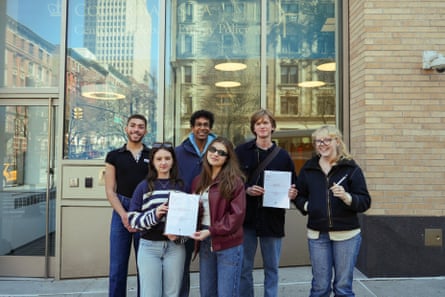 Members of the Sunrise Movement at Columbia University. Photograph: Courtesy of the Sunrise Movement at Columbia University
theguardian.com
Members of the Sunrise Movement at Columbia University. Photograph: Courtesy of the Sunrise Movement at Columbia University
theguardian.com
Columbia University students filed an administrative complaint alleging that the university’s Center on Global Energy Policy (CGEP) misleads the public by presenting itself as independent while taking millions of dollars from fossil fuel companies. The Guardian reports that Columbia’s Sunrise Movement chapter submitted the complaint to New York City’s consumer protection bureau, pointing to donations from ExxonMobil, Shell, BP, Occidental and Tellurian.
The dispute is not about whether universities can accept corporate money—most do—but about what the branding buys. CGEP positions itself as a neutral source for policymakers and media, and its research can travel far beyond campus through citations, panel appearances and the credibility halo of an Ivy League label. The students argue that the center’s “independent” framing functions as a reputational service for oil and gas firms, allowing industry narratives to be repeated through an academic institution rather than a corporate press office.
Columbia rejects the premise. A university spokesperson told The Guardian that CGEP’s funders are disclosed on its website and that accusations of deception are “absurd and unfounded,” adding that the center receives money from a wide range of sources including tech firms and foundations. That defense hinges on a narrow definition of transparency—listing donors—while critics focus on how research is marketed and consumed: most readers of a policy brief or op-ed will not cross-check a donor page.
The Guardian also cites internal industry documents surfaced by a 2024 congressional investigation in which companies described CGEP as an “opinion leader” that could help advance “energy transition” messaging. In other words, funders are not paying for access to neutral analysis; they are paying for a channel that can shape what counts as responsible, pragmatic climate policy.
The complaint’s choice of venue—consumer protection rather than academic governance—signals a tactical shift. If an energy center is treated like a public-facing product, then “independence” becomes a marketing claim subject to the same scrutiny as any other claim. Universities have traditionally handled conflicts of interest through disclosure forms and internal review. The students are asking regulators to treat the university’s credibility as something sold to the public.
CGEP’s donor list may be public, but the complaint argues that the center’s independence claim is the real deliverable.