
Péter Magyar wins Hungary election landslide
Tisza takes constitutional supermajority after Orbán concedes defeat, a system built to entrench power now hands the tools to its opponent
Images
 Péter Magyar is on course for a constitutional majority he needs to reverse Orbán-era reforms
bbc.com
Péter Magyar is on course for a constitutional majority he needs to reverse Orbán-era reforms
bbc.com
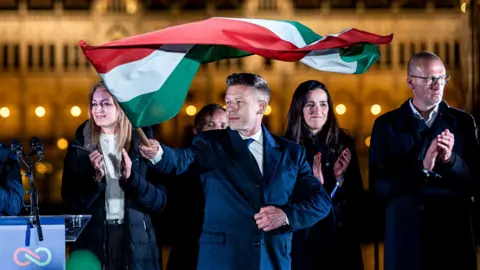 Péter Magyar is on course for a constitutional majority he needs to reverse Orbán-era reforms
bbc.com
Péter Magyar is on course for a constitutional majority he needs to reverse Orbán-era reforms
bbc.com
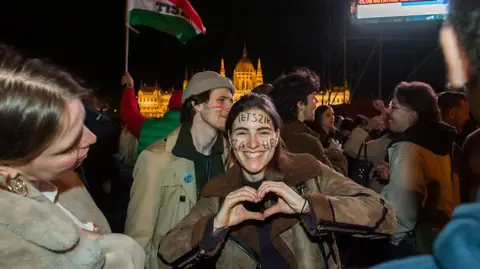 Budapest was filled with jubilant supporters celebrating Magyar's victory
bbc.com
Budapest was filled with jubilant supporters celebrating Magyar's victory
bbc.com
 Hungarian prime minister Viktor Orbán concedes defeat after 'painful' election result - video
theguardian.com
Hungarian prime minister Viktor Orbán concedes defeat after 'painful' election result - video
theguardian.com
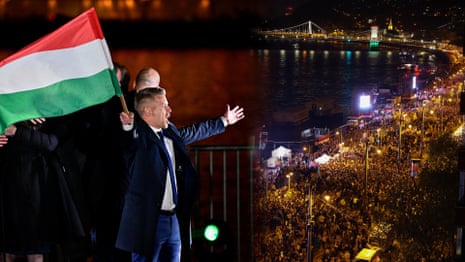 Thousands celebrate in Hungary as Péter Magyar ends Viktor Orbán's 16-year rule – video
theguardian.com
Thousands celebrate in Hungary as Péter Magyar ends Viktor Orbán's 16-year rule – video
theguardian.com
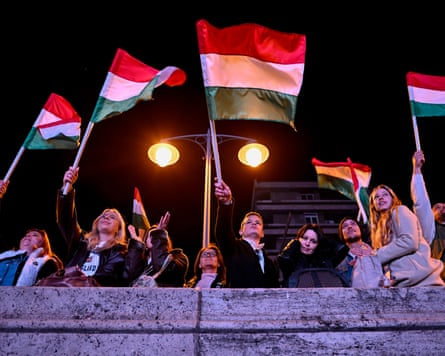 People celebrate in the streets after the announcement of partial results of the Hungarian parliamentary election in Budapest. Photograph: Dénes Erdős/AP
theguardian.com
People celebrate in the streets after the announcement of partial results of the Hungarian parliamentary election in Budapest. Photograph: Dénes Erdős/AP
theguardian.com
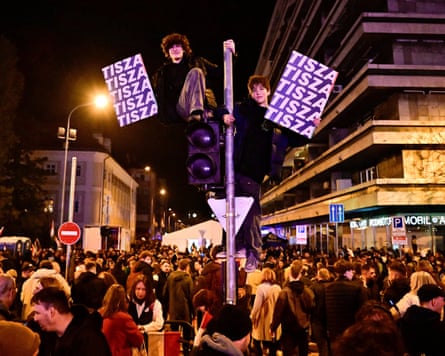 Boys perched on a traffic light hold Tisza signs amid celebrations in Budapest. Photograph: Márton Mónus/Reuters
theguardian.com
Boys perched on a traffic light hold Tisza signs amid celebrations in Budapest. Photograph: Márton Mónus/Reuters
theguardian.com
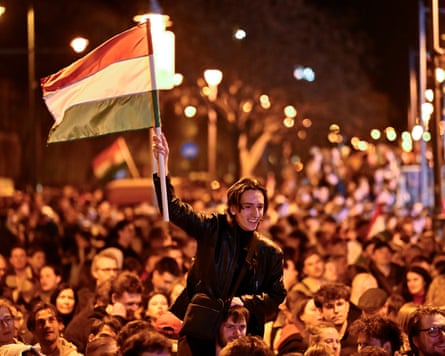 One poll suggested that as many as 65% of voters under the age of 30 were planning to cast their vote against Orbán. Photograph: Dénes Erdős/AP
theguardian.com
One poll suggested that as many as 65% of voters under the age of 30 were planning to cast their vote against Orbán. Photograph: Dénes Erdős/AP
theguardian.com
Hungary’s parliamentary election has ended Viktor Orbán’s 16-year run in power, after the opposition Tisza party led by Péter Magyar surged to a projected 138 seats in the 199-seat parliament with almost all votes counted. Orbán conceded defeat within hours of polls closing, calling the result “painful” and congratulating Magyar by phone, according to the BBC. Turnout reached about 79.5%, a record level in post-communist Hungary.
The numbers matter because 138 seats is not just a victory but a governing tool: it clears the two-thirds threshold needed to amend the constitution and rewrite the “cardinal laws” Orbán’s Fidesz used to lock in its preferences across the judiciary, media regulation and public administration. Both the BBC and the Guardian report that Magyar campaigned on dismantling the patronage system known as NER, restoring judicial independence, and reversing unpopular changes in education and healthcare—areas that have deteriorated while politically connected firms and insiders benefited from state contracts and regulatory favour.
That supermajority also changes Hungary’s bargaining posture in Brussels. Orbán spent years using veto threats and procedural choke points to extract concessions from the EU while maintaining unusually close ties with Moscow. Magyar has promised to distance Hungary from Russia and pursue more cooperative relations with the EU and Ukraine, a shift that could affect everything from sanctions unanimity to defence cooperation. The Guardian notes that the election was watched internationally as a test case for the broader right-populist ecosystem, which had treated Orbán’s model as exportable.
The campaign’s final week illustrated those cross-border linkages in unusually direct form. JD Vance travelled to Budapest to “help” Orbán, the Guardian reports, and Donald Trump publicly endorsed him, offering US “economic might” if he won. Orbán’s defeat therefore lands not only as a domestic repudiation but as a setback for a network of politicians who use friendly governments, photo-ops and mutual endorsements to signal inevitability.
Magyar himself is a former insider who once backed Orbán, a biography that cuts both ways: it gave him credibility among disillusioned conservative voters while raising questions about how far he will go in unwinding a system he once served. For now, the electoral arithmetic gives him room to act quickly—and little room to blame coalition partners if he does not.
On Sunday night in Budapest, car horns and champagne marked the end of an era. By Monday morning, Hungary’s next government had something Orbán rarely had to face: a constitutional mandate that can be used against the architecture he built.