
Israel expands Lebanon air campaign
IDF says biggest Hezbollah strike wave since March, Hormuz ceasefire leaves Beirut outside the deal
Images
 The provisional truce comes more than a month after the US and Israel launched coordinated attacks on Iran
bbc.com
The provisional truce comes more than a month after the US and Israel launched coordinated attacks on Iran
bbc.com
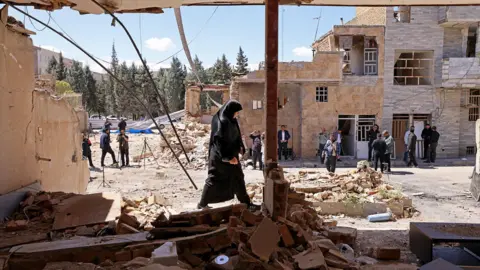 The provisional truce comes more than a month after the US and Israel launched coordinated attacks on Iran
bbc.com
The provisional truce comes more than a month after the US and Israel launched coordinated attacks on Iran
bbc.com
 Smoke rises from the site of an Israeli strike that targeted an area in Beirut, Lebanon. Photograph: Dylan Collins/AFP/Getty Images
theguardian.com
Smoke rises from the site of an Israeli strike that targeted an area in Beirut, Lebanon. Photograph: Dylan Collins/AFP/Getty Images
theguardian.com
 Emergency workers at the site of an Israeli airstrike in Beirut. Photograph: Hussein Malla/AP
theguardian.com
Emergency workers at the site of an Israeli airstrike in Beirut. Photograph: Hussein Malla/AP
theguardian.com
 People gather as rescuers work at the site of an Israeli strike in Saida, Lebanon. Photograph: Reuters
theguardian.com
People gather as rescuers work at the site of an Israeli strike in Saida, Lebanon. Photograph: Reuters
theguardian.com
 A rescuer stands amid rubble at the site of an Israeli strike in Tyre, Lebanon. Photograph: Adnan Abidi/Reuters
theguardian.com
A rescuer stands amid rubble at the site of an Israeli strike in Tyre, Lebanon. Photograph: Adnan Abidi/Reuters
theguardian.com
Israel carried out what it called its largest wave of strikes on Hezbollah targets in Lebanon since the war began in early March, hitting areas including Beirut and the southern cities of Tyre and Saida. Lebanon’s prime minister, Nawaf Salam, said the attacks had killed unarmed civilians and struck densely populated neighbourhoods, accusing Israel of escalating even as regional actors talk about de‑escalation, according to the Guardian.
The timing is awkward for diplomats. Hours earlier, the United States and Iran announced a conditional two‑week ceasefire tied to the reopening of the Strait of Hormuz, a chokepoint for Gulf oil shipments. According to the BBC, the arrangement would allow shipping through the strait for two weeks under Iranian military coordination, after more than a month of US‑Israeli attacks on Iran and a period of explicit threats from US President Donald Trump about what would happen if Iran did not reopen the waterway.
The gap between the Hormuz truce and the Lebanon front illustrates how compartmentalised this conflict has become. Washington’s immediate metric is maritime traffic and energy pricing; Tehran’s leverage is the ability to turn insurance, freight rates and naval risk into a global tax. Lebanon, by contrast, is where the war’s “allies and proxies” logic becomes operational: Israeli leaders can endorse a pause with Iran while insisting it does not apply to Lebanon, and Hezbollah can be treated as a separate ledger even when it is described internationally as Iran‑backed.
That separation matters because it shifts who bears the costs. A Hormuz pause mainly reduces the price of disruption for importers and shippers; a Lebanon carve‑out concentrates the damage on Lebanese infrastructure and civilians while preserving Israel’s freedom to keep pressure on Hezbollah. The BBC reports that Pakistan’s prime minister, Shehbaz Sharif, helped mediate the US‑Iran arrangement and has invited delegations to Islamabad for further talks—an attempt to turn a time-limited shipping deal into a broader settlement. But Israel’s position that the ceasefire “does not include Lebanon” leaves Beirut outside the main bargaining room.
It also complicates enforcement. US Defence Secretary Pete Hegseth said American forces would remain ready to restart strikes “at a moment’s notice” if Iran does not comply, the BBC reports. That is a compliance mechanism aimed at Tehran’s behaviour in the Gulf and against US forces—not at Israel’s air campaign over Lebanon. In practice, the region is being asked to treat a two‑week shipping corridor as proof of de‑escalation while watching a separate air war intensify.
On Wednesday, smoke rose from strike sites in Beirut as rescuers worked through rubble, photographed by Reuters and other agencies. The two‑week clock on Hormuz started anyway.