
Somalia drought and aid cuts push 6.5 million toward crisis hunger
US humanitarian funding drops from $462m to $3m year-on-year, water trucks become last-mile lifeline in Baidoa camps
Images
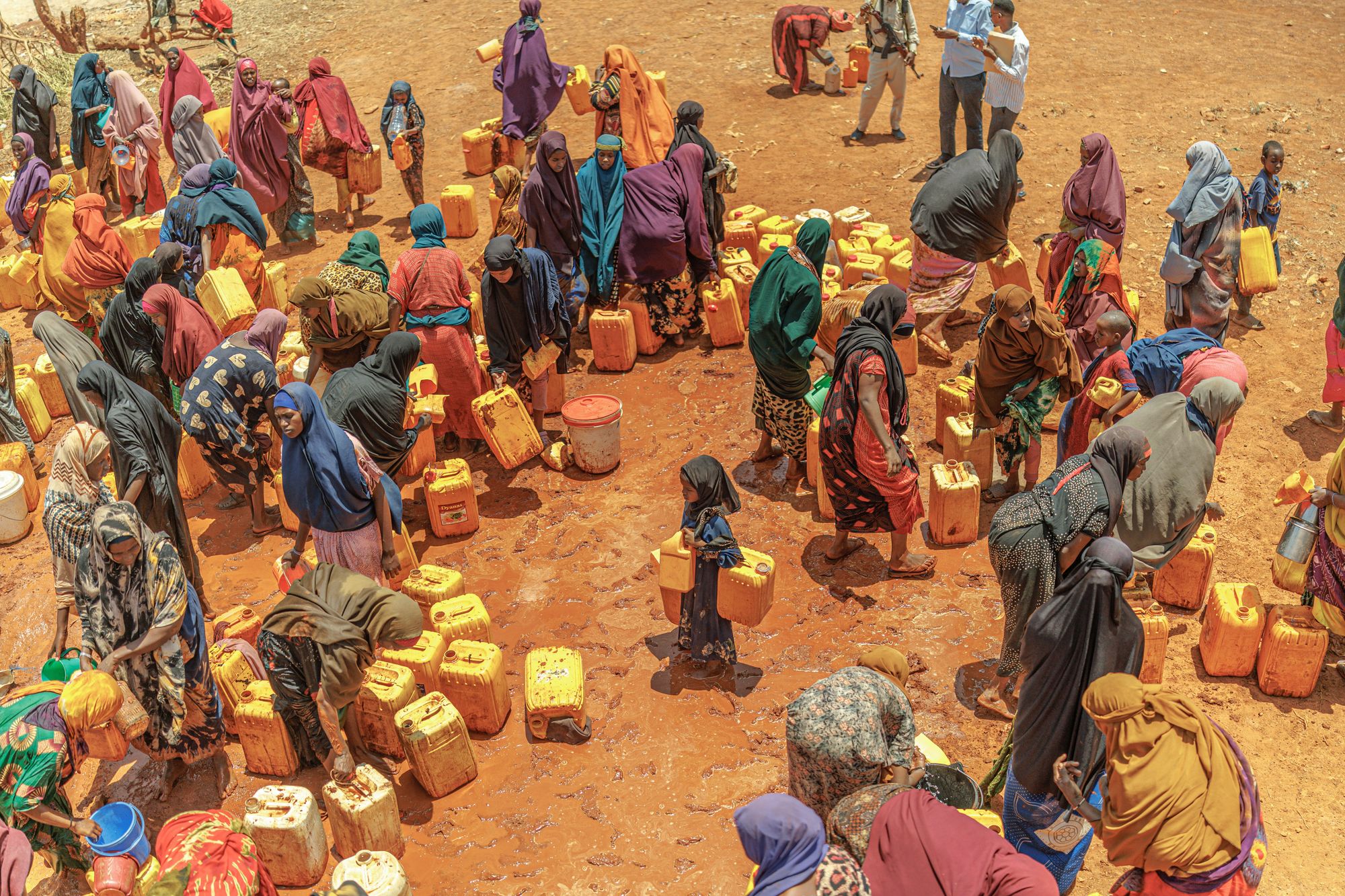 Internally displaced people in Madina Camp, Baidoa, Somalia bring their jerry cans to the water delivery (Mercy Corps)
Mercy Corps
Internally displaced people in Madina Camp, Baidoa, Somalia bring their jerry cans to the water delivery (Mercy Corps)
Mercy Corps
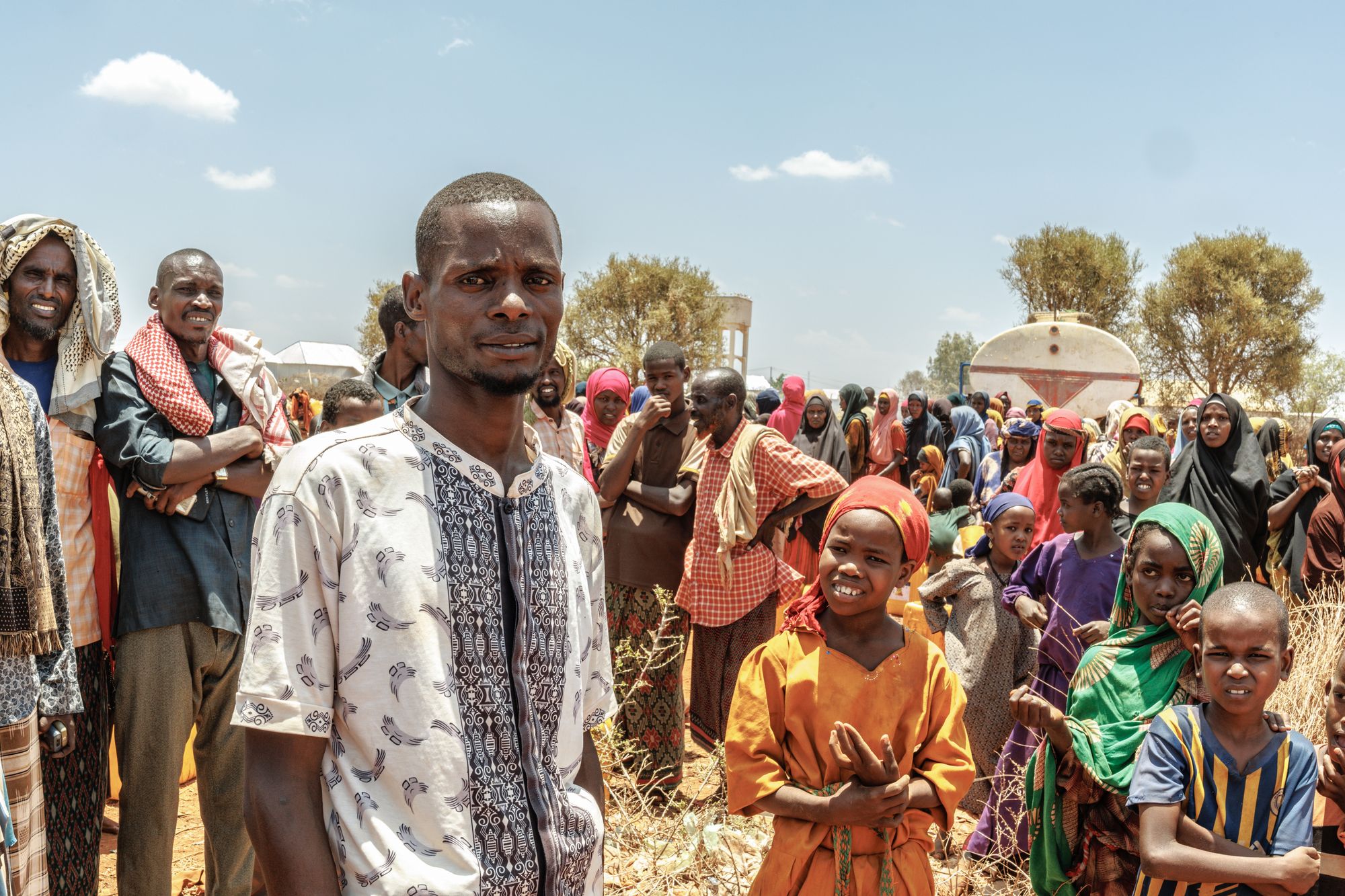 According to Adan Adan Abdi, a sub-camp leader of around 50 people, the water delivery was the only aid that had been received for several days (Mercy Corps)
Mercy Corps
According to Adan Adan Abdi, a sub-camp leader of around 50 people, the water delivery was the only aid that had been received for several days (Mercy Corps)
Mercy Corps
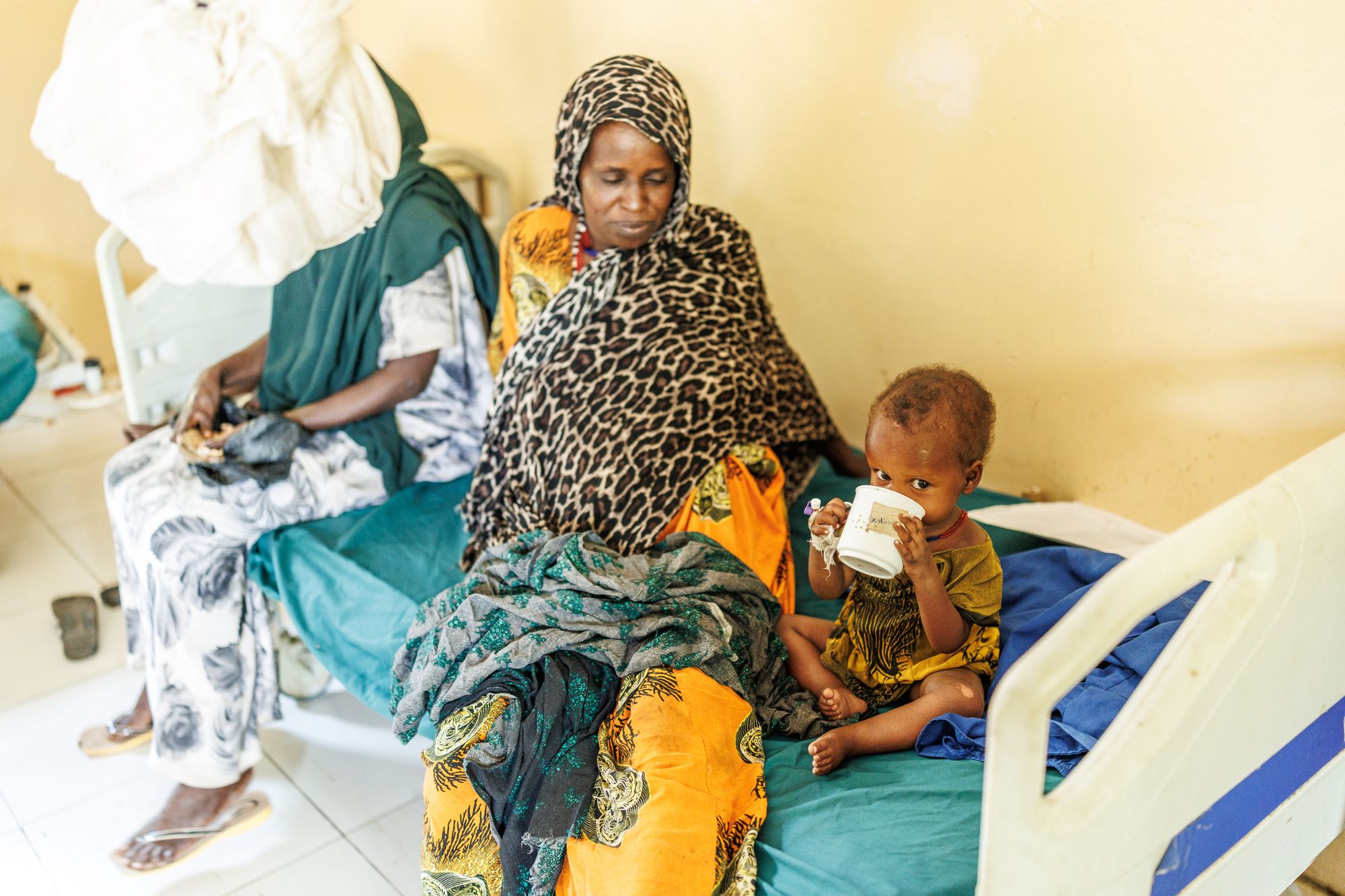 22-year-old Nurta Sidow Qasim feeds her surviving son Mohamed tea, after losing Mohamed’s twin, Khadija, to malnutrition (Mercy Corps)
Mercy Corps
22-year-old Nurta Sidow Qasim feeds her surviving son Mohamed tea, after losing Mohamed’s twin, Khadija, to malnutrition (Mercy Corps)
Mercy Corps
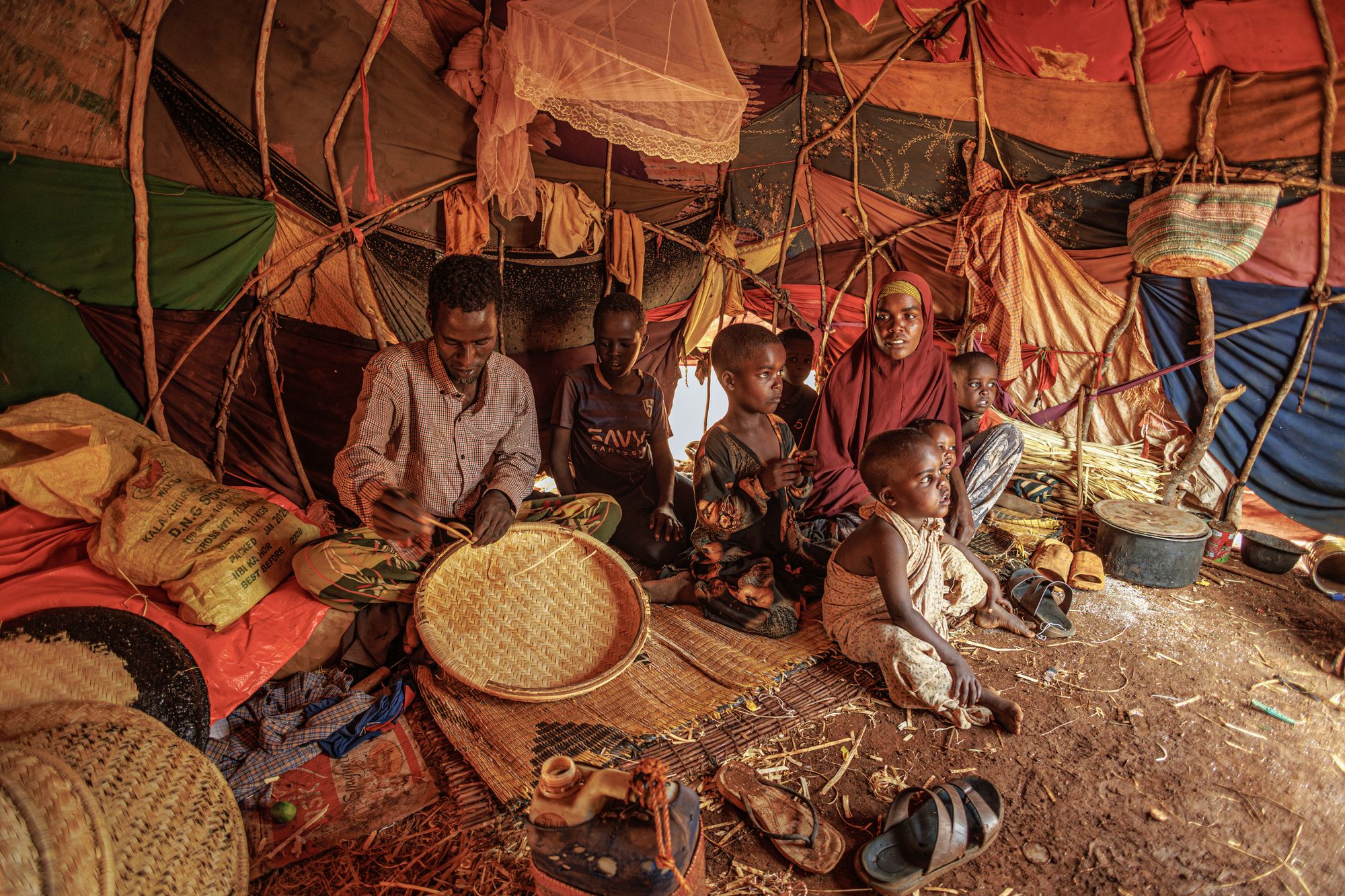 A family sits under a makeshift shelter at the Madina Internally Displaced Persons camp in Somalia (Mercy Coprs)
Mercy Coprs
A family sits under a makeshift shelter at the Madina Internally Displaced Persons camp in Somalia (Mercy Coprs)
Mercy Coprs
In Madina Camp outside Baidoa in Somalia’s South West State, residents queue and jostle around water trucks when they arrive, with camp leaders describing days without food to cook and only sporadic deliveries of clean water. The Independent reports that two consecutive failed rainy seasons have pushed Somalia deeper into a climate-driven emergency, with an estimated 6.5 million people now facing “crisis” hunger levels or worse—up by 1.7 million since January.
Somalia has long lived with water scarcity, but officials say the rhythm has changed. Abdiaki Ainte, director of climate and food security in the prime minister’s office, told the Independent that drought has become a persistent pattern over the past three decades, eroding resilience and spreading beyond traditionally drought-prone regions. That means displacement is no longer a short-term response to a bad season; it is becoming a semi-permanent migration from rural livelihoods into camps that depend on trucking, donations and overstretched local charities.
The human costs are immediate. A 22-year-old mother, Nurta Sidow Qasim, described losing one of her infant twins to malnutrition after hospital admission and now feeding the surviving child black tea and occasional powdered milk when food runs out. These are the kinds of coping strategies that appear when markets fail and aid becomes the main supply chain.
Funding is shrinking precisely as need rises. The Independent notes that only 29% of humanitarian funding requirements were met last year, and that major donors are pulling back. The UK is set to cut further after not listing Somalia among countries whose aid will be “protected.” The US contribution has fallen sharply: $3 million in humanitarian aid in the first three months of 2026, down from $462 million over the same period in 2025.
When external funding collapses this quickly, local institutions inherit obligations without the tax base to meet them. Camp residents sell firewood to buy food, a survival strategy that also strips nearby land and raises the long-run cost of recovery. Meanwhile, international attention is finite; Somalia competes with higher-profile crises for headlines, diplomacy and donor budgets.
In Baidoa, the water truck is still the most visible piece of government-adjacent infrastructure. People fight over jerry cans because the delivery schedule is not something they control.