
Trump announces two-week ceasefire with Iran
Tehran promises safe passage through Strait of Hormuz, deadline-driven diplomacy replaces durable de-escalation
Images
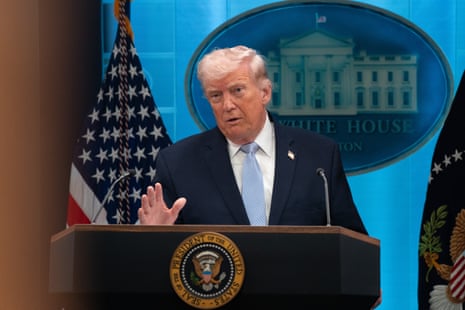 Donald Trump at the White House on 6 April. The US and Iran have agreed to a two-week conditional ceasefire. Photograph: The Washington Post/Getty Images
theguardian.com
Donald Trump at the White House on 6 April. The US and Iran have agreed to a two-week conditional ceasefire. Photograph: The Washington Post/Getty Images
theguardian.com
Donald Trump said on Tuesday that the US and Iran had agreed to a two-week conditional ceasefire, with Tehran promising to reopen the Strait of Hormuz for “safe passage” coordinated with Iran’s armed forces. According to The Guardian, the announcement came less than two hours before a White House deadline—8pm Eastern—after which Trump had threatened to bomb Iranian power plants and bridges. The paper reported that B-52 bombers were believed to be en route before the ceasefire was declared.
The immediate market and shipping significance is straightforward: Hormuz is the exit route for a large share of Gulf oil and LNG, and recent coverage has framed it as the conflict’s single point of failure. In bubb.la’s Mellanöstern feed, multiple items over the past fortnight have described a de facto slowdown in tanker traffic driven less by physical interdiction than by war-risk insurance, financing constraints, and ship-by-ship “clearance” arrangements with Iran. A ceasefire that restores predictable passage does not automatically restore insurability; underwriters price the credibility of enforcement and the risk of abrupt reversal, not the wording of a statement.
The diplomatic mechanism described by The Guardian also underlines how the war has been managed: not through a formal negotiation track but via last-minute interventions around self-imposed escalation deadlines. The Guardian reports Pakistan played a mediating role, with Prime Minister Shehbaz Sharif requesting a two-week pause “to allow diplomacy to run its course.” Trump, in turn, tied the pause to “COMPLETE, IMMEDIATE, and SAFE OPENING” of Hormuz and said the US would seek a broader deal during the two weeks.
Israel’s position is presented as conditional as well. The Guardian cites Axios reporting that Israel would accept the two-week ceasefire once the Hormuz blockade ended. That sequencing matters because it places maritime access—rather than nuclear inspections, missile limits, or prisoner exchanges—at the centre of the bargain. It also turns the strait into a compliance meter visible to traders and shipowners: if traffic slows again, the ceasefire’s failure becomes legible in freight rates and insurance premiums before it is confirmed diplomatically.
For Tehran, the offer is a way to trade an economic chokepoint for breathing room while keeping formal concessions vague. Trump referenced a “10-point proposal” from Iran that could lead to an armistice being “finalized and consummated,” after earlier dismissing it as “not good enough,” according to The Guardian. For Washington, the pause arrives after five weeks of strikes with no clear sign—again per The Guardian—that Iran was prepared to “surrender,” despite repeated threats of broader infrastructure destruction.
Two hours before the deadline, the White House was still talking about bombing bridges and power plants. By the evening, the ceasefire’s most concrete deliverable was the promise that tankers could pass Hormuz again for two weeks.