
Trump sets Hormuz deadline for Iran
White House threatens to decimate bridges and power plants if shipping not restored, oil chokepoint leverage turns into civilian infrastructure target list
Images
 bbc.com
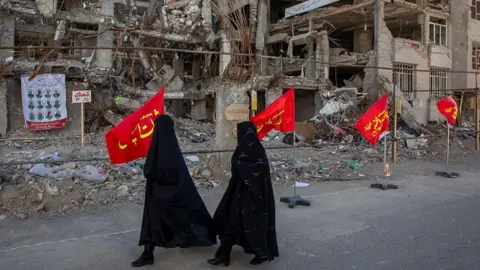 Getty Images Two women in black head-to-toe walk past destroyed buildings and a series of red flag with yellow Arabic script.
bbc.com
Getty Images Two women in black head-to-toe walk past destroyed buildings and a series of red flag with yellow Arabic script.
bbc.com
 A thin, grey banner promoting the US Politics Unspun newsletter. On the right, there is an image of North America correspondent Anthony Zurcher, wearing a blue suit and shirt and grey tie. Behind him is a visualisation of the Capitol Building on vertical red, grey and blue stripes. The banner reads: "The newsletter that cuts through the noise.”
bbc.com
A thin, grey banner promoting the US Politics Unspun newsletter. On the right, there is an image of North America correspondent Anthony Zurcher, wearing a blue suit and shirt and grey tie. Behind him is a visualisation of the Capitol Building on vertical red, grey and blue stripes. The banner reads: "The newsletter that cuts through the noise.”
bbc.com
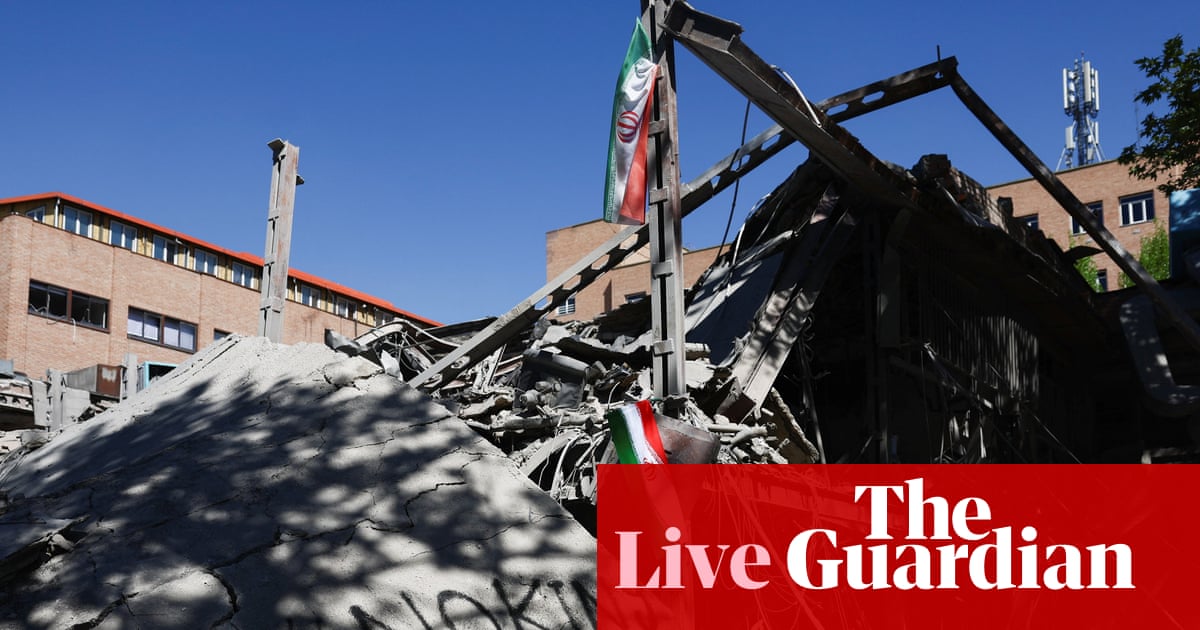 Trump says ‘a whole civilisation will die tonight’ if Iran does not make a deal – Middle East crisis live
theguardian.com
Trump says ‘a whole civilisation will die tonight’ if Iran does not make a deal – Middle East crisis live
theguardian.com
US President Donald Trump has set a Tuesday evening deadline for Iran to reopen the Strait of Hormuz, warning that if no deal is reached “every bridge and power plant in the nation will be decimated,” according to the BBC. The ultimatum comes in the sixth week of a US–Israeli air campaign against Iran and as shipping and energy markets treat the strait as a single point of failure.
The demand is narrowly framed—“free traffic of oil” through Hormuz—yet the threatened punishment is national-scale infrastructure destruction. According to the BBC, Trump has repeatedly moved deadlines over recent weeks, but this time attached a specific start time for “devastating” strikes. That turns the negotiation into a credibility test: extend again and the threat looks performative; follow through and Washington becomes directly responsible for a large share of Iran’s civilian power and transport network.
The strait is Iran’s most efficient lever because it does not require a formal blockade to work. Trump himself, the BBC reports, argued that closing Hormuz could be achieved by “one terrorist,” a nod to the reality that mines, drones and missiles can raise insurance premiums and deter traffic even when oil is still flowing. Earlier in the conflict, shipping firms were already seeking ad hoc assurances and insurers were repricing routes, making the commercial consequences partly independent of what navies can “keep open” in a legal sense.
Iran, for its part, has signaled it does not want to trade away that leverage for a temporary pause. The BBC reports Tehran has rejected a temporary ceasefire and insisted on a definitive end to the war, while US officials describe Iranian demands as maximalist. Reuters, cited by SVT, also reported an Iranian call for citizens—students, artists and athletes—to form human chains around energy facilities, explicitly framing attacks on public infrastructure as war crimes.
That legal argument is not academic. Power plants and bridges sit at the boundary between military advantage and civilian survival: they enable troop movement and industrial output, but also keep hospitals running and cities supplied. The BBC notes Trump has spoken openly about the destruction he is threatening, while also acknowledging that anything destroyed would have to be rebuilt—potentially with outside help. In the same breath, he has described Iran’s post-strike recovery in terms of decades, implying a long tail of humanitarian and financial obligations even if the operation is tactically “successful.”
As the deadline nears, the Strait of Hormuz remains open, and the consequences of closing it are still being priced mainly through insurance and risk premiums rather than physical scarcity.