
Asian states cut ad hoc Hormuz passage deals with Iran
Philippines joins Pakistan and India in seeking ship-by-ship assurances, oil shock turns diplomacy into a substitute for insurance
Images
 An Indian tanker that passed through the Strait of Hormuz
bbc.com
An Indian tanker that passed through the Strait of Hormuz
bbc.com
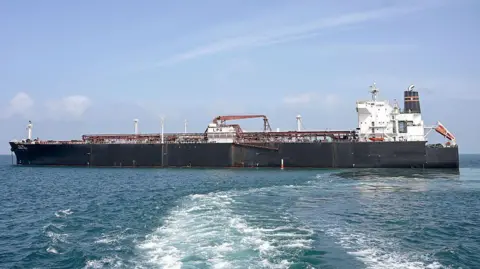 An Indian tanker that passed through the Strait of Hormuz
bbc.com
An Indian tanker that passed through the Strait of Hormuz
bbc.com
Asian governments are already negotiating with Iran for safe passage through the Strait of Hormuz as US President Donald Trump’s deadline for Tehran to “reopen” the route approaches, the BBC reports. The broadcaster says the Philippines, Pakistan and India have all secured assurances for at least some of their flagged vessels, while China has acknowledged that some of its ships have also transited the strait.
The backdrop is a shipping disruption driven less by a formal blockade than by risk pricing. Hormuz normally carries about a fifth of global energy shipments, and the BBC notes oil prices have surged as Tehran threatened attacks on shipping in response to US and Israeli strikes. Even when tankers physically can sail, insurers, banks and counterparties can make voyages commercially impossible—or push costs high enough that governments start looking for political workarounds.
The Philippines offers a clear example of how quickly a fuel shock becomes a domestic emergency. Manila imports roughly 98% of its oil from the Middle East, according to the BBC, and declared a national energy emergency after pump prices more than doubled following the outbreak of the Iran war. Philippine foreign secretary Theresa Lazaro said Iran promised “safe, unhindered and expeditious passage” for Philippine-flagged ships, a pledge she described as vital for oil and fertiliser supplies.
Pakistan’s foreign minister Ishaq Dar said on 28 March that Iran had agreed to allow 20 Pakistani ships through the strait, calling it a “constructive gesture”. India’s foreign minister Subrahmanyam Jaishankar told the Financial Times that India’s tanker movements reflected diplomacy, while Iran’s embassy in India publicly reassured Indian shipping. Analysts quoted by the BBC caution that the guarantees may apply only to certain ships or cargoes, and may not be durable; Tehran has also made claims that passage is open to all countries except the US and its allies, a formulation that leaves plenty of room for selective enforcement.
For Asia’s import-dependent economies, the episode shows how energy security is increasingly managed ship-by-ship, flag-by-flag, and phone call by phone call. For Iran, selective “safe passage” offers leverage without the costs of a declared closure.
On the water, the strait is narrow. On paper, exemptions are narrower still.