
South Korea says North Korea holds back from aiding Iran
NIS sees no weapons shipments since US strikes, Pyongyang keeps diplomatic options open as Trump re-enters the picture
Images
 via Reuters
zerohedge.com
via Reuters
zerohedge.com
South Korea’s National Intelligence Service has told lawmakers it has seen no evidence that North Korea has sent weapons or supplies to Iran since the start of the US-led strikes on Iran, according to Reuters as cited by Zero Hedge. In a closed-door briefing, the agency also pointed to Pyongyang’s unusually muted public posture: two low-key foreign ministry statements condemning the attacks as illegal, but no public condolences after Supreme Leader Ayatollah Ali Khamenei’s reported death and no congratulatory message to his successor.
The absence is notable because North Korea has treated other conflicts as opportunities to deepen ties and extract cash, technology, and political cover. In the war in Ukraine, Pyongyang has openly tightened defence cooperation with Moscow and, by many accounts, sent personnel—support that carries fewer immediate costs when the partner is a major military power and the front is far from North Korea’s borders. Iran is different: helping a country under direct US and Israeli bombardment risks drawing attention to any supply chain, shipping route, or financial channel that could be used to move weapons or components. For a regime that survives on sanctions evasion, the safest pipeline is the one that remains deniable.
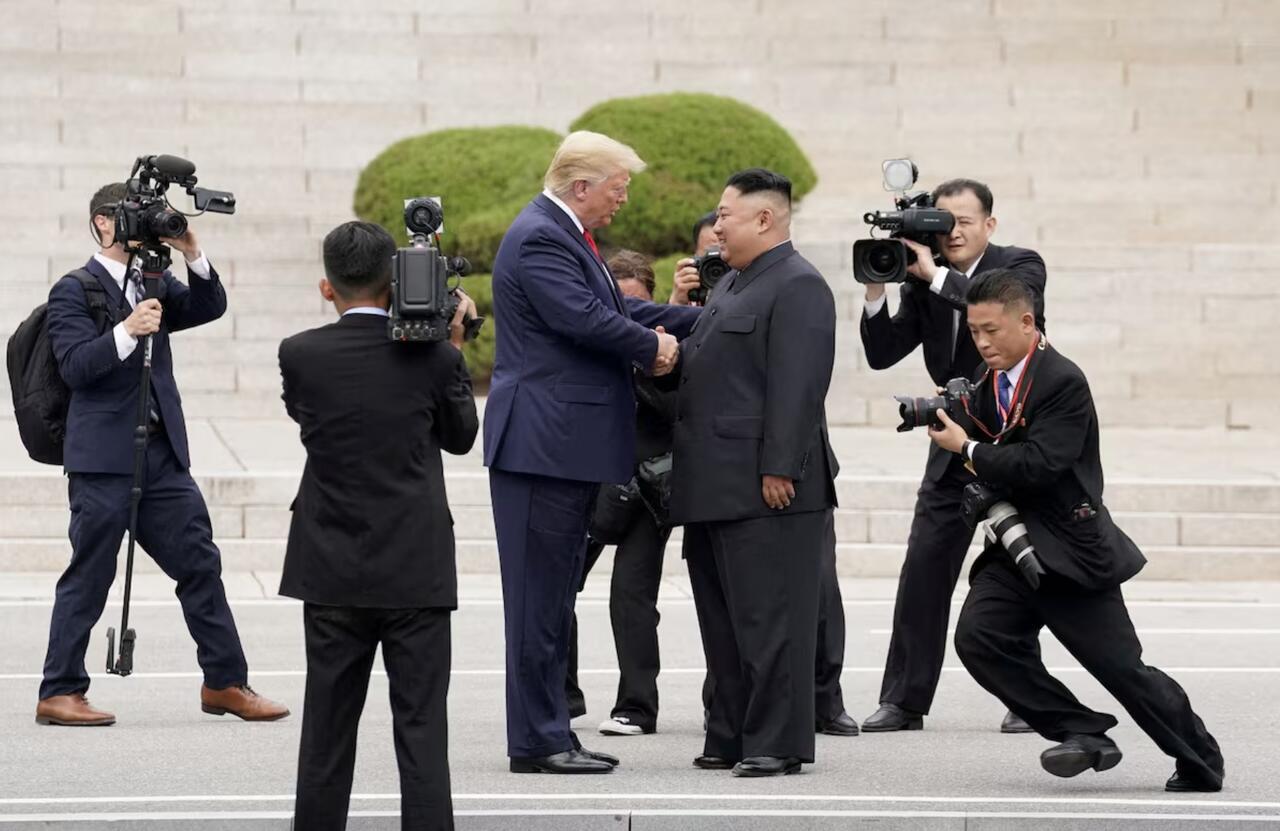
The NIS assessment also suggests Pyongyang is keeping its options open for a renewed diplomatic track with Washington, a calculation that becomes more plausible as US President Donald Trump publicly drags North Korea back into his foreign-policy narrative. Trump has recently referenced North Korea in remarks about the Iran crisis, again arguing that previous US administrations failed to prevent Pyongyang from acquiring nuclear weapons. That kind of rhetoric can be read two ways in Pyongyang: as a threat, but also as a signal that North Korea is still considered a negotiable file—one where a pause, a gesture, or even silence can be traded later.
For Asian security planners, the episode underlines how transactional North Korea’s alliances can be. Public solidarity costs little; moving matériel costs a lot when surveillance is intense and a partner is losing. For Iran, it is another reminder that “axis” politics often stops at the point where secondary sanctions, interdiction risk, and intelligence exposure begin.
North Korea’s state media has issued condemnations of the strikes. The intelligence service says it has not seen the shipments that would normally follow.