
CJNG succession shifts to Juan Carlos Valencia González, Mexican authorities say El Mencho fall opens path for R3 and his Elite Group, US offers $5 million while cartel fields armoured convoys
Mexican authorities say El Mencho fall opens path for R3 and his Elite Group, US offers $5 million while cartel fields armoured convoys
Images
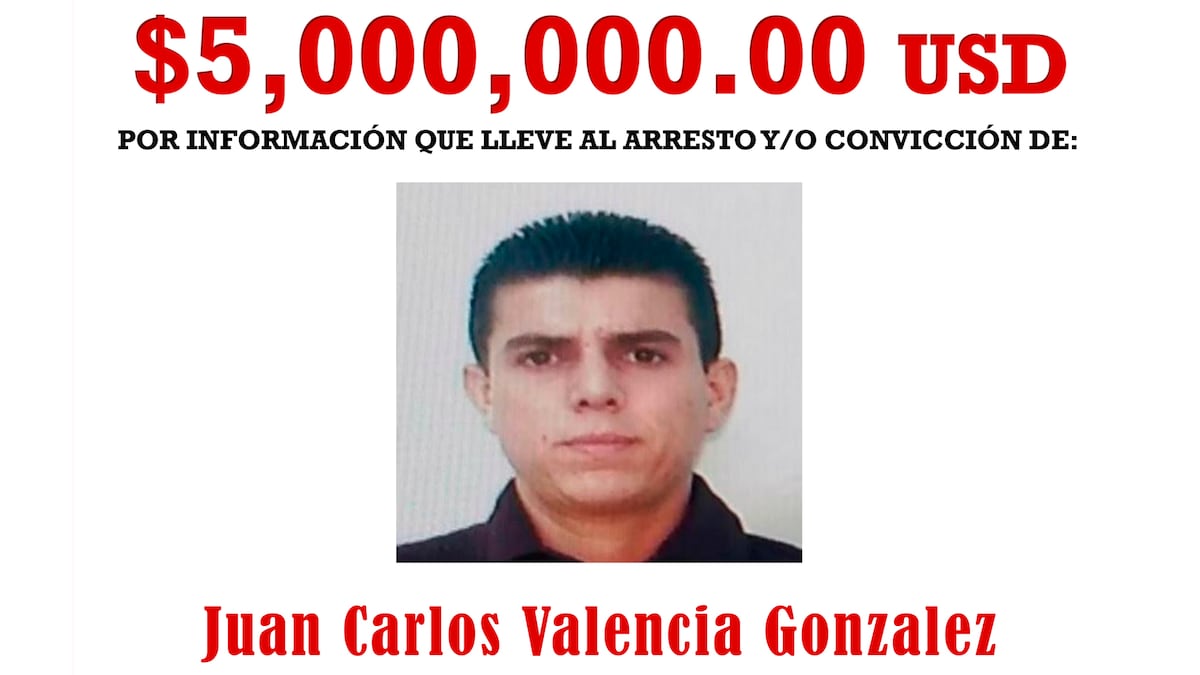 Juan Carlos Valencia González emerges in power vacuum at the head of the Jalisco New Generation Cartel
english.elpais.com
Juan Carlos Valencia González emerges in power vacuum at the head of the Jalisco New Generation Cartel
english.elpais.com
Mexican authorities say Juan Carlos Valencia González, a 41-year-old known as “El Pelón” and “R3,” is stepping into the leadership vacuum at the Jalisco New Generation Cartel after the reported fall of Nemesio Oseguera Cervantes, “El Mencho.” According to El País, Valencia González commands a CJNG “Elite Group” that parades in propaganda videos with armoured convoys, turreted trucks and heavy weapons, a capability Mexico’s defence ministry has previously described as unmatched among identified cartel units. The United States is offering a $5 million reward for information leading to his capture.
The succession story matters less for the cartel’s branding than for what it reveals about continuity. El País traces Valencia González’s rise through family ties that blend migration, smuggling and organisation-building: relatives who moved early to the United States, a network that professionalised over decades, and a stepfather who turned CJNG into an export-capable enterprise. The “Elite Group” is not merely muscle; it is a mobile, trained force designed to hold territory, intimidate rivals and challenge local police in places like Guanajuato, Michoacán, Jalisco and Zacatecas. When a cartel can field armoured columns and crew-served weapons, the boundary between criminality and irregular warfare becomes administrative rather than practical.
That capability also reshapes the bargaining between Mexico’s state and its regions. A cartel that can punish municipal police, disrupt logistics and enforce road controls can extract compliance without needing to “govern” in the conventional sense; it only needs to make non-cooperation expensive. The result is a security market where protection, silence and access are priced locally, while the federal government is pushed into headline operations that may remove individuals but leave the underlying franchise intact. Washington’s reward poster and Mexico’s declarations of a new “top target” become part of the same cycle: a named successor provides a focal point for enforcement, while the organisation demonstrates it can replace leaders without losing operational tempo.
For the United States, the emergence of a successor with a visible armed wing keeps the bilateral agenda anchored to fentanyl, trafficking routes and cross-border violence, regardless of who sits in Mexico City. It also complicates any claims of “decapitation” success: if the next leader already runs an elite unit and has been on U.S. radar for years, the problem is not intelligence but capacity and incentives on the ground.
The convoy in the 2020 propaganda video was filmed as a birthday tribute to El Mencho, El País reports. The men in matching tactical gear chant loyalty to “R3,” and the trucks carry the CJNG insignia like a uniformed service.