
Iran says Revolutionary Guard intelligence chief killed in airstrikes
Trump issues Hormuz ultimatum and threatens Iranian infrastructure, oil markets price a shipping lane like a weapon
Images
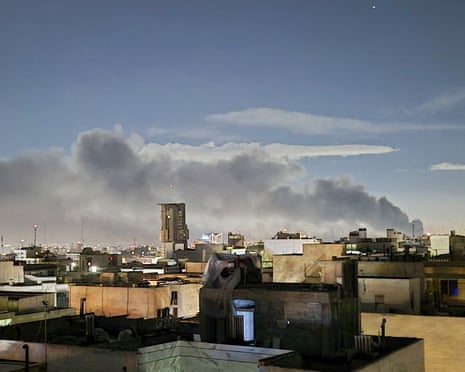 Smoke rises from residential areas in eastern and western parts of Tehran after US-Israeli airstrikes on Monday. Photograph: Anadolu/Getty Images
theguardian.com
Smoke rises from residential areas in eastern and western parts of Tehran after US-Israeli airstrikes on Monday. Photograph: Anadolu/Getty Images
theguardian.com
 Personal de emergencia trabaja junto a un vehículo destruido en el lugar del impacto, tras un ataque con misiles lanzados desde Irán (REUTERS/Florion Goga)
infobae.com
Personal de emergencia trabaja junto a un vehículo destruido en el lugar del impacto, tras un ataque con misiles lanzados desde Irán (REUTERS/Florion Goga)
infobae.com
 Infantes de Marina estadounidenses observan una lancha rápida de ataque iraní desde el buque USS John P. Murtha durante un recorrido por el estrecho de Ormuz, en el golfo de Omán (REUTERS)
infobae.com
Infantes de Marina estadounidenses observan una lancha rápida de ataque iraní desde el buque USS John P. Murtha durante un recorrido por el estrecho de Ormuz, en el golfo de Omán (REUTERS)
infobae.com
 Donald Trump brindará una conferencia de prensa sobre la guerra en Irán acompañado de militares en la Casa Blanca (REUTERS)
infobae.com
Donald Trump brindará una conferencia de prensa sobre la guerra en Irán acompañado de militares en la Casa Blanca (REUTERS)
infobae.com
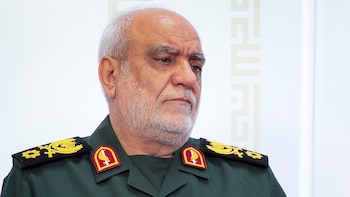 Majid Khademi
infobae.com
Majid Khademi
infobae.com
 El personal de emergencias trabaja junto a un edificio dañado en el lugar del impacto, tras una lluvia de misiles lanzados desde Irán, en el marco del conflicto entre Estados Unidos, Israel e Irán, en Tel Aviv (Israel), el 6 de abril de 2026. REUTERS/Florion Goga
infobae.com
El personal de emergencias trabaja junto a un edificio dañado en el lugar del impacto, tras una lluvia de misiles lanzados desde Irán, en el marco del conflicto entre Estados Unidos, Israel e Irán, en Tel Aviv (Israel), el 6 de abril de 2026. REUTERS/Florion Goga
infobae.com
US and Israeli airstrikes on Iran intensified on Monday as Iran’s Revolutionary Guard confirmed the death of Majid Khademi, described by Iranian media as the head of its intelligence protection apparatus. The escalation comes as President Donald Trump issued a deadline for Tehran to “fully open” the Strait of Hormuz by Tuesday evening US time, threatening strikes on Iranian power plants and bridges, according to the Guardian’s live reporting.
The Strait of Hormuz is not a symbolic choke point. Roughly a fifth of globally traded oil moves through it, and even partial disruption forces traders to price not just barrels but insurance, credit and rerouting capacity. Reuters-reported price swings have already been mirrored in the Guardian’s account of market anxiety: oil can fall on a headline about “talks” and rise again on a single threat about infrastructure. That volatility is the war’s first export product, and it lands far from the battlefield—in European fuel bills, freight rates and industrial input costs.
Diplomacy is now running in parallel with escalation rather than replacing it. Axios, cited by the Guardian, reports discussions involving the US, Iran and regional mediators around a potential 45-day ceasefire framework. Yet the same news cycle also features fresh strikes on “regime targets” in Tehran, Iranian missile impacts in Haifa, and Iranian drone and missile attacks on Gulf energy-linked sites and shipping. When ceasefire proposals coexist with expanding target lists, the negotiating table becomes another theatre of operations—useful for managing allies, markets and domestic politics, even when the combat tempo rises.
Trump’s ultimatum illustrates how quickly a maritime security problem becomes a domestic political performance. The Guardian notes unusually sharp criticism from across the US political spectrum, including from figures who are otherwise ideological opponents. But the operational logic is straightforward: if the Strait is treated as a lever, the counter-lever is infrastructure, and the line between “military” and “civilian” targets blurs fast. Iran’s deputy foreign minister, quoted by the Guardian, framed the threats as potential war crimes; Iran’s military command warned of “much more devastating” retaliation if civilian targets are hit.
The immediate beneficiaries of a prolonged crisis are those who sell scarcity—energy producers enjoying higher prices, and security bureaucracies that can convert uncertainty into budgets and mandates. The immediate payers are import-dependent economies and consumers who cannot hedge at institutional scale.
On Monday, smoke rose over parts of Tehran after new strikes, while a Japanese-owned tanker reportedly transited Hormuz en route to India. The shipping lane remained open—under threat, on a deadline, and priced as if it might not be tomorrow.